Best Mount Fuji Photo Spots in Autumn and Winter
15 Mount Fuji photo spots for November 2026 to February 2027: where the light falls, autumn colour and light-up dates, Diamond Fuji, access, crowds and local rules.
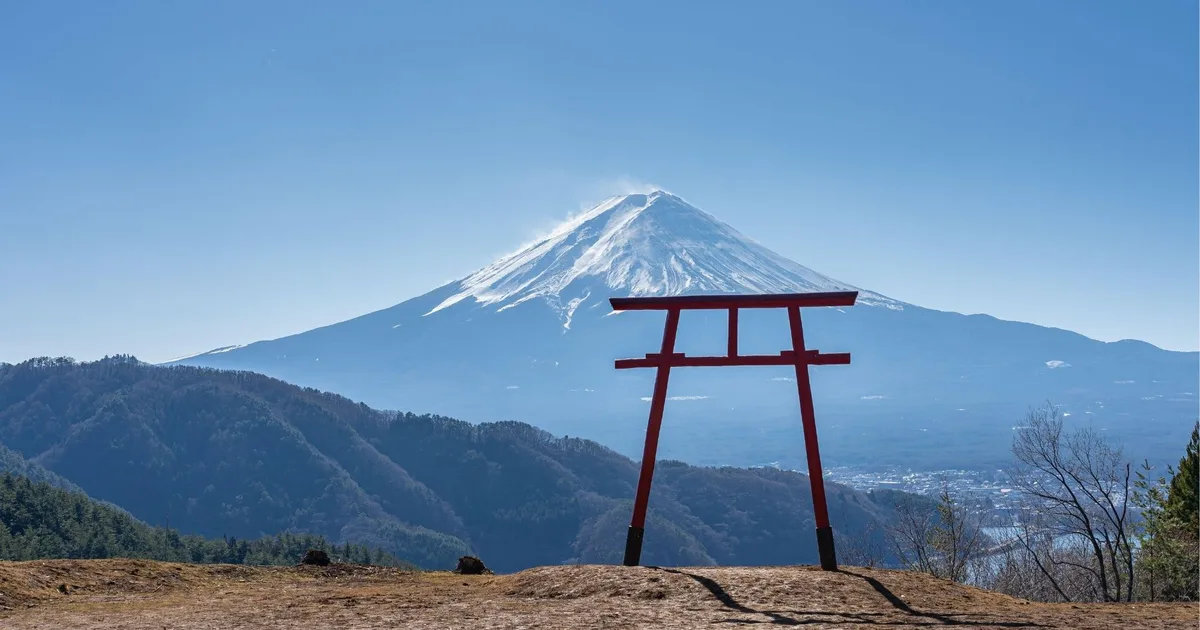
From November 2026 to February 2027, start at Chureito Pagoda at sunrise. Go to the Momiji Corridor (7–29 November) for maples, the north shore of Lake Kawaguchiko and Lake Motosu for reflections, and the Lake Yamanaka shore for Diamond Fuji at sunset. Pick each spot by where the light falls, arrive before the tour buses, and treat every residential street as somebody’s home: that is why the local rules have tightened.
If you would like someone else to handle the driving, the Mt Fuji, Chureito Pagoda, Lake Kawaguchi and Oshino Hakkai tour links the pagoda, Oishi Park, Oshino Hakkai and Saiko’s thatched village in one day from Tokyo, rated 4.8/5 from 5,965 reviews at $49 per person. It reaches the pagoda by late morning, not at sunrise, so it suits travellers who want the famous frames without an overnight stay.
Check Availability
This guide is about the cold-season version of each view: colour timing, light-ups, the snow cap, Diamond Fuji and the seasonal rules and closures. For the year-round basics of each viewpoint, see our guide to the best places to see Mount Fuji. If you are still deciding when to go, start with Mount Fuji in November 2026, and for a frosty 6:00 tripod session read what to wear at Mount Fuji in November and winter.
Quick picks
| Category | Our pick | Why |
|---|---|---|
| Best overall | Chureito Pagoda (Fujiyoshida) | Pagoda, town and Fuji in one frame; morning light comes from the side and front |
| Best autumn leaves | Momiji Corridor, Kawaguchiko north shore | Red maple tunnel with a festival and evening light-up, 7–29 November 2026 |
| Best snow/winter | Lake Yamanaka shoreline and Panorama-dai | Snow-heavy Fuji, Diamond Fuji at sunset, winter lake reflections |
| Best reflection (Sakasa Fuji) | Kawaguchiko north shore (Nagasaki Park area) or Lake Motosu | Calm water at dawn, Fuji to the south |
| Best sunrise | Chureito Pagoda or Kawaguchiko north shore | Low morning sun from the south-east lights the north face |
| Best without a car | Oishi Park (Red Line bus) | Frequent buses, free, wide lake-and-Fuji view |
| Best hidden gem | Nakanokura Pass, Lake Motosu | The view from the former ¥1,000 note, about 30 minutes’ forest walk, few people |
Our pick on GetYourGuide for a day without a car: the Mt Fuji, Chureito Pagoda, Lake Kawaguchi and Oshino Hakkai tour ($49, 4.8/5 from 5,965 reviews). For an overnight near the north-shore spots, see where to stay at Lake Kawaguchiko.
Master table: Fuji photo spots at a glance
| # | Spot | Area | Best season (Nov–Feb) | Best time | Access | Crowds |
|---|---|---|---|---|---|---|
| 1 | Chureito Pagoda | Fujiyoshida | Early–mid Nov leaves; Dec–Feb snow | Sunrise–9:00 | Shimoyoshida Stn + 398 steps | Very high from mid-morning |
| 2 | Momiji Corridor | Kawaguchiko N. shore | Nov (peak forecast around 15–16 Nov) | Early morning; light-up after dusk | Red Line, Itchiku Kubota Art Museum stop | Very high on festival weekends |
| 3 | Oishi Park | Kawaguchiko N. shore | Nov leaves; winter clarity | Morning | Red Line, Natural Living Center stop | Moderate–high midday |
| 4 | Nagasaki Park / north-shore reflections | Kawaguchiko N. shore | All winter | Dawn, windless | Red Line / walk / car | Low at dawn |
| 5 | Mt. Fuji Panoramic Ropeway | Kawaguchiko E. shore | Nov leaves; Dec–Feb | Morning | Red Line stop 9 | High, queues by 10:00 |
| 6 | “Lawson Fuji” | Near Kawaguchiko Stn | Winter clarity | Before 8:00 | 2–3 min walk from station | High 10:00–16:00 |
| 7 | Honcho-dori | Fujiyoshida | Dec–Feb | About 7:00 | Walk from Shimoyoshida Stn | Very high after 9:00 |
| 8 | Oshino Hakkai | Oshino village | Winter snow | Early morning | Bus from Fujisan/Kawaguchiko | High by 10:00 |
| 9 | Saiko Iyashi no Sato Nenba | Lake Saiko | Late Oct–mid Nov leaves; snow | Opening time | Green Line, about 40 min | Moderate, peaks 11:00–14:00 |
| 10 | Nakanokura Pass | Lake Motosu | All winter | Afternoon (front-lit) or dawn silhouette | Car; limited Blue Line | Low |
| 11 | Lake Shoji | West lakes | Winter | Dawn | Car / Blue Line | Very low |
| 12 | Lake Yamanaka shore and Panorama-dai | Yamanakako | Mid-Oct–late Feb Diamond Fuji | Sunset | Car / bus + walk | Busy on Diamond dates |
| 13 | Hakone Shrine “Peace Torii” | Moto-Hakone | Winter | Early morning | Bus/boat to Moto-Hakone | 30–60 min queues |
| 14 | Tokyo towers | Shinjuku, Shibuya, Ikebukuro | Dec–Feb clearest | Morning (front-lit) or sunset silhouette | Metro | Shibuya Sky sunset sells out |
| 15 | Fujinomiya side (Lake Tanuki) | Shizuoka | Winter clarity | Dawn | Car | Low in winter |
How light works around Fuji
Picture Fuji as the centre of a clock. Kawaguchiko, Fujiyoshida, Saiko and Oshino are on the north side, so the low winter sun rising in the south-east lights the mountain from the side and front in the morning. By late afternoon you are shooting into the sun. Lake Yamanaka and Tokyo sit to the east, which makes them sunset and silhouette country, including Diamond Fuji. Lake Motosu and Lake Shoji look south-east toward the peak, so dawn there is backlit and moody, while afternoon light falls more evenly. As a rule of thumb, shoot north-side spots in the morning and east-side spots at sunset.
The spots, one by one
1. Chureito Pagoda (Arakurayama Sengen Park)
The shot: A five-storey vermilion pagoda in the foreground, Fujiyoshida’s rooftops below and Fuji filling the background. In early to mid November the slope turns orange and red. From December the summit is fully white and the air is at its clearest.
Light: You face roughly south-south-west toward Fuji. Sunrise to about 9:00 gives side light on the pagoda and front light on the mountain. Afternoons are often hazy and backlit.
Access: Shimoyoshida Station (Fujikyu Line), then about 10 minutes on foot to the shrine and 398 steps to the observation deck. Allow 20–30 minutes in total. Entry is free and the park is open around the clock. Outside cherry season there is a free car park of roughly 100 spaces; paid or temporary parking applies during blossom season. Our Chureito Pagoda visitor guide covers the climb, parking and the 2026 access rules in detail.
Crowds and context: On 3 February 2026, Fujiyoshida Mayor Shigeru Horiuchi cancelled the park’s cherry blossom festival, citing traffic jams, litter and trespassing, including visitors entering homes to use toilets. As he told The Japan Times, the city acted “to protect the dignity and living environment of our citizens.” Forbes reported that the festival drew about 200,000 visitors a year to a city of only around 46,000–47,000 residents. The park stayed open, and the city ran crowd and traffic control from 1 to 19 April 2026 instead. Autumn and winter are much calmer, but the deck still fills by mid-morning. Arrive in the dark for sunrise, and leave large bags in the station lockers.
Etiquette: This is a war memorial and shrine ground. Stay on public paths and keep your lens off private homes and gardens. Don’t use residents’ driveways or ask for toilets.
No day tour from Tokyo reaches the pagoda at sunrise; for that you need to sleep in Fujiyoshida or Kawaguchiko the night before. For a daytime visit, our pick on GetYourGuide is the Mt Fuji Top 5 Spots day tour with Arakurayama Park and Oshino Hakkai ($55, 4.6/5 from 2,786 reviews).
2. Momiji Corridor (Momiji Kairo), Kawaguchiko north shore
The shot: A tunnel of old maples arching over a small stream, with Fuji visible from the lakeshore nearby. After dark the lit maples glow red and gold.
When: The Fujikawaguchiko Autumn Leaves Festival runs from 7 to 29 November 2026, and the official town notice gives the light-up as sunset to 21:00. Some travel sites still list 21:30 or later, so go by the town’s hours. In past years the stalls ran 9:00–19:00, but the 2026 notice does not repeat them. Weathernews forecasts the Kawaguchiko lakeside maples to peak from around 15 November and the Japan Meteorological Corporation from 16 November, so plan on around 15–16 November, with leaves starting to fall from around 28 November. For the full festival guide, see the Fujikawaguchiko Autumn Leaves Festival 2026.
Light: Morning for Fuji across the lake. The tunnel itself works in soft overcast or at night.
Access: Red Line bus to Itchiku Kubota Art Museum, about a minute’s walk. Free.
Crowds: The town itself warns that weekends are very crowded and the roads congested, and 21–23 November 2026 is a three-day weekend. Go on a weekday at 7:00–8:00, or late in the light-up.
Etiquette: Tripods can block the narrow path during the light-up, so shoot handheld at high ISO or stand at the edges.
3. Oishi Park
The shot: The postcard view across Lake Kawaguchi to Fuji, with the “Flower Street” beds in front. The kochia turn red in autumn, but by mid-November they are usually past their best.
Light: Morning is front- and side-lit, and the second-floor terrace of the Natural Living Center gives a cleaner, higher view.
Access: Red Line to Kawaguchiko Natural Living Center, about 25–30 minutes from Kawaguchiko Station. Free admission and free parking.
Crowds: Tour groups arrive late morning. Before 9:00 it’s peaceful.
4. North-shore reflections: Nagasaki Park and the Ubuya area
The shot: Sakasa Fuji, the upside-down Fuji mirrored in still water, framed by bare winter branches or late maples.
Light and timing: The lake is calmest from dawn to roughly an hour after sunrise. Wind usually picks up by mid-morning. Fuji sits to the south, so early light comes in from the left.
Access: Nagasaki Park lies along the Red Line route toward Oishi, and the Ubuya/Ubuyagasaki area is across Kawaguchiko Bridge on the north side. Both are free. If you’re staying in a lakeside hotel, walk there.
Crowds: Low at dawn. Start your day here if you’re staying over; our guide to where to stay at Lake Kawaguchiko lists the Fuji-facing hotels on this shore.
5. Mt. Fuji Panoramic Ropeway (Kachi Kachi Ropeway)
The shot: An elevated view over Lake Kawaguchi and the town toward Fuji, from the deck on Mt. Tenjo (about 1,075 m).
Fees and 2026 changes: The operator’s adult round-trip fare rises from ¥1,000 to ¥1,200 (children ¥500 to ¥600) on 1 November 2026. Revised one-way fares (¥600 before the change) were not published at the time of writing. Hours are 8:30–17:00. Shortened hours apply on 25–26 November (last ride up 15:00, last down 15:20), and the annual maintenance closure runs from 7 to 18 December 2026.
Access: Red Line stop No. 9 (Ropeway Entrance), or about 15 minutes on foot from Kawaguchiko Station. You can also hike up in under an hour, or buy a one-way ticket and walk down.
Crowds: Weekend queues build by 10:00. Ride the first cars of the day.
6. The “Lawson Fuji” spot
The shot: Fuji appearing to sit right on top of a convenience store’s blue roof.
Status: In May 2024, after jaywalking, blocked traffic and trespassing, the town put up a black mesh screen, 2.5 m high and 20 m long, across the road from the Lawson Kawaguchiko Ekimae store. Within a week, AP reported, officials had found around 10 eye-level holes cut in it, each the right size for a camera lens. The screen came down in August 2024 (isfujivisible.com dates it to 15 August), and visitor photos from 2026 show the view clear again. Security staff and multilingual signs are now in place. A lower barrier of about 1.4 m went up opposite the store in August 2025, and authorities told Euronews the screen “will be reinstalled if tourists return in large numbers.”
Access and timing: It’s 2–3 minutes’ walk west of Kawaguchiko Station. Shoot from the far pavement and cross only at the signalled crossing. Go before 8:00; the busiest window is 10:00 to 16:00.
7. Fujiyoshida Honcho-dori
The shot: A retro shopping street with lanterns and tangled overhead wires, and Fuji looming huge at the end of the road. Use a telephoto to compress it.
Rules: Taking photos from the roadway is prohibited, and crossing guards work the Honcho intersection. This is a working road with traffic, shops and homes. The safe method is a long lens from the pavement, or from the crossing during a green light.
Timing: Around 7:00 in December or January gives clear air and few cars. It gets very crowded after 9:00.
8. Oshino Hakkai
The shot: Spring-fed ponds and thatched roofs, with snowy Fuji behind on winter mornings.
Fees: The village and most ponds are free. One private garden and museum area charges a small fee, around ¥300. Our Oshino Hakkai visitor guide covers the ponds, buses and opening times.
Etiquette: Coin-tossing has polluted these sacred UNESCO-listed ponds. FNN, as cited by SoraNews24, reported that divers recovered 4,400 coins in 2024 and 18,000 in 2025, and the village has been installing offertory boxes instead. Never throw anything into the water, and don’t step into private yards.
Timing: Arrive before 9:00; the main pond is crowded by 10:00. Paths can be icy in winter.
9. Saiko Iyashi no Sato Nenba
The shot: A rebuilt thatched-roof village with Fuji rising in the gap between the roofs. Leaves are at their best from late October to mid-November, and a dusting of snow on the roofs is the best winter version of the view.
Fees and hours: ¥500 adults, ¥250 children. Open 9:00–17:00 from March to November and 9:30–16:30 from December to February, with last entry 30 minutes before closing.
Access: Green Line bus, about 40 minutes from Kawaguchiko Station. Timing: Arrive at opening; most visitors come between 11:00 and 14:00.
10. Lake Motosu and Nakanokura Pass (the former ¥1,000-note view)
The shot: Fuji across the deepest of the Five Lakes. This is the view on the back of the former 1,000-yen note (Series E) and the older 5,000-yen note, based on a photograph by Koyo Okada. The new 2024 ¥1,000 note uses a different design.
Access: From the small lakeside car park (around 15–20 free spaces) on the north-west shore, it’s about 30 minutes uphill on a maintained forest trail to the observation deck. Public transport is thin: the Blue Line runs only a handful of departures a day, so a car makes this much easier.
Light: Fuji lies to the south-east, so dawn is a backlit silhouette and afternoon is evenly lit. Lake Motosu doesn’t freeze, and a still morning can give a reflection.
Crowds: Low. Watch for ice on the trail in midwinter, and bring microspikes after snow.
11. Lake Shoji
The shot: The smallest and quietest of the Five Lakes, with Fuji framed between lower foreground hills. It’s a favourite for calm-water reflections at dawn. Hikers also climb forest trails above the lake to the local “Panorama-dai” viewpoint. If you’re going in winter, check trail conditions locally first.
Access: By car or the Blue Line. Crowds are very low, which makes it a good escape when Kawaguchiko is packed.
12. Lake Yamanaka: shoreline and Panorama-dai
The shot: A big, snow-loaded Fuji over the highest of the Five Lakes, and on the right evening the sun sitting on the summit (Diamond Fuji), sometimes doubled in the water.
Light: You face west toward Fuji, so this is sunset and silhouette territory (see the Diamond Fuji section below).
Access and parking: Panorama-dai’s official car park holds only seven cars plus one accessible space. The local tourism association asks visitors to park at Mikuni Pass or the Kirara area and walk in, never on the roadside. Use designated car parks along the shore too, and keep fishermen’s launch areas clear. Winter tyres are essential in season.
13. Hakone Shrine “Peace Torii” (Moto-Hakone)
The shot: A red torii standing in Lake Ashi. The classic Fuji-and-torii frame comes from the Moto-Hakone shoreline looking across the lake, where Fuji shows above the hills on clear winter mornings.
Rules and crowds: A sign at the lakeside torii asks each party to keep photos to about three minutes. Visitors report waits of 30–40 minutes on typical days and up to an hour when it’s busy. Go early in the morning. For whether Hakone or Kawaguchiko is the better base, see Kawaguchiko vs Hakone in November.
14. Tokyo city spots (for clear winter days)
On the clearest days, mostly from December to February, Fuji is visible from Tokyo’s high-rise decks:
- Tokyo Metropolitan Government Building (Shinjuku): free 45th-floor decks at about 202 m. The South deck is generally open 9:30–22:00 and the North deck closes earlier. Each closes on alternating weekdays, so check before you go. Morning gives the clearest Fuji.
- Shibuya Sky: an open-air roof at 229 m. Adult online tickets have been quoted at ¥2,700 before 15:00 and ¥3,400 from 15:00. Sunset slots sell out days or weeks ahead, and tripods and large bags are restricted. Book on the operator’s own site.
- Sunshine 60 (Ikebukuro): has announced Diamond Fuji viewing sessions starting on 13 November 2026 and 25 January 2027. Details were still to be published at the time of writing.
- Tokyo Skytree: the highest viewpoint, best on crisp winter mornings.
15. Fujinomiya side: Lake Tanuki and Shiraito Falls
Lake Tanuki gives a calm, symmetrical Fuji from the Shizuoka side. Its famous sunrise “Double Diamond Fuji” happens around 20 April and 20 August, not between November and February. In winter it’s a quiet, clear-air reflection spot at dawn. Shiraito Falls nearby makes a pleasant add-on, but a car is close to essential for both. If you go, treat this as a separate full day.
Diamond Fuji, Pearl Fuji and other special moments
Diamond Fuji is when the sun rises or sets exactly on the summit. Pearl Fuji is the same with the moon, usually a full moon. Each viewpoint gets only a short window, so the “mid-October to late February” Yamanaka season is the alignment moving from spot to spot along the shore.
Lake Yamanaka Diamond Fuji reference dates (sunset)
These are the Yamanakako Tourism Association’s yearless reference dates. They can shift by a day or two, and a 2026–27 calendar had not been published as of mid-September 2026.
| Spot | Autumn (approx. time) | Winter (approx. time) |
|---|---|---|
| Panorama-dai | ~16 Oct (16:22) | ~25 Feb (16:50) |
| Asahigaoka lakeshore | ~18 Oct (16:08) | ~22 Feb (16:35) |
| Hirano lakeshore (Kirara) | ~27 Oct (16:03) | ~16 Feb (16:33) |
| Hirano lakeshore 2 | ~31 Oct (16:00) | ~11 Feb (16:29) |
| Below Mama-no-Mori | ~3 Nov (15:48) | ~8 Feb (16:19) |
| Nagaike waterside park | ~6 Nov (15:44) | ~5 Feb (16:13) |
| Oike-hama | ~13 Nov (15:33) | ~30 Jan (16:03) |
| Yanajiri | ~15 Nov (15:30) | ~27 Jan (15:55) |
| Hana no Miyako Park | Late Nov–mid Jan (15:23–15:46) | — |
Other windows (November 2026 to February 2027):
- Diamond Fuji Weeks 2027, Lake Yamanaka: 1–22 February in the association’s annual plan, subject to change.
- Mt. Ryugatake (Lake Motosu), sunrise: roughly 3 December to 9 January, per Yamanashi’s list. This is a real winter hike.
- Mt. Takao (Tokyo): last season ran from 17 to 28 December. The 2026 dates are to be announced and will fall around the 22 December solstice.
- Lake Tanuki: not in this period (April and August only).
Tips: The alignment comes before flat-horizon sunset and the brightest moment lasts only seconds, so arrive 30–60 minutes early. Never look at the sun through an optical viewfinder; compose on the rear screen. For day-by-day Diamond and Pearl Fuji predictions, Japanese photographers use independent calculators. Cross-check any prediction against the official spot page.
Other phenomena
- First snowcap (hatsukansetsu): the Kofu observatory declares it when the summit looks white from Kofu. The long-term average is 2 October. The latest cap since records began in 1894 came on 7 November 2024, and the observatory said the 2025 cap on 23 October arrived “21 days later than an average but 15 days earlier than last year.” As of mid-October 2026 no cap had been declared yet. Snow can come and go before December, so don’t build a November plan around a guaranteed white cap.
- Lenticular (kasa) clouds: these lens-shaped caps form in moist, windy conditions, often ahead of a weather change. They’re most dramatic at sunrise or sunset from the north-shore lakes. Keep a telephoto handy.
- Lake Kawaguchiko Winter Fireworks: the 2026 shows ran on Saturdays and Sundays from 24 January to 22 February, plus 23 February (Mt. Fuji Day): 11 nights, 20:00–20:20, from Oike Park (main venue), Tatamiiwa and Yagisaki Park. A similar late-January-to-23-February pattern is expected for 2027, but the 2027 dates were not confirmed at the time of writing. The 2026 notice also warned that forest-fire alerts can affect the event.
Photography tips for Fuji in the cold season
Check visibility first. Look at live cameras (kawaguchiko.net, isfujivisible.com and the lakeside webcams), the JMA forecast and cloud satellite imagery the evening before and again at 5:00. The mountain is most often clear early in the day and tends to cloud over by late morning; our Mount Fuji visibility guide has the month-by-month odds. If it’s hidden, switch to plan B with our backup plan for when Fuji is hidden by clouds.
Best months. December to February gives the crispest air and the most snow. November gives leaves plus a growing snowcap.
Reflections need calm. Aim for the first hour after sunrise, before the wind arrives.
Gear:
- A telephoto (70–200 mm or more) for compression shots at Honcho-dori, Diamond Fuji and lenticular clouds, and a wide-angle for the Momiji Corridor and lakes.
- A circular polariser for deep winter blue and to control reflections, and a graduated or regular ND for long exposures of water. An ordinary ND is not a solar filter.
- A tripod for dawn and dusk, but don’t put it up on narrow paths, steps, pavements, festival corridors or indoor decks such as Shibuya Sky.
- Spare batteries in an inside pocket. Freezing waits drain them fast. Add touchscreen gloves, hand warmers (kairo, sold at every konbini) and a thermos.
- Mobile data for live cams and bus times: set up an eSIM or pocket Wi-Fi before you fly.
Night and light-up shooting. Use ISO 1600–6400 handheld with stabilisation, or brace against railings. White balance around 3,800–4,500 K keeps lit maples from going orange. Underexpose slightly to protect the highlights.
Drones. Japan requires registration (with Remote ID) for any drone of 100 g or more, including the battery. Flights over densely inhabited districts, over people, at night or beyond line of sight need MLIT approval. Many parks, shrines and town facilities ban drones outright. Unless you have permits and landowner permission, leave the drone at home; the most famous Fuji viewpoints are crowded, built-up or sacred.
Insurance. Icy steps and expensive gear don’t mix, so check that your travel insurance covers camera equipment.
Sample photography itineraries
One day by car (sunrise to sunset)
- 5:45 Chureito Pagoda for sunrise (free parking outside cherry season)
- 8:30 Honcho-dori telephoto shots from the pavement, then coffee
- 9:30 North-shore Kawaguchiko: Nagasaki Park, then Oishi Park
- 11:30 Momiji Corridor (November) or Saiko Nenba (December to February, open from 9:30)
- 13:30 Lunch (hoto noodles), then drive west to Lake Motosu and walk to Nakanokura Pass for afternoon front light
- 15:30 Drive to Lake Yamanaka and stand at the Diamond Fuji spot that matches your date. Alignment is roughly 15:30–16:50 depending on spot and date.
- Evening Momiji Corridor light-up (until 29 November), or the winter fireworks on a weekend in late January or February
Drive with winter tyres from December.
One day by public transport (Red and Green Line buses)
The Red Line runs about every 15 minutes during the day, and the Green Line about every 30 minutes. A one-day pass covering the Red, Green and Blue lines costs ¥1,500 (two-day ¥2,000).
- Sunrise Train to Shimoyoshida (stay in Fujiyoshida or Kawaguchiko the night before), then Chureito Pagoda
- 9:00 Back to Kawaguchiko, then the Red Line to the Ropeway (closed 7–18 December) or straight to Oishi Park
- 12:00 Walk or ride back along the north shore via the Momiji Corridor / Itchiku Kubota stop
- 13:30 Green Line to Saiko Nenba (last entry 16:00 in winter)
- Late afternoon Back to Kawaguchiko for the “Lawson” view (quiet at dusk) and dinner
- Coming from Tokyo? Compare options in Tokyo to Mount Fuji: bus vs train vs tour in winter, or let someone else drive with one of the best Mount Fuji day tours from Tokyo for November and winter. If you want to set the stops and the timing yourself, the Mount Fuji Private Tour With English Guide lets you agree the route with your driver-guide on the morning, 4.9/5 from 900 reviews at $319 for a small group.
Two days (the photographer’s choice)
- Day 1: Arrive midday, then the Ropeway, Oishi Park and the Momiji Corridor light-up (November), and an overnight on the north shore
- Day 2: Dawn reflections at Nagasaki Park, Chureito Pagoda mid-morning (or swap Chureito to Day 1’s sunrise if you arrived the night before), Oshino Hakkai, then Lake Yamanaka for Diamond Fuji at sunset. Use the second morning as a weather back-up.
Etiquette and local rules (please read)
The Fuji area’s welcome is wearing thin in the most photographed places. Fujiyoshida cancelled its biggest festival in 2026 over visitor behaviour, and the Lawson screen showed how fast a view can be taken away. Keep these spots open:
- Never shoot from the roadway at Honcho-dori or the Lawson. Cross only at signals and follow the crossing guards.
- Private property is private. Don’t walk into yards, use driveways or knock on doors for toilets. Use station, park and konbini facilities.
- Park only in designated car parks. No roadside stops at Panorama-dai, the Motosu trailhead or the lake shores.
- Take all rubbish with you. Public bins are rare.
- Respect shrines and sacred water. Bow at torii, keep voices down at Chureito, and never throw coins into Oshino Hakkai’s ponds.
- Share the frame. Keep to time limits (about three minutes at Hakone’s torii), don’t camp out with tripods on narrow decks, and step aside after your shot.
- No drones without registration, permits and the landowner’s OK.
- Don’t climb for a “summit” shot. Winter climbing is off-season and dangerous: see can you climb Mount Fuji in November or winter.
Frequently Asked Questions
What is the best place to photograph Mount Fuji in November?
At sunrise, Chureito Pagoda with autumn colour around it. Later in the morning, the Momiji Corridor and Oishi Park on Kawaguchiko’s north shore. The Kawaguchiko maples are forecast to peak around 15–16 November 2026.
What time of day is best for Mount Fuji photos?
Early morning. Fuji is most often cloud-free then, the lakes are calm enough for reflections, and the north-side spots are front-lit. Sunset is best from the east side (Lake Yamanaka, Tokyo).
When can I see Diamond Fuji at Lake Yamanaka in 2026–27?
The alignment moves around the shore from mid-October to late February. Each spot has its own dates, for example Oike-hama around 13 November and 30 January, and Hana no Miyako Park from late November to mid-January. Diamond Fuji Weeks 2027 is planned for 1–22 February.
Is Chureito Pagoda still open after the festival was cancelled?
Yes. Only the 2026 cherry blossom festival was cancelled. The park is free and open around the clock, but you’re expected to stay out of residential streets and private property.
Is the Lawson Mount Fuji view still blocked?
No. The black screen went up in May 2024 and came down in August 2024. The view is clear again, but shoot only from the pavement and cross at the signals.
Can I see Mount Fuji from Tokyo in winter?
Yes, on clear days, mostly from December to February. Try the free Tokyo Metropolitan Government Building decks in the morning, or Shibuya Sky at sunset (book well ahead).
Can I fly a drone near Mount Fuji?
Usually not without paperwork. Drones of 100 g or more need registration and Remote ID, many flights need MLIT approval, and many parks and shrines ban drones outright.
Do I need a car for Fuji photography?
Not for Kawaguchiko, Chureito, Oishi Park or Saiko, which are well served by train and the Red and Green Line buses. A car makes a big difference for Lake Motosu, Shoji, Yamanaka’s Diamond Fuji spots and Lake Tanuki.
Facts to re-check close to your trip
- The Momiji Corridor light-up hours (the town gives sunset to 21:00) and the live foliage forecast
- Panoramic Ropeway one-way fares after 1 November 2026, the 25–26 November shortened hours and the 7–18 December closure
- The Lake Yamanaka 2026–27 Diamond Fuji calendar and the final Diamond Fuji Weeks 2027 and Ice Candle Festival dates
- Lake Kawaguchiko Winter Fireworks 2027 dates and any forest-fire-warning cancellations
- Whether Fuji’s first snowcap has been declared by the Kofu observatory
- Shibuya Sky ticket prices and sunset slot availability, plus which Tokyo Metropolitan Government deck is open that day
- Sunshine 60 and Mt. Takao Diamond Fuji session details
- Saiko Nenba winter hours and fees, and Chureito parking status
- Any new crowd-control measures at Honcho-dori, the Lawson and Chureito Pagoda
- Fujikyu Red, Green and Blue Line winter timetables and bus pass prices
- Hakone Shrine torii queue rules
- Road and trail conditions (winter tyres, chain rules, ice on the Nakanokura Pass trail)
Related reading
- Best places to see Mount Fuji: the twelve viewpoints, year-round
- What to do if Mount Fuji is hidden by clouds: a morning check routine and rainy-day ideas
- Fujikawaguchiko Autumn Leaves Festival 2026: dates, light-up hours and getting there
- Chureito Pagoda visitor guide: the steps, parking and the 2026 rules
Your Own Car, Your Own Day at Mount Fuji
Rated 4.9/5 by 675 travellers. Hotel pickup in Tokyo, an English-speaking driver-guide, and an itinerary you set yourself — with free cancellation up to 24 hours before.
Check Availability & Book