The Best Places to See Mount Fuji
There is no single best Fuji viewpoint — there is a best one for the shot you want. Twelve viewpoints compared on access, crowds, timing and what each one actually delivers.
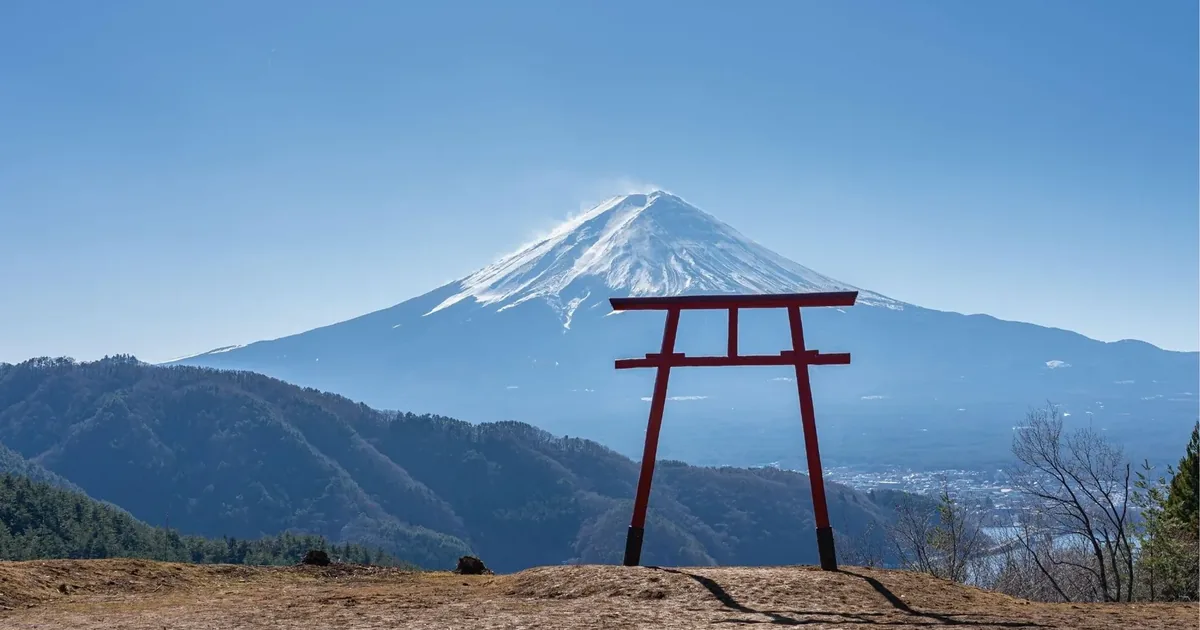
There is no single best place to see Mount Fuji. There is a best place for the picture in your head — and those are different viewpoints, in different directions, at different times of day. Want the postcard with a five-storey pagoda in the frame? Chureito. A mirror-calm lakeside reflection? Oishi Park. Thatched roofs and spring-fed ponds? Oshino Hakkai. To stand above the cloud layer? The 5th Station. Fuji as the backdrop to a volcanic valley and a lake cruise? Hakone. What follows is every viewpoint worth the detour, sorted by what it actually gives you, with the access and crowd realities that decide whether you get the shot.
Check Availability
No best viewpoint — only the best one for what you want
The honest framing is a matching exercise, not a ranking. Almost every “top Fuji viewpoints” list is really answering a question the reader never asked, which is why so many people end up at the most-photographed spot at the worst hour of the day. Start from the outcome instead.
| What you want | Where to go | The trade |
|---|---|---|
| The iconic pagoda-and-Fuji photograph | Chureito Pagoda, Arakurayama Sengen Park | 398 steps, and serious crowds in blossom season |
| A calm lakeside reflection | Oishi Park, Lake Kawaguchi’s north shore | Needs a windless morning for the mirror |
| Thatched roofs, ponds, atmosphere | Oshino Hakkai | Busiest stop on the circuit from late morning |
| Altitude — above the clouds | Fuji Subaru Line 5th Station | Closed in winter; no private cars in climbing season |
| A wide, elevated sweep | Lake Yamanaka, north shore and the pull-offs | Best by car; sunset works as well as dawn |
| Fuji plus a full day of other scenery | Hakone — Owakudani, Lake Ashi | More distant, more weather-dependent |
| Quiet, and nobody else’s tripod | Motosu, Shoji, Iyashi-no-Sato, Hakkai Garden | Infrequent buses; realistically a car day |
| An urban or surreal frame | Honcho Street, the Lawson store | Add-ons, not destinations |
Two structural facts sit behind that table. The first is that the Fuji Five Lakes region concentrates nearly all the essential viewpoints inside one compact, well-served area — you can reach most of them from a single base without ever changing hotels, and our guide to which of the five lakes to actually visit works through where to put that base. The second is that crowding and viewpoint quality are inversely correlated at the famous spots. Chureito’s 398-step climb buys you the best-known composition in Japan; during cherry blossom season the platform gets packed enough that visitors may be asked to keep their stay brief. The quieter alternatives — Hakkai Garden, Lake Motosu, the Momiji Tunnel — trade fame for elbow room, and several of them are only realistic with a car.
The one rule that beats every viewpoint: be there before nine
Fuji makes its own weather. Clear dawns cloud over by early afternoon with dispiriting regularity, and the mountain generates a cap of orographic cloud that has nothing to do with the forecast for the wider region. That produces the single highest-leverage tip on this page, and it outranks the choice of viewpoint entirely: aim to be standing at your chosen spot before roughly 9 a.m.
Everything else follows from it. Front-load the most weather-sensitive stop onto the clearest part of the day. Treat any viewpoint reached after lunch as a bonus rather than a plan. Check a live Fuji visibility forecast on the morning itself if your itinerary has any flex in it at all — and if it does not, our month-by-month visibility guide sets out which weeks are worth planning around in the first place, because the seasonal odds swing far harder than the hourly ones.
There is one useful exception. Lake Yamanaka’s angle suits both ends of the day, so a late-afternoon or sunset stop there is a legitimate way to salvage a morning that clouded over — which is exactly the kind of re-ordering a driver who can see the summit from the expressway will suggest, and a coach timetable cannot. If you would rather set the order yourself, the Mount Fuji Private Customized Tour With English Guide is built around exactly this list — Chureito Pagoda, Oshino Hakkai, Oishi Park and Lake Kawaguchiko, in whatever order the morning’s cloud allows — at 5.0 stars from 114 reviews, $317 for a small group.
The Five Lakes core: the five viewpoints that do most of the work
1. Lake Kawaguchi and Oishi Park — the all-purpose base
Lake Kawaguchi is the most accessible and most reliable viewpoint in the Fuji Five Lakes, and arguably the best place to see the mountain up close without hiking. The north shore, and specifically Oishi Park, gives the most unobstructed view with water in the foreground: a paved lakeside promenade running through seasonal flower displays — lavender in early summer, bright red kochia in autumn — with the classic reflection shot possible on calm, windless mornings.
- Why it works: it delivers in all four seasons. Cherry blossom in spring, flowers through summer, fiery foliage in autumn, snow-capped Fuji in winter — plus easy access from Tokyo and no shortage of cafés and ryokan within walking distance.
- Access: the Kawaguchiko sightseeing bus network runs from Kawaguchiko Station. No car required.
- Book it: the Mt Fuji, Oishi Park, Lake Kawaguchi and Oshino Hakkai day tour covers six photo spots including Oishi Park and the lake, 4.9 stars from 349 reviews at $49 per person.
2. Chureito Pagoda — the iconic shot
If you have seen a photograph of Japan with a red five-storey pagoda rising from a hillside and Fuji perfectly framed behind it, often ringed with cherry blossom, that is Chureito Pagoda inside Arakurayama Sengen Park, above Fujiyoshida City. It is one of the region’s most popular blossom viewpoints and, for photography, the single most dramatic spot anywhere around the mountain. Our full Chureito Pagoda visitor guide covers the climb, the crowds and the 2026 access restrictions in detail.
- The catch: reaching the observation deck means climbing 398 steps. In blossom season the platform becomes extremely busy and visitors may be asked to keep their visit brief so others can get through. There is a gentler switchback path alongside the stairs.
- Cost: entry is free.
- Best time: early morning, for the light and to beat the crowds — doubly true in blossom season.
- Book it: the Mt Fuji, Chureito Pagoda, Lake Kawaguchi and Oshino Hakkai tour is the highest-volume version of the classic circuit, 4.8 stars across 5,794 reviews at $49.
3. Oshino Hakkai — spring-fed ponds and thatched roofs
We have a full visitor guide to Oshino Hakkai covering all eight ponds, the fees and the routing that avoids the crowds. In brief: a small, touristy but genuinely charming village between Lake Kawaguchiko and Lake Yamanakako, built around eight crystal-clear spring-fed ponds formed by Fuji’s snowmelt. You get the mountain alongside the thatched roofs of the Hannoki Bayashi Shiryokan open-air museum, from an observation deck near the museum entrance. The still ponds reflect Fuji beautifully, especially in the morning, and the food stalls sell sweet potato mochi and matcha.
- The catch: this is often the busiest stop on the whole circuit, especially from late morning onward.
- Access: fiddlier than Kawaguchi or Chureito. From Fujisan Station take a bus toward Gotemba Station — but not all buses detour via Oshino Hakkai; only about every other service, roughly hourly, makes the stop. About 20 minutes, around ¥450. This is one of the spots where a car or a private tour meaningfully simplifies the day.
- The quieter version: Hakkai Garden (Hikoheiya Yashiki), a small, beautifully landscaped traditional garden of ponds, stone lanterns and thatched structures, offers a similar Fuji-framed composition with far fewer people. It is closest to Fujisan Station and is the sort of place travellers find by accident.
- Book it: the Mount Fuji 9 Iconic Spots tour taking in Oshino Hakkai and Oishi Park is the cheapest way to string the village together with the lakeshore, 4.9 stars from 362 reviews at $30.
4. The Fuji Subaru Line 5th Station — above the clouds
For travellers who want a closer, higher perspective without summiting, the 5th Station on the Yoshida Trail sits at roughly 2,300 m — about halfway up — with sweeping views above the cloud layer on clear days. During the summer climbing season the area buzzes with hikers preparing to ascend, which gives it a completely different energy from the lakeside stops.
- Access notes: local bus from Kawaguchiko Station, or a seasonal direct bus from Shinjuku. The road closes in winter, roughly December to March, and is shut to private vehicles under the My Car Regulation during the climbing season — for 2026 that runs from 18:00 on 3 July to 18:00 on 10 September, with shuttle buses from Fujisan Parking instead. Our transport guide carries the current dates and fares.
- The practical rule: do not book a tour on the assumption you will stand at the 5th Station. Treat it as optional and check what your specific date’s plan actually is.
- Book it: the Luxury Land Cruiser day tour builds the 5th Station and Oshino Hakkai into a twelve-hour private day, 4.8 stars from 264 reviews at $355 for a small group, and there is a full breakdown of its itinerary.
5. Lake Yamanaka — the elevated sweep
The easternmost, largest and second most developed of the Five Lakes. Good views are available from the lake generally, and best along the northern shore. A particularly good elevated pull-off near the lake gives a full sweep of Fuji with the water and forest below — a popular stop if you are driving, and especially good around sunset. Its higher elevation, around 980 m, means less valley haze in the morning too, so it earns its place at both ends of the day.
- Book it: the Mt. Fuji, Hakone Ropeway, Owakudani and Lake Ashi coach tour takes in Lake Yamanaka alongside the Hakone circuit and is the highest-volume Fuji day trip on the market, 4.6 stars from 8,444 reviews at around $54.
Elevated and urban angles
The Mount Fuji Panoramic Ropeway (Kachi Kachi Ropeway) rises about 400 metres up the side of Mount Tenjo to an observation deck overlooking Fuji and Lake Kawaguchiko simultaneously. It is the obvious option if you want an elevated view without Chureito’s 398 steps, and it pairs naturally with a Kawaguchiko-based day.
Honcho Street in Fujiyoshida is a well-known composition where Fuji appears to rise directly at the end of the street, framed by Showa-era shopfronts — a striking contrast to everything else on this list. It is roughly a 25-minute walk from Chureito Pagoda, which makes it an easy pairing.
The Lawson at Fujikawaguchiko is the famous, slightly surreal shot where Fuji rises directly behind an ordinary convenience store. It draws heavy crowds and has been the subject of local crowd-management measures — a 2.5 m screen went up in May 2024 and came down that August, and a lower barrier was installed in August 2025 to keep photographers out of the road while still allowing the picture. Treat it as a quick add-on rather than a primary destination, and expect the arrangements to change again. The Mt Fuji Top 5 Spots day tour is the one that explicitly builds the Lawson store into its route alongside Arakurayama Park, Oshino Hakkai and Oishi Park — 4.6 stars from 2,782 reviews at $55.
The quieter western lakes and seasonal add-ons
Lake Motosu — famous as the view on the ¥1,000 banknote — and Lake Shoji are the least developed and least crowded of the Five Lakes, and reward travellers who want a quieter, more contemplative Fuji. Saiko Iyashi-no-Sato Nenba, a reconstructed thatched-roof village near Lake Saiko, adds a folk-village backdrop similar in spirit to Oshino Hakkai but with noticeably fewer visitors. None of the three is served by frequent buses; our Five Lakes comparison sets out exactly how infrequent, and which of them is worth the effort. If the quiet corners are the point, the Kawaguchiko Hidden Mt. Fuji driving tour with a local guide is built around exactly that — a private car to the lesser-known spots away from the crowded stops, though at 5.00 stars from only 16 reviews it is a small listing rather than a proven one.
The Momiji Tunnel is a striking autumn-foliage drive and walk, best done with a car given where it sits. The Mt. Fuji Heritage Tour through the traditional villages, lakes and shrines includes the seasonal maple tunnel alongside Oishi Park, Arakura Sengen Park and Oshino Hakkai — 4.5 stars from 555 reviews at $53, the lowest-rated of the coach products named on this page, which is worth weighing against the fact that it is the only one that goes there.
Shiraito Falls, near the base of Fuji on the Shizuoka side, is a scenic waterfall stop that pairs with a south-side itinerary rather than the standard Kawaguchiko loop. GetYourGuide sells a private 5th Station and Shiraito Falls tour that combines the two, though it rates 4.8 stars from only 18 reviews — a thin, newish listing rather than a proven one, and the score has already slipped as reviews have come in, so treat it as provisional.
Hakone — the distant, multi-activity alternative
Hakone offers a genuinely different way to experience the mountain. Instead of a close-up lakeside shot you get Fuji as the backdrop to a full day of volcanic and lake scenery. On a clear day the views come from high-up ropeways or across Lake Ashi, with hot springs, museums and volcano atmosphere thrown in. Our guide to how Kawaguchiko and Hakone compare in November sets the two side by side.
- Owakudani is a steaming volcanic valley of sulfur clouds and dramatic landscape; on clear days Fuji appears through the haze like a painting. The ropeway ride is one of the best ways to see both Fuji and Hakone’s surreal terrain in a single aerial pass. The famous kuro-tamago black eggs, boiled in the valley’s sulfurous springs, are the standard add-on — local lore holds that one adds seven years to your life, which is folklore rather than fact.
- Lake Ashi gives Fuji views from the water, usually combined with the floating torii gate at Hakone Shrine and a “pirate ship” sightseeing cruise.
- The trade-off: Hakone’s Fuji views are more distant and more weather-dependent than Kawaguchiko’s. A clear morning in Hakone does not guarantee a clear Fuji, because Hakone sits inside its own volcanic caldera and generates its own micro-weather.
The coach version of this is the Mt. Fuji and Hakone tour taking in Arakurayama, Oshino Hakkai and Owakudani, 4.8 stars from 628 reviews at $49. The chartered version, which can re-order the day when the cloud moves, is the Mt Fuji and Hakone Private Custom Tour with English Driver at 4.8 stars from 807 reviews, $315 for a small group — with a full itinerary breakdown here. Our honest guide to doing Fuji and Hakone in one day sets out exactly what the combination cuts before you commit to it, and our standalone Hakone day-trip guide covers the full loop for anyone happy to leave the mountain out.
The Shizuoka side: a quieter, south-facing angle
For a different and much less-touristed perspective from the south:
- Miho no Matsubara is a UNESCO-listed pine-tree coastline near Shizuoka with Fuji rising over Suruga Bay — a maritime composition unlike anything in the Five Lakes.
- Fujisan Hongu Sengen Taisha is the head shrine of the Sengen network dedicated to Mount Fuji, and frames the mountain culturally and spiritually as well as visually.
- Gotemba Premium Outlets is primarily a shopping destination, but it doubles as a legitimate if incidental south-facing viewpoint — useful if you are already stopping there between Fuji and Hakone. GetYourGuide sells a private Mt. Fuji and Gotemba Premium Outlets day tour that combines both, though at 4.95 stars from only 17 reviews it is a new listing rather than a proven one.
Miho no Matsubara and Fujisan Hongu Sengen Taisha have no well-reviewed GetYourGuide product that reaches them from Tokyo, so they are realistically a Shizuoka-based excursion or a stop on a longer road trip rather than a day trip.
Which viewpoint for which traveller
One day, essentials only. Base at Kawaguchiko and do the classic circuit — Oishi Park or the north shore, Chureito Pagoda, and Oshino Hakkai — in roughly that order, so the clearest morning light lands on the most weather-sensitive stop.
Photography and the perfect shot. Chureito Pagoda at or shortly after sunrise, before both the crowds and the midday cloud arrive. Add Honcho Street on the walk back down.
Atmosphere over an icon. Oshino Hakkai, or the quieter western lakes and Saiko Iyashi-no-Sato Nenba, all of which reward a slower pace.
Altitude. Add the 5th Station — but check the road and seasonal access first, and budget it as a half-day given the bus times.
Driving or on a private tour. Oshino Hakkai, the Momiji Tunnel, Hakkai Garden and the Lake Yamanaka pull-off are all meaningfully easier with a car, because bus frequency to each is limited. The Mount Fuji Private Tour With English Guide is the most-reviewed Fuji-only private day at 4.9 stars from 880 reviews, $319 for a small group, and has its own page here. If you are already staying at the lakes rather than in Tokyo, the Kawaguchiko local-guide tour starts at the mountain instead — six hours on foot with a licensed local guide, 5.0 stars from 55 reviews at $474, with a breakdown here.
Variety over a Fuji close-up. Hakone, for a day pairing the mountain with a volcanic valley, a ropeway and a lake cruise — accepting that the views will be more distant and more weather-dependent.
Whatever you choose, the timing rule stands. Be at your spot before nine. Days that start beautifully clear are frequently cloud-covered by early afternoon, and no viewpoint on this list overrides an early start. Whether that early start costs you a 5 a.m. alarm and a bus timetable or a hotel pickup is largely a question of budget and group size, which our private-versus-group comparison and cost breakdown both work through with real numbers.
The caveats that matter
Crowd levels and access rules change seasonally, especially at Chureito Pagoda in blossom season and at the Lawson photo spot, where crowd-management measures have been installed, removed and reinstalled since 2024. Confirm current conditions before building a specific spot into a peak-season plan.
Bus frequency to Oshino Hakkai and similar detour stops is limited — roughly hourly, and only on alternating services. Verify current timetables rather than assuming frequent service.
Visibility is never guaranteed anywhere on this list. Fuji’s own weather means any viewpoint can be clouded over regardless of the general regional forecast. This is a probabilistic guide to where to look, not a guarantee of what you will see.
Transport and pricing detail lives elsewhere and is deliberately light here — the transport guide prices every train, bus and driving route, and the day-trip planning guide compares the formats.
Tour prices are the live GetYourGuide starting prices for the specific listings named, and vary by operator, season, group size and inclusions. Ratings and review counts were re-sourced from each listing on 12 September 2026; both move, and a new listing’s score can swing hard on a handful of reviews.
Related reading
- Fuji Five Lakes: which lake should you actually visit? — where to base yourself among the five
- The best time for a Mount Fuji private tour, month by month — when the mountain is actually visible
- Tokyo to Mount Fuji: every way to get there — fares, passes and routes to each viewpoint
- Mount Fuji day trip from Tokyo: the complete planning guide — fitting the viewpoints into one day
- Mount Fuji and Hakone in one day — the honest version of the combination
- Compare all six private Fuji tours — side by side, with live prices
Your Own Car, Your Own Day at Mount Fuji
Rated 4.9/5 by 675 travellers. Hotel pickup in Tokyo, an English-speaking driver-guide, and an itinerary you set yourself — with free cancellation up to 24 hours before.
Check Availability & Book