Chureito Pagoda in Winter
Chureito Pagoda in December, January or February: when to go for a clear Mount Fuji view, the 398 steps in frost and ice, train access, parking and winter photo itineraries.
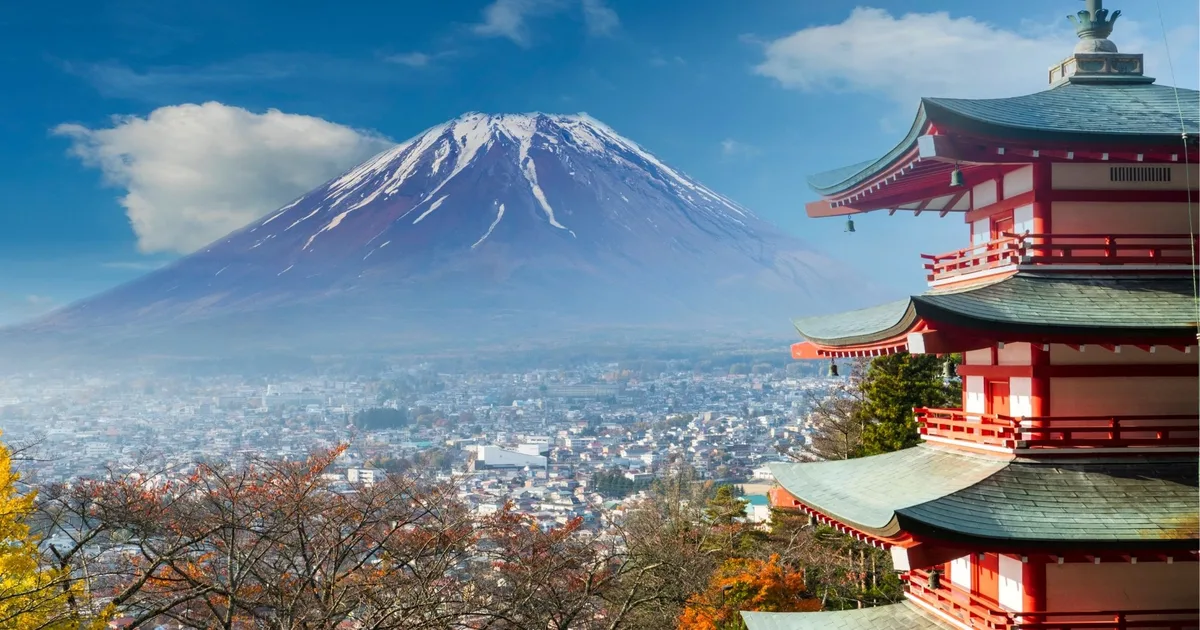
Go to Chureito Pagoda on a clear winter morning, after sunrise, and give yourself 60 to 90 minutes at the park. From December to February the summit of Mount Fuji is usually white behind the red five-storey pagoda, but the park itself may be dry, frosty or icy, and you reach the famous viewpoint on foot up 398 steps. Snow on the ground is a bonus you cannot plan for; a clear sky and a safe stairway matter more.
Check Availability
The viewpoint is in Arakurayama Sengen Park in Fujiyoshida, above the town. The park is open 24 hours and free to enter, but darkness, freezing temperatures and possible ice make a pre-dawn visit harder than it sounds. Make Chureito your first major stop of a Mount Fuji sightseeing day; photographers can plan a sunrise shoot, but should look at the condition of the steps first. For the year-round picture (the cherry blossom season, the April access rules and the history of the pagoda), see our Chureito Pagoda visitor guide.
Planning note, November 2026: these recommendations are for winter 2026–2027. Opening, parking rules, transport timetables and any weather-related restrictions can change. Check Fujiyoshida’s official visitor information and the railway timetable shortly before you travel.
Chureito Pagoda in winter: the practical answers
| Question | Practical answer |
|---|---|
| Is Chureito Pagoda open in winter? | Yes. Arakurayama Sengen Park is listed as open 24 hours, subject to any temporary restrictions. |
| Is there an entrance ticket? | No. The park and the observation deck are free to visit. Parking is charged. |
| How many steps? | The main stairway has 398 steps, plus the walk to the park and up to the observation deck. |
| Can you see snow? | Snow-capped Mount Fuji is often visible in clear weather. Snow at the pagoda is not guaranteed. |
| Best time of day? | Early morning gives the best chance of an unobstructed view; sunrise suits dedicated photographers when the steps are safe. |
| Nearest railway station? | Shimoyoshida on the Fujikyu Railway Line. |
| How far from the station? | About 25–30 minutes on foot to the pagoda, uphill, depending on your pace. |
| How long to allow? | About 60–90 minutes; longer for photography, ice or slower walkers. |
| Good with children? | Usually, for children happy on stairs; plan rests and warm clothing. |
| Step-free? | No. An official source describes a sloped route, but do not assume it is step-free, accessible or safe in ice. |
Is Chureito Pagoda worth visiting in winter?
Yes, if your priority is the classic Mount Fuji photograph and you can go on a clear morning. Winter can give you a sharp contrast between the red memorial pagoda and Fuji’s white summit. The trees are bare, with no spring blossom or autumn leaves, so the picture is simpler and more graphic.
There are three reasons to go in winter:
- A snow-capped summit. The mountain usually carries heavy snow in the colder months, which gives you the classic white Fuji profile. That does not mean the park will be snowy.
- A good chance of a clear view. Cold, dry winter mornings are often excellent for visibility, although cloud, haze, precipitation and wind can still hide Fuji completely.
- An easy stop on a winter tour. The pagoda is in the northern Fuji sightseeing area, so you can combine it with Lake Kawaguchiko, Oshino Hakkai or other nearby stops in one day.
The drawbacks count as much: a steep climb, an exposed viewpoint with little shelter, possible ice on the steps and a long journey if you travel from Tokyo for one photograph.
What does Chureito Pagoda look like in winter?
On a typical clear winter day you see the vermilion pagoda in the foreground, rooftops below and the snow-covered summit of Mount Fuji behind. The blossom and leaves that frame the spring and autumn photos are gone. After a snowfall the hillside and rooftops can turn white, but a snow-covered pagoda is a bonus, not something to plan around.
Social media can give the impression that every January morning brings fresh snow. In practice, a white Fuji summit and fresh snow around the pagoda come from two different kinds of weather.
Chureito Pagoda in December, January and February
| Month | What to expect | Best reason to go | Watch out for |
|---|---|---|---|
| December | Cold mornings, short days, snow usually visible high on Fuji | Clear-sky photography combined with a day trip from Tokyo | Freezing dawn temperatures; late-December holiday travel |
| January | Midwinter cold, frost or icy patches possible, white Fuji backdrop | Crisp winter scenery and morning photography | Frost, exposed wind and dark early starts |
| February | Still winter, with occasional snow or ice around the park | Classic snow-capped Fuji views; pairing with seasonal Five Lakes events | Local snow or slush can slow the climb |
You cannot pick the best specific day a month in advance. For a photography-led trip, leave some flexibility in your Japan itinerary and check the forecast and a live camera close to the date.
Which month is best? January and February give the most wintry scenery, and December can be just as good in fair weather. Let the forecast decide over the calendar.
For broader monthly planning, see Mount Fuji in December and Mount Fuji in January.
Can you see Chureito Pagoda covered in snow?
Sometimes, but not reliably, even in January or February. Chureito sits far below Mount Fuji’s summit, and the two places get very different weather. Fuji can be white while the park steps are bare. When snow does fall locally, the view can be beautiful, but the stairs and paths get harder to walk.
If you only want a snowy Fuji in the background, you do not need snow at the pagoda. Clear, dry conditions make the climb easier and give you a sharper view of the mountain.
If you want to play in snow, Chureito is a poor substitute for a managed snow area. Go to a resort with snow-play facilities and check that it is operating. Our guide to snow at Mount Fuji in winter lists where you can touch and play in it.
What if it snows the night before?
Check whether the park has posted a warning or closure, look at the weather where you are staying, and give the steps time to thaw or be cleared. A fresh snowfall does not mean the viewpoint is safe at dawn. Shoes with good grip and a willingness to change the plan help more than forcing an early climb for a rare photo.
Best time to visit: sunrise, morning or afternoon?
Sunrise: for committed photographers
At sunrise the light changes fast and the air can be clear, and there are often fewer people than later in the day. But a sunrise visit between December and February means arriving in freezing conditions, possibly on a path that is still dark.
Choose a sunrise shoot if:
- You are comfortable walking uphill in the cold and in low light.
- You have a headlamp, grippy footwear and a spare warm layer.
- The weather is suitable and the steps are safe.
- Your schedule allows an early start and a back-up location.
Do not climb before dawn during snowfall, after freezing rain, when the steps are visibly icy or when local authorities advise against it. A park that is open 24 hours is not safe at every hour.
After sunrise to mid-morning: best for most visitors
On a first visit, go in the morning once it is light. You can see where you are walking, judge the stairs and still have a good chance of photographing Fuji before local cloud builds.
A practical winter rhythm: arrive at Shimoyoshida or the park in the morning, walk up at an easy pace, spend time on the deck, then move on to Lake Kawaguchiko around late morning or lunchtime.
Afternoon: flexible, but less predictable for a clear Fuji
An afternoon visit can suit travellers coming from a hotel at Lake Kawaguchiko. Afternoon cloud often covers the mountain, though, and winter days leave less light for the rest of your plans. If photography is the point of the trip, avoid making the pagoda your last stop unless the forecast favours the afternoon.
Exact sunrise times
Sunrise moves a lot between early December and late February. Check the sunrise time for Fujiyoshida on your date, then allow time for travel and the uphill approach. For a sunrise photograph you need to be in position before the sun comes up, which means leaving your hotel earlier. Our guide to the best time of day to see Mount Fuji in winter explains how the morning light and cloud usually play out.
The 398 steps: how difficult is the climb in winter?
The main stairway in Arakurayama Sengen Park is the Sakuyahime Stairway, with 398 steps. From the pagoda, follow the path up to the observation deck for the well-known picture of pagoda, town and Mount Fuji.
This is an uphill outing and no roadside lookout. Most active visitors manage it with a few breaks, but winter changes it:
- Cold air: you start chilly, warm up on the climb, then cool down fast at the top.
- Frost or snow: shaded steps can stay slippery when everything else is clear.
- Crowds: people stopping to photograph the stairs can make passing awkward.
- Footwear: smooth-soled fashion shoes and heels are a poor choice.
- Short days: a late visit can mean coming down in the dark.
Take your time. Step aside to rest and keep your hands free on slippery sections.
Is there a way to avoid the stairs?
A Japanese government tourism feature describes a sloped route for visitors who prefer not to use the stairway. That does not mean the path is wheelchair accessible, reliably step-free, open in all conditions or safe in winter ice. If someone in your party cannot manage a steep climb, contact the Fujiyoshida tourism office before the trip for current advice, and do not count on an accessible alternative.
If mobility is a real concern, a lakeside Mount Fuji viewpoint is easier. A private car shortens the transfers between stops, but it cannot drive you to the Chureito observation deck.
How to get to Chureito Pagoda from Tokyo in winter
Option 1: Train from Shinjuku to Shimoyoshida
This suits independent travellers who do not need a car for other stops.
- Travel from Shinjuku towards Otsuki on the JR Chuo Line.
- Change at Otsuki to the Fujikyu Railway Line towards the Fuji Five Lakes.
- Get off at Shimoyoshida Station.
- Follow the signs to Arakurayama Sengen Park and walk uphill to Chureito Pagoda.
Fujikyu Railway gives the journey from Shinjuku as roughly two hours with good connections. Add about 25–30 minutes on foot from the station to the pagoda, more time for the observation deck, and a margin for the change of train. Some limited express services are more convenient; check that your train stops at Shimoyoshida.
Budget: rail fares vary by service, seat type and date. Check the current through fare and any limited-express supplement when you book; an old fare quoted online may be out of date.
Best for: solo travellers, couples, visitors on a budget and anyone who wants a simple pagoda visit.
Option 2: Highway bus plus local train
Highway buses from Tokyo serve Fujiyoshida and the Fuji Five Lakes. A bus to Fujisan Station or another nearby stop can be paired with a local train or taxi to Shimoyoshida. This works if the bus times suit you, but traffic on winter weekends and holidays can cut into your sightseeing time. Our Tokyo to Mount Fuji in winter comparison sets the bus, train and tour side by side.
Best for: travellers who prefer bus timetables or fares, especially if staying around Fujiyoshida or Kawaguchiko afterwards.
Option 3: Private car tour from Tokyo
A private tour links Chureito with other sights more smoothly than public transport, which helps if your group includes children, luggage or people who prefer fewer changes.
A driver can take you to a public car park, subject to local traffic and parking rules. Cars and tour buses cannot drive up to the pagoda plaza. You still walk uphill, and large vehicles have separate parking and drop-off rules.
Before booking, ask whether the price includes highway tolls, parking and fuel, whether the driver also guides, and whether the plan can change in poor weather. Compare the Mount Fuji private tour options before choosing.
From Lake Kawaguchiko
If you are already staying at Kawaguchiko, take the local Fujikyu train to Shimoyoshida, or go by car or taxi to one of the park’s car parks. This is a good reason to spend a night near Fuji: you can wait for a clear morning instead of committing to a very early start from central Tokyo.
Parking at Arakurayama Sengen Park: important 2026 information
Fujiyoshida’s official tourist guide lists several paid car parks around Arakurayama Sengen Park: ¥1,500 per entry of up to six hours at the P1 and P4 car parks and ¥1,000 at P2 and P3, with motorcycle parking at ¥750. Spaces are limited and the local roads are narrow. Charges and access arrangements can change.
Private-tour passengers often miss two points:
- A private car does not remove the climb. The car parks are below the observation deck.
- Buses and other large vehicles face stricter rules. Fujiyoshida says buses cannot enter the park car parks and gives separate instructions for bus parking and passenger drop-off.
Use the current municipal parking map, not a shortcut through residential streets from social media. Never stop where you block residents or emergency access.
Official parking and access information: Fujiyoshida Tourist Guide.
Three winter itineraries featuring Chureito Pagoda
Itinerary A: Classic Mount Fuji winter day trip from Tokyo
Best for: first-time visitors who want the pagoda plus the classic Five Lakes viewpoints.
| Time | Suggested plan | Why it works |
|---|---|---|
| 7:00–7:30 | Leave Tokyo by private car | Gets you to the Fuji area early; traffic can change the timings |
| 9:00–10:30 | Chureito Pagoda and observation deck | Puts the mountain view early in the day |
| 11:00–12:00 | Lake Kawaguchiko lakeside viewpoints | Easier walking and different photo angles |
| 12:00–13:00 | Lunch and a warm-up break | Needed on a cold day |
| 13:15–14:30 | Oshino Hakkai or another Five Lakes sight | Choose one instead of rushing between distant stops |
| 14:30–15:00 | Optional last view or café | Let weather and traffic decide |
| 15:00 onward | Return towards Tokyo | Allow plenty of time for congestion |
These times are examples, not guaranteed driving times or a fixed tour schedule. A private operator should confirm meeting times, pickup points and winter road conditions.
Private-tour advantage: if Fuji is hidden at Chureito, your driver can often reverse the order and try again later, although no itinerary guarantees a view. The 5th Station is usually not part of a winter day: our Mount Fuji 5th Station in winter guide explains which roads close and when.
Itinerary B: Independent rail-and-photo day
Best for: travellers on public transport who would rather see one great viewpoint well than tick off a long list.
- Leave Shinjuku early by train, changing at Otsuki where needed.
- Get off at Shimoyoshida and walk uphill to Chureito Pagoda.
- Spend 45–75 minutes photographing the park and the observation deck, plus walking time.
- Return to Shimoyoshida and take the Fujikyu Railway on to Kawaguchiko.
- Have lunch and explore one or two easy lakeside spots.
- Return to Tokyo by train or a pre-booked highway bus.
This is usually more relaxed than trying to fit Chureito, all five lakes and Hakone into one day. If you want a sunrise picture, stay in Fujiyoshida the night before instead of relying on the first trains from Tokyo.
Itinerary C: Winter photography morning and overnight stay
Best for: keen photographers who can move with the forecast.
Day 1: Travel from Tokyo to Lake Kawaguchiko or Fujiyoshida, photograph the lakeside in the afternoon and stay the night.
Day 2: Check the local weather and the path. If it is safe, visit Chureito around dawn or just after sunrise, then go on to a lakeside viewpoint for a different angle on Fuji. Leave time for breakfast and kit changes before heading back to Tokyo.
Two days give you more than one weather window, which makes this a stronger photography plan than a single rushed day trip. The cost is a night in a hotel, and even then a cloud-free summit is not guaranteed.
For more route ideas, read our Mount Fuji in winter guide, which includes winter day-trip itineraries from Tokyo, and our best Mount Fuji photo spots in autumn and winter.
Winter photography tips: how to get the classic Chureito shot
1. Go to the observation platform, not just the pagoda
The famous photograph is taken from a platform beyond and above the pagoda, where the red tower and Mount Fuji fit in one frame. Stop at the pagoda itself and you will not get the familiar composition.
2. Bring a flexible lens
A moderate wide-angle or standard zoom covers the full pagoda-and-mountain picture. A longer focal length isolates Mount Fuji and compresses the town, but may crop the pagoda depending on where you stand. Work with the space on the platform; do not block paths or climb on structures.
3. Protect highlight detail on the mountain
Snow on Mount Fuji is much brighter than the dark hillside or the pagoda, especially in direct sun. Check your histogram and avoid blowing out the white summit. Shoot RAW if your camera allows it and you plan to edit.
4. Dress for standing still
You move far less while photographing than while climbing. A warm insulated layer, gloves you can operate a camera in and a spare battery kept warm in a pocket all help. Bring a lens cloth for condensation.
5. Do not chase dangerous snow shots
No photo is worth a fall on icy steps or climbing past a barrier. A good view after sunrise on a dry path beats an unsafe attempt before dawn.
6. Have a cloud contingency
If Fuji is hidden, the red pagoda, the shrine grounds and the town below can still make the stop worthwhile. You can also switch to a café, a lakeside walk or an indoor sight if the weather turns. A private driver helps with logistics but cannot change the weather; our Mount Fuji hidden by clouds backup plan lists the alternatives.
What should you wear to Chureito Pagoda in winter?
From December to February, start with your shoes and adaptable layers:
- Shoes or boots with reliable grip: especially if there is frost, wet snow or ice.
- An insulating mid-layer and a windproof outer layer: the climb warms you up, but the exposed deck can be much colder.
- Gloves and a warm hat: for standing still and taking photos.
- A daypack for layers you take off: easier than carrying bulky clothing on the stairs.
- Water and a small snack: especially for families or an early start.
- A headlamp for a real pre-dawn visit: do not rely on your phone’s light.
If snow or freezing rain has made the route unsafe, change the plan. Traction devices do not override a closure, and loose or badly fitted ones can be awkward on stone steps. Our what to wear at Mount Fuji in winter packing list covers the rest of the day.
Is Chureito Pagoda suitable for families, seniors or travellers with limited mobility?
Families with children
For school-age children used to walking, the climb can be a memorable short adventure. Stop to rest, keep an adult close on the steps and do not rush between photo spots. With toddlers, a good carrier is safer than carrying a child in your arms; the route is not suitable for a pushchair.
Older travellers
Age alone does not decide it. What matters is comfort with long runs of uphill steps, the cold, balance and the ability to come down safely. If your group is happy walking but dislikes a rushed day, an unhurried private tour can help.
Limited mobility
Do not expect a shuttle or a car drop-off at the upper observation deck. Official tourism material mentions a sloped alternative, but check it directly against your specific needs and the winter conditions. If someone in your group cannot safely reach the lookout, choose a more accessible Fuji viewpoint instead of splitting up unexpectedly.
Should you book a private tour just for Chureito Pagoda?
Usually not, if the pagoda is all you want to see. Public transport takes you to Shimoyoshida, and you walk the last uphill stretch whatever vehicle you arrive in. For one traveller or a couple, the train usually costs far less.
A private tour makes more sense when you want to combine Chureito with Lake Kawaguchiko, Oshino Hakkai, an onsen or extra photography stops on the same winter day. It also takes care of pickup, bags, meal breaks and changes of plan if the forecast shifts.
Our pick on GetYourGuide is the From Tokyo: Mount Fuji Private Tour With English Guide (from $319 per group, rated 4.9/5 from more than 950 reviews). Its standard route includes Chureito Pagoda, Lake Kawaguchiko and Oshino Hakkai, with hotel pickup in Tokyo, and you agree the order of stops with your driver-guide on the morning, so a cloudy start can be saved for later.
When comparing tours, ask:
- Is Chureito Pagoda specifically included, and how long is allowed for the climb and the deck?
- Are pickup area, highway tolls, parking, fuel and any overtime charges included?
- Is it a driver-only service or a guided day with photography help?
- Can the order of stops change if cloud covers Fuji in the morning?
- What happens if snow, road restrictions or icy stairs rule out the pagoda?
- Does the vehicle size fit the local parking and drop-off rules?
- Are child seats available if you need them?
For a fuller comparison, see our guide to Mount Fuji private tours from Tokyo.
Common mistakes to avoid
Planning around a photograph instead of the forecast. Fuji is usually white in winter, but it can still disappear behind cloud. Aim for a clear morning.
Underestimating the walking. The car park or station is not the viewpoint. Plan for the 398 steps and the uphill approach.
Expecting deep snow on the ground. The park may have none even when Fuji is brilliant white.
Assuming a 24-hour park means safe access. Darkness, frost and snow change the risk. Check local conditions.
Booking too many stops. Chureito, Kawaguchiko, Oshino Hakkai, Hakone and a snow resort in one winter day leaves too little time at each.
Forgetting the return journey. Traffic, train connections and early darkness can turn a relaxed day into a stressful one if you leave no margin.
Frequently asked questions
Is Chureito Pagoda open in December, January and February?
Yes. Arakurayama Sengen Park is listed as open 24 hours all year, including winter. Temporary restrictions or unsafe paths can still affect access, so check official notices on the day.
Does Chureito Pagoda get snow in January?
It can, but local snow is not guaranteed. You are far more likely to see snow on Mount Fuji than snow on the pagoda, the stairs and the park. A clear, dry winter day is usually better for safe sightseeing.
Is Chureito Pagoda better in winter or cherry blossom season?
Winter gives you a white Fuji and a stark red pagoda. Spring brings the pink cherry blossom frame but also heavy seasonal crowds. Neither season guarantees a view: choose winter for the mountain and cooler weather, spring for the blossom.
How many steps are there to Chureito Pagoda?
The main stairway has 398 steps. Carry on past the pagoda to the observation deck for the classic view, and allow time for the walk up and back down.
Can I drive directly to the Chureito Pagoda viewpoint?
No. Cars use the car parks lower down, and you continue on foot. Large vehicles have extra local restrictions. A private car makes the wider day easier but leaves the final climb to you.
How long does it take to visit Chureito Pagoda?
Allow about 60–90 minutes at the park, more or less depending on your pace, the weather, photo stops and the state of the steps. Walking from Shimoyoshida Station adds about 25–30 minutes each way.
Can you visit Chureito Pagoda for sunrise?
Yes, the park is open 24 hours. In winter, though, a pre-dawn visit needs extra care, because temperatures can be below freezing and the paths dark or icy. Check conditions and avoid unsafe steps.
Is the sunrise view guaranteed to show Mount Fuji?
No. Morning often gives a good chance of a view, but cloud can cover Fuji at any time. Check the local forecast and a live camera on the day instead of relying on seasonal averages.
Can I visit Chureito Pagoda from Tokyo without a tour?
Yes. Take the JR Chuo Line towards Otsuki, change to the Fujikyu Railway and get off at Shimoyoshida. Follow the signs uphill to the park. Check the exact trains and any seat reservations for your date.
Is Chureito Pagoda free?
Yes, the park and the observation deck are free. Parking is charged, and private transport and rail fares are separate.
Is the park suitable for a pushchair or wheelchair?
Do not plan on reaching the observation deck step-free. The standard route uses a long stairway. Official tourism material mentions a sloped route, but confirm its current accessibility and winter safety directly with Fujiyoshida.
Is Chureito Pagoda crowded in winter?
It can still be busy on clear days, weekends and holidays; winter does not mean an empty deck. Arriving early, once it is light, balances photography conditions with safe walking.
Can I combine Chureito Pagoda and Lake Kawaguchiko in one day?
Yes. Both are in the northern Fuji sightseeing area and pair naturally. By private car the combination is easy; on your own, use the Fujikyu Railway and local transport. Leave time for the climb, lunch and the journey back.
What if Mount Fuji is cloudy when I arrive?
You can still enjoy the pagoda, the shrine grounds and the view over Fujiyoshida. If your schedule allows, come back later or try a lakeside viewpoint. A private tour cannot guarantee a cloud-free view.
Is Chureito Pagoda the same place as Arakurayama Sengen Park?
Chureito is the five-storey memorial pagoda inside Arakurayama Sengen Park. Arakura Fuji Sengen Shrine is in the same park. The well-known photograph is taken from an observation deck uphill of the pagoda.
Final verdict: should Chureito be on your winter Mount Fuji itinerary?
Yes, if you want the classic red pagoda and snow-capped Fuji photograph and can safely manage a steep uphill walk. In winter it works best as the first major stop on a clear morning, followed by easier sightseeing around Lake Kawaguchiko. It suits you less as the only destination of a long day from Tokyo if you have limited mobility, need snow on the ground or cannot move with the weather.
For the wider day, start with our complete Mount Fuji winter guide, see Lake Kawaguchiko in winter for the afternoon, or compare private tours around Mount Fuji, and check your exact dates before you book, because winter conditions change from week to week.
Official sources and further reading
- Fujiyoshida Tourist Guide: Arakurayama Sengen Park and Chureito Pagoda: opening, parking, local rules and access.
- Fujiyoshida Tourist Guide: walking route from Shimoyoshida Station: illustrated directions and the 398-step stairway.
- Fujikyu Railway: getting to Chureito Pagoda: the rail route via Otsuki and Shimoyoshida.
- Fujiyoshida City: Chureito Pagoda guidance: local parking warnings and visitor information.
- Japan National Tourism Organization: Arakurayama Sengen Park: official destination overview.
- Government of Japan: The View of Mount Fuji That Has Become Known the World Over: heritage background and a description of the sloped route.
Information checked November 2026. Transport, parking, access restrictions and conditions can change without notice; confirm current details before you travel.
Your Own Car, Your Own Day at Mount Fuji
Rated 4.9/5 by more than 900 travellers. Hotel pickup in Tokyo, an English-speaking driver-guide, and an itinerary you set yourself — with free cancellation up to 24 hours before.
Check Availability & Book