Does It Snow at Mount Fuji in Winter?
Does Mount Fuji have snow in winter, and will there be snow at Lake Kawaguchiko? The three kinds of winter snow, where to play in it, December to February, and safe day-trip plans.
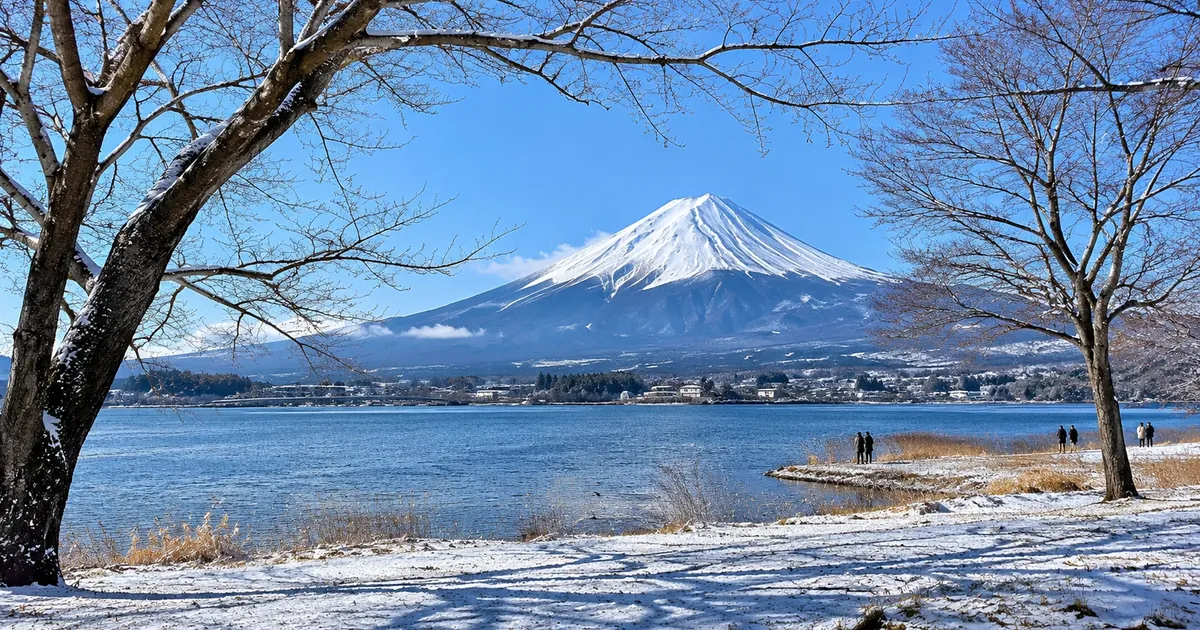
Yes: from December to February the top of Mount Fuji usually wears a snow cap, but the lakes and villages where sightseeing tours stop often have none. The summit stands at 3,776 metres, far above Lake Kawaguchiko and Oshino Hakkai, so you can photograph a white mountain over dry roads, bare trees and a snow-free shore. Decide first which kind of snow you want: a snowy view, snow to play in, or a snowy climb (the last is off the table, because the summit trails close in winter).
Check Availability
Three kinds of winter snow at Mount Fuji
When people ask whether it snows at Mount Fuji, they usually mean one of three different things, and each needs a different trip:
- Snow on the mountain itself. The white cap and snow-covered upper slopes you see from a distance. This is the classic winter photograph, and it is there on most winter days.
- Snow on the ground around the Fuji Five Lakes. Fresh or lingering snow at parks, shrines, roadsides and lakeshores. It depends on the weather of the past few days, and nobody can promise it.
- Managed snow at a ski or snow-play area. Pistes, sledging and snow-play zones on the lower slopes when they are operating. Opening dates, facilities and snow cover change every season.
A tour sold as a “snowy Mount Fuji tour” may give you the first without the second or the third. Read the itinerary and ask the operator which kind of snow is included.
Quick answer: go to the Fuji Five Lakes to see a snowy Mount Fuji. Book an operating snow resort if touching or playing in snow matters to you. Check the weather, the resort’s snow report and road access a day or two before you travel.
Why the summit can be white when Kawaguchiko is not
The upper slopes spend the winter in conditions far colder than the towns and lakes at the base, so snow settles high on the mountain even on days when the lakeshore stays above freezing. Our guide to Mount Fuji in winter compares the three months for temperature, clear views and events; this page covers the snow itself.
Mount Fuji snow in winter: what to expect
| Your question | Practical answer |
|---|---|
| Is Mount Fuji snow-covered in December? | The upper mountain usually has a visible snow cap, though coverage varies by year and weather. |
| Is Mount Fuji snow-covered in January? | Usually yes; January is midwinter, but neither depth nor visibility can be guaranteed. |
| Is Mount Fuji snow-covered in February? | Usually yes; conditions stay wintry high on the mountain. |
| Does it snow at Lake Kawaguchiko? | Sometimes, but you can’t count on snow lying on the lakefront when you visit. |
| Can I see snow without climbing? | Yes: photograph the snowy summit from lower viewpoints, or visit an operating snow-play venue. |
| Can I drive to the 5th Station? | Don’t assume so. The Fuji Subaru Line stays open in winter only as far as snow and ice allow, and the other 5th Station roads close for the season. |
| Can I climb to the summit in winter? | No for ordinary visitors: the official summit trails are closed and winter climbing is extremely dangerous. |
| Is a snowy view guaranteed on a clear-looking day? | No. Summit snow may be there while cloud or haze hides the mountain. |
Where you can touch or play in snow near Mount Fuji
If snow underfoot is the point of the trip, look beyond ordinary lake sightseeing. An operating winter sports venue is a more reliable bet than hoping for a fresh snowfall in town.
Fujiten Snow Resort
Fujiten Snow Resort is a ski area on Mount Fuji’s lower northern slopes. Depending on the facilities running on the day, you can ski, snowboard or use its snow-play areas for families. Some facilities need separate tickets or have age and height limits.
For winter 2026–2027, Fujiten’s official site says the season is scheduled to open in mid-December 2026. The opening date and which facilities run both depend on the weather, so check the resort’s operating report, slope status and children’s areas before you travel.
A ski resort uses snowmaking and groomed pistes. That is different from natural snow lying across the surrounding countryside.
Other snow-play attractions
What operates changes from season to season. If you are considering sledging, tubing or a particular children’s snow zone, check the operator’s current season page directly. Old blog posts often list attractions without confirming they still run.
Stopping at a snowy roadside
Skip it. Snowbanks can be unstable, the shoulder may be narrow and a stopped car can block traffic. Use designated visitor facilities, legal parking and marked recreation areas. Never walk onto a frozen lake or enter a closed mountain road to reach snow.
Snowy Mount Fuji vs snow underfoot: which trip to book
| Your goal | Type of visit that fits | Main trade-off |
|---|---|---|
| Photograph a snow-capped mountain | Fuji Five Lakes scenic tour | Cloud can hide Fuji |
| A relaxed first Fuji visit | Kawaguchiko and Oshino Hakkai | Snow on the ground is unpredictable |
| Let children play in snow | An operating snow-play venue | Activities depend on opening dates and conditions |
| Ski or snowboard | An operating winter resort | More time on site, fewer sightseeing stops |
| A sunrise landscape photo | A night beside one of the lakes | An early start and the cost of a room |
| Snowy views and an onsen | Lake views plus a booked onsen | Can be too much for one day from Tokyo |
| Reach the summit in winter | Not a normal sightseeing option | Official trails closed; extreme risk |
For the hour that gives you the clearest look at the snow cap, see our guide to the best time of day to see Mount Fuji in winter.
Does it snow at Mount Fuji in December?
The upper slopes usually have snow in December, and the low winter sun makes the white summit stand out against a blue sky. Coverage isn’t fixed: a warm spell, wind or a fresh fall can change how much of the peak looks white.
At Lake Kawaguchiko, December is cold, especially in the morning and after dark, but don’t expect a blanket of snow on the lakeshore. In early December, plan a towns-and-lakes day unless a snow venue has confirmed it is open.
A December snow plan
- Go to a viewpoint such as the north shore of Lake Kawaguchiko or Lake Yamanaka early in the day.
- Add Oshino Hakkai or a lakeside café if the weather is good.
- If you want snow sports, check whether Fujiten has opened for the season and which facilities are running.
- Expect cold wind and icy patches, even when the ground looks dry.
Fujiten’s mid-December target is not a promise that every slope or snow-play area will run on your date. Our Mount Fuji in December 2026 guide covers the month’s weather and itineraries.
Does it snow at Mount Fuji in January?
Yes, the upper mountain normally stays snowy through January, and that crisp white cone is a big reason to visit. January is also among the coldest months around the Fuji Five Lakes, so ice and the odd snowfall lower down are real possibilities.
There is no dependable rule that Kawaguchiko lies under snow every January. One visitor finds snowy mountain scenery with little snow in town; another arrives after a local storm to slushy pavements and slow traffic.
A January snow plan
If photographing the snow cap is the priority, plan the day around the clearest hours and keep the first stop flexible. If touching snow is the priority, give a snow resort a proper block of time; squeezed into a busy multi-stop tour, it turns into a rushed half hour.
The New Year holidays change opening hours, so confirm transport and each attraction’s New Year schedule. Our Mount Fuji in January 2027 guide has the month in detail.
Does it snow at Mount Fuji in February?
Yes, February is still winter on Mount Fuji. The summit is normally snow-covered, and snow or ice can affect lower roads and paths after a cold spell. Many February visitors combine snowy summit photos with seasonal events around the lakes.
At Lake Yamanaka, the winter months bring Diamond Fuji, when the sun sets on or near the summit seen from particular spots on particular dates. It is a lighting effect, not a snow event, and it needs a clear sky and careful timing; no one can guarantee it.
A February snow plan
Choose one focus: a photography trip, a snow-play trip or an overnight stay. Trying to fit every snow attraction, lake and sunset viewpoint into one day leaves you rushing, with short daylight and winter traffic.
Where to see snowy Mount Fuji without hiking
You don’t need to climb to see the snow. Most of the famous photos of a white-capped Fuji are taken from spots far below the summit.
1. Lake Kawaguchiko: easy lakeside views
The north shore and other open lakeside spots frame the snowy mountain above the water. On calm mornings you may get a reflection, though wind and cloud can spoil it. A lakeside stop suits most visitors who want the classic view without a hard walk.
Good for: first-time visitors, couples, landscape photography and relaxed private tours.
Keep in mind: snow on the mountain does not mean snow along the lakeshore.
2. Lake Yamanaka: wide views and winter light
Lake Yamanaka has open viewpoints across the water toward Mount Fuji. It works as an alternative or an addition to Kawaguchiko, especially for photographers who want another angle. Diamond Fuji depends on the date and the exact viewing spot.
Good for: winter light, sunset plans and a slower day.
3. Oshino Hakkai: village scenery with Fuji beyond
Oshino Hakkai pairs spring-fed ponds and village streets with Mount Fuji behind, where the sightlines allow. After fresh snow it looks lovely, but you’ll enjoy it without snow too. Our Oshino Hakkai visitor guide has the details.
Good for: traditional scenery and short stops.
4. Chureito Pagoda: the classic Fuji photograph
The Chureito Pagoda is famous for its pagoda-and-mountain composition, and winter often brings a sharp snowy summit behind it. Reaching the main viewing deck means climbing several hundred steps, which can be slippery after snow or a hard frost. See our Chureito Pagoda visitor guide.
Good for: fit visitors who want that one photograph.
Skip or adapt if: someone in your group has limited mobility, worries about icy steps or can’t manage a steep climb.
5. Oishi Park and other north-shore viewpoints
Lake Kawaguchiko’s north shore gives you several open spots and compositions. In winter the foreground may be brown, frosty or snowy depending on recent weather, and the mountain still looks superb without fresh snow underfoot.
Good for: flexible photo stops and groups who want cafés and toilets close by.
Can you climb Mount Fuji when there is snow?
Don’t plan to climb to the summit in December, January or February as a regular tourist activity. The official summit trails are closed outside the summer climbing season. Winter brings severe cold, strong wind, ice, avalanche risk, and no mountain huts or trail support.
The official Mount Fuji climbing website warns against attempting the climb out of season. Seeing a snowy route from below does not mean it is open or safe. Our guide to climbing Mount Fuji in November or winter explains the rules.
Some winter tours list “Mount Fuji 5th Station”. That is a road-access stop, not the summit, and in winter you can’t count on reaching it. The Fujinomiya and Subashiri roads on the Shizuoka side close for the winter, and the Fuji Subaru Line on the Yamanashi side opens only as far as snow allows: last winter it reached the 5th Station until 18 January 2026, then not again until 18 April. Our Fuji Subaru Line 5th Station guide explains where to check the road on the day.
A one-day snow itinerary from Tokyo
Option A: snow-capped Fuji photos, no snow underfoot needed
This is the default for first-time visitors who want winter scenery.
| Approximate time | Plan |
|---|---|
| Early morning | Leave Tokyo; check visibility and local road updates |
| Mid-morning | First clear-view stop around Lake Kawaguchiko |
| Late morning | A second north-shore viewpoint or Oishi Park |
| Lunch | A warm indoor lunch and a break |
| Early afternoon | Oshino Hakkai or Lake Yamanaka, depending on traffic and sky |
| Late afternoon or evening | Return to Tokyo, allowing for winter delays |
Why it works: you put a clear mountain view first instead of chasing snow at several unrelated places. A private driver can change the order, but nobody can change the weather.
Option B: a day for playing in snow
Go straight to a resort or snow-play area you know is operating, give yourself enough time for the activity, and add one nearby Fuji viewpoint if conditions allow. This suits families whose main goal is touching snow.
Check first: admission, rental gear, parking, activity limits and whether the driver will wait while you are inside. A private transfer doesn’t include snow-resort tickets unless the operator says so.
Option C: winter scenery with a night at the lake
Spend the afternoon beside Lake Kawaguchiko, stay locally and try for early-morning photos the next day. Then add a second lake, an onsen or a short visit. The extra morning gives you a backup if the view changes, though it still doesn’t guarantee one. Our guide to where to stay at Lake Kawaguchiko lists hotels with Fuji views.
For the months side by side, read our complete Mount Fuji winter guide.
What to wear for snow and winter sightseeing
Even with a snow-free lakefront, mornings can be below freezing. Dress for standing outside, not for the temperature inside your car or train.
- A wind-resistant winter coat with insulating layers underneath.
- Warm socks and shoes with good grip; waterproof footwear helps after snow.
- Gloves, a hat and a scarf or neck warmer for windy lake viewpoints.
- Sunglasses and sunscreen for the glare off snow, especially at a resort.
- A spare warm layer for children, plus a small towel or dry socks if they will play in snow.
- Spare camera batteries kept warm in an inside pocket, and a cloth for condensation on the lens.
For skiing or snowboarding, follow the operator’s equipment and helmet rules; city trainers and coats won’t do. Our Mount Fuji winter packing list goes item by item.
How weather affects a private Mount Fuji tour in winter
Winter trips carry two separate uncertainties: visibility and access. Cloud can cover the summit on an otherwise dry day, and snow or ice can slow the roads even when the mountain looks spectacular. Our backup plan for a cloudy Fuji day covers what to do when it hides.
Before booking, ask the tour operator:
- Can the order of viewpoints change with visibility and local conditions?
- What happens if a mountain road, the pagoda steps or a winter venue is closed?
- Is the vehicle fitted for winter roads?
- Are snow-play tickets, rentals and admission fees included or extra?
- How many sightseeing stops are realistic after a snow activity?
- What is the cancellation or rescheduling policy for bad weather?
A private tour is convenient for families, photographers and groups carrying winter gear: the From Tokyo: Mount Fuji Private Tour With English Guide (from $319 per group, 4.9/5 from 900+ reviews) lets you set the order of stops on the day. Public transport or a group tour costs less if you only want central Kawaguchiko; the Tokyo: Mt Fuji & Oishi Park & Lake Kawaguchi & Oshino Hakkai coach tour (from $49 per person, 4.8/5 from 6,400+ reviews) follows a fixed route through the Chureito Pagoda, Oishi Park and Oshino Hakkai. Choose by itinerary; no tour can promise snow.
Frequently asked questions
Is there always snow on Mount Fuji in December?
Not on every date, and no amount or coverage is guaranteed. The upper slopes normally have a snow cap by winter, but how it looks depends on that year’s weather.
Is Mount Fuji completely covered in snow in January?
Not necessarily. The summit and upper slopes are usually white, while much of the lower mountain can stay dark. Coverage changes with snowfall, wind and mild spells.
Can I see Mount Fuji with snow in February?
Yes, February is a good month to plan for a snow-capped view, as long as the cloud lets you see the mountain. Snow on the mountain and a clear view are two separate things.
Does it snow at Lake Kawaguchiko in December?
It can, but snow lying on the lakeshore is not guaranteed, so don’t build a December photo trip around it.
Is Lake Kawaguchiko snowy in January or February?
Both months can bring snow or ice, but every winter and every visit is different. Check a local forecast and recent photos or webcams shortly before you travel.
Where is the best place to see snow on Mount Fuji from Tokyo?
Lake Kawaguchiko is the easiest first choice for the classic view. Lake Yamanaka, Oshino Hakkai and the Chureito Pagoda give you different foregrounds and different amounts of walking.
Where can children play in snow near Mount Fuji?
Try an operating snow-play area or a ski resort such as Fujiten, subject to its opening report, children’s areas and ticket rules. Don’t assume any lake stop will have snow on the ground.
Can I visit Mount Fuji 5th Station in January?
Don’t count on it. The Shizuoka-side roads close for the winter, and the Fuji Subaru Line opens only as far as snow allows; last winter it stopped reaching the 5th Station on 18 January. A lake-based route is the more dependable winter plan.
Is it safe to drive around Mount Fuji in winter?
Road conditions vary. Snow, black ice and seasonal closures happen. You need winter tyres and up-to-date road information. If you’ve never driven in winter conditions, a professional driver or public transport is the safer choice.
Will my tour be cancelled if it snows?
Not automatically. Operators decide based on road safety, conditions at the venues and their own policies. Ask for the exact cancellation and rerouting terms when you book.
Can I climb Mount Fuji in December, January or February?
No. The official summit trails are closed outside the climbing season, and winter climbing is extremely dangerous. Book a sightseeing trip instead.
Which month is best for snowy Mount Fuji photos?
All three winter months can give you a striking snow cap. A clear day, the viewpoint and the time of day matter more than picking a month for snow depth.
Can I combine a snow resort and Lake Kawaguchiko in one day?
Sometimes, especially with a private car, but a proper snow activity leaves time for fewer sightseeing stops. Confirm opening hours and allow for winter traffic.
Does snow on Mount Fuji mean there will be snow in Tokyo?
No. Tokyo sits at sea level with very different weather. A white summit says nothing about snow in the city.
Plan for the snow you want
December, January and February are excellent months to look at a snow-capped Mount Fuji; they don’t promise snow under your feet. For a photograph, put a clear morning, an early start and one or two strong lakeside viewpoints first. For sledging or playing in snow, book a winter venue that has confirmed it is open. For the summit, wait for the summer climbing season.
A flexible Mount Fuji private tour can link the viewpoints and a snow venue in one day. Check the forecast, the resort’s snow report and the road status two days out, because all three change quickly in winter.
More Mount Fuji winter planning guides
- Mount Fuji in winter 2026–2027: December to February compared
- Mount Fuji in December 2026
- Mount Fuji in January 2027
- Best time of day to see Mount Fuji in winter
- Mount Fuji visibility guide
- Coming next: Mount Fuji in February 2027
Official sources and live checks
- Official Mount Fuji Climbing Website: summit trail closures and safety notices.
- Official climbing season information: season dates and the difference between roads and trails.
- Fujiten Snow Resort: planned season, operating status and snow reports.
- Fujiten opening hours and fees: hours, prices and seasonal notes; confirm before travelling.
- Yamanashi Tourism: Mount Fuji 5th Station: year-round road access, subject to severe weather.
- Mt. Fuji Tourism & Communication Bureau: regional winter road and climbing guidance.
Last checked: 15 November 2026. Snow conditions, resort opening dates and winter road access can change at short notice; check them before you leave.
Your Own Car, Your Own Day at Mount Fuji
Rated 4.9/5 by more than 900 travellers. Hotel pickup in Tokyo, an English-speaking driver-guide, and an itinerary you set yourself — with free cancellation up to 24 hours before.
Check Availability & Book