Fuji Five Lakes: Which One Should You Visit?
Kawaguchiko, Yamanakako, Saiko, Shojiko and Motosuko compared on access, development, views and character — and how many you can realistically fit into one day.
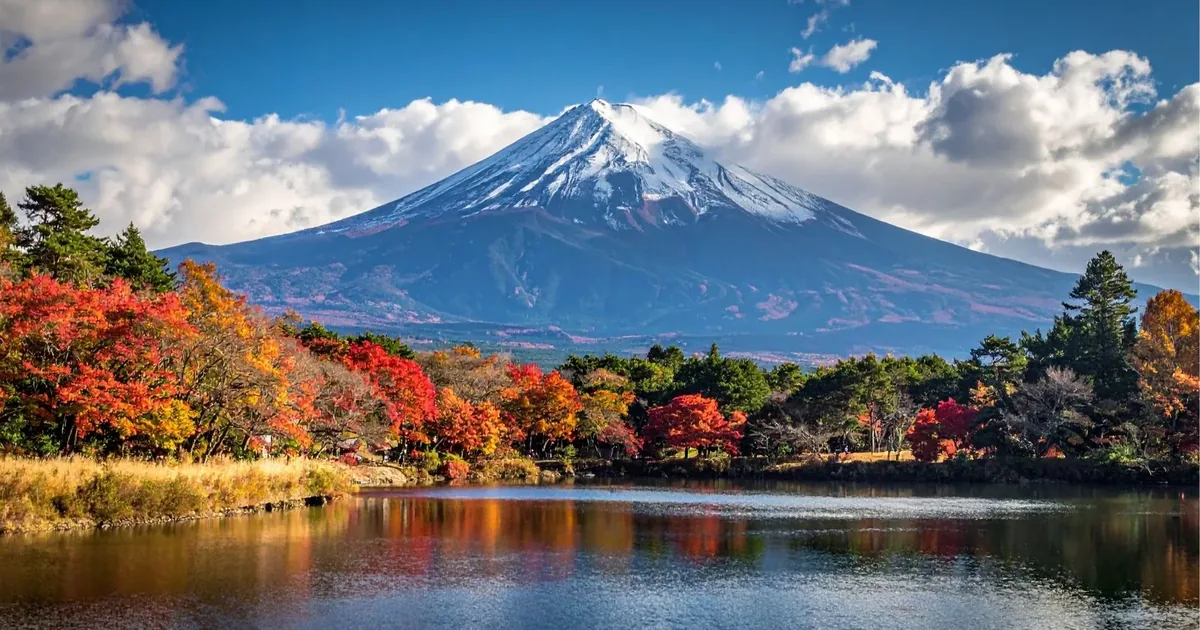
The Fuji Five Lakes are sold as a set and behave like five different destinations. Kawaguchiko has a train station, a hundred hotels and the region’s whole bus network; Shojiko has a handful of guesthouses and four buses a day. Choosing between them is really two decisions — where you sleep, and which of the others is worth the detour — and getting the first one wrong is what turns a two-day trip into an exercise in waiting at bus stops. Here is what each lake actually is, how hard it is to reach, and how many of them you can realistically string together in a day.
Check Availability
The short answer: base at Kawaguchiko
For the overwhelming majority of first-time visitors the answer is Lake Kawaguchiko, and the reasoning is entirely practical rather than scenic. It is the only one of the five with a train station, it is the terminus of the direct highway buses from Shinjuku, and it is the hub from which every sightseeing bus line in the region departs. The English-language authority on the area, japan-guide.com, is blunt about it: “Lake Kawaguchiko is the easiest to access and offers the most things to see and do for the average foreign traveler. The four other lakes are less developed than Lake Kawaguchiko and are not as easy to access by public transportation.”
The other four reward specific interests rather than general sightseeing. Match the lake to the priority:
| If you want | Go to | Because |
|---|---|---|
| Everything within reach, no car | Kawaguchiko | The only rail-served lake; every bus line starts here |
| Water sports, resort calm, Diamond Fuji | Yamanakako | Largest, highest, second most developed |
| Caves, forest, quiet nature | Saiko | Lava caves and Iyashi-no-Sato, 20–35 min from Kawaguchiko |
| Genuine solitude | Shojiko | Smallest and least developed of the five |
| The deepest, clearest water and the banknote view | Motosuko | 121.6 m deep; the ¥1,000-note composition |
And one hard planning constraint, which the rest of this guide keeps coming back to: by bus you can realistically manage two or three lakes in a day — Kawaguchiko plus one other. The three western lakes cluster together and are best done as a single chain, ideally with a car.
How the five compare on the basic facts
The lakes (富士五湖, Fujigoko) sit at roughly 800–1,000 m on the northern base of Mount Fuji in Yamanashi Prefecture, all of them formed when past Fuji lava flows dammed rivers and valleys. Despite the collective branding, the numbers diverge sharply.
| Lake | Surface area | Max depth | Elevation | Character |
|---|---|---|---|---|
| Kawaguchiko (Lake Kawaguchi) | ~6.13 km² — 2nd largest | ~14.6 m | ~833 m — the lowest | Most developed and accessible; longest shoreline (~19 km) |
| Yamanakako (Lake Yamanaka) | ~6.46–6.57 km² — largest | 13.5 m — shallowest | ~980–982 m — highest (3rd highest in Japan) | Resort and water sports; the only lake with a natural outflow, the Sagami River |
| Saiko (Lake Sai) | 2.1 km² — 2nd smallest | 71.7 m — 2nd deepest | ~900 m | Quiet, forest-ringed, undeveloped |
| Shojiko (Lake Shoji) | 0.5 km² — smallest | 15.2 m | ~900 m | The most rural and undeveloped |
| Motosuko (Lake Motosu) | 4.7 km² — 3rd largest | 121.6 m — deepest (9th in Japan) | ~900 m | Remote; camping, stargazing, clearest water |
Saiko, Shojiko and Motosuko share the same 900 m surface elevation for a reason: they were once a single lake, Senoumi, split into three by the massive Jōgan lava flow of 864 AD. They remain connected by underground waterways, and the lava bed itself became the Aokigahara “Sea of Trees” forest that borders them.
Kawaguchiko — the default base
What makes Kawaguchiko the best base, as opposed to simply a good viewpoint, is a stack of infrastructure the other four do not have.
Access. It is the only one of the five lakes with a train station — Kawaguchiko Station on the Fujikyu (Fujikyuko) Railway — and the terminus of the direct Shinjuku highway buses. That coach, co-run by Keio Bus, Fujikyu Bus and JR Bus, is listed at ¥2,200 one way for adults (¥1,100 children) and takes about 1 hour 40 minutes. The station is the region’s transport hub and the starting point for every sightseeing bus line. Our transport guide prices the alternatives, including the direct Fuji Excursion train.
Infrastructure density. The eastern and southern shores are packed with hotels, ryokan, onsen, restaurants, convenience stores, museums and rental shops. The western shore stays calm and largely undeveloped. First-timers should stay near the station or along the developed shore.
What it reaches without moving base. The Mt. Fuji Panoramic (Kachi Kachi) Ropeway, Oishi Park, the northern-shore viewpoints, Fuji-Q Highland, the Chureito Pagoda one train stop away at Shimoyoshida, Oshino Hakkai, and day trips to both the western lakes and Yamanakako. The best Fuji views are from the northern shore — our viewpoint guide works through which of them is worth which hour of the day.
Crowds. It is also the busiest of the five. Tripadvisor reviewers note that “the area around this lake is quite touristy” and return repeatedly to the overtourism theme, while still saying it is “definitely worth a visit” and that quieter corners can be found. Arrive early; sunrise gives the clearest Fuji before cloud builds.
The nearby Fujiyoshida area around Fujisan Station, about 20 minutes away and home to both Chureito Pagoda and Fuji-Q, is a reasonable alternative base with a more urban feel if Kawaguchiko lodging is full or expensive.
If you are already staying lakeside rather than in Tokyo, the Kawaguchiko private tour with a local guide starts from Fujiyoshida, Fujikawaguchiko or Narusawa rather than the capital — six hours by private vehicle with a licensed guide (lunch is extra), 5.0 stars from 54 reviews at $474, with a full breakdown here. Coming from Tokyo for the day instead, the Mt Fuji, Oishi Park, Lake Kawaguchi and Oshino Hakkai tour covers six photo spots around the lake at 4.9 stars from 349 reviews, $49 per person.
Yamanakako — the resort lake
Yamanakako is the largest of the five and sits highest, at around 980 m, which gives it a cool highland-resort climate — summer averages around 20°C — and a long-standing reputation as a summer getaway. It is the closest lake to Mount Fuji and the second most developed after Kawaguchiko, with small towns at either end.
Character. A resort town with a strong water-sports and boating culture: windsurfing, SUP, canoeing, and fishing including wakasagi smelt, plus a lakeside cycling path that nearly circles the lake, tennis and glamping. It is a longtime destination for Japanese school and university sports-team training camps. Family-friendly draws include the “Swan Lake” sightseeing boat and the amphibious KABA bus, and Hana no Miyako flower park runs seasonal displays.
Views. Excellent, particularly from the less-developed northern shore and the Panorama Dai lookout. Photographers rate its wide, open Fuji views highly, and the higher elevation means clearer morning views with less valley haze. Yamanakako is also the premier Diamond Fuji location — the sun setting directly into the summit. The Official Travel Guide Yamanashi notes it can be “enjoyed over a long period from mid-October to late February”, and Lake Yamanaka’s “Diamond Fuji Weeks” run 1–22 February in 2026, with the Ice Candle and Sky Lantern Festival on 22 February 2026. On calm evenings you may catch a “Double Diamond” reflected on the water.
How it differs from Kawaguchiko as a base. Quieter and more spread out, with fewer restaurants within walking distance — many visitors eat at their ryokan or hotel. Better for travellers who prioritise views, water activities and calm over convenience and attractions.
Access. No train. Direct highway buses run from Shinjuku to Yamanakako Asahigaoka or Hirano in about 2 hours 25 minutes for around ¥2,600. From Kawaguchiko it is 30–50 minutes on the Fujikko sightseeing bus or a regular service, roughly ¥670–770 to the sightseeing-boat pier.
Yamanakako is a stop on the Mt. Fuji, Hakone Ropeway, Owakudani and Lake Ashi coach tour — the highest-volume Fuji day trip on the market at 4.6 stars from 8,444 reviews, around $54 — which pairs the lake with the Hakone circuit rather than the other Fuji lakes.
Saiko — the nature and caves lake
Only about a kilometre west of Kawaguchiko but a world apart, Saiko is barely developed, in part because its view of Mount Fuji is blocked by intervening mountains except at the lake’s western tip. It is the second deepest of the five and is ringed by steep, wooded slopes.
Character. The quietest and wildest of the genuinely accessible lakes, bordering the Aokigahara Sea of Trees. Popular for camping, fishing, boating, kayaking, SUP and hiking, with several campsites along its shores.
Key attractions. The lava caves formed in the 864 eruption — the Narusawa Ice Cave (Narusawa Hyoketsu), the Fugaku Wind Cave (Fugaku Fuketsu), and the Saiko Bat Cave, the largest at over 350 m. Saiko Iyashi-no-Sato Nenba is an open-air museum and craft village of thatched-roof farmhouses on the western shore, rebuilt on a former farming settlement, with craft workshops and around ¥500 entry. Koyodai is a nearby hilltop lookout famous for autumn colour.
Access. The Green Line (Saiko) sightseeing bus from Kawaguchiko Station circles the lake and stops at Iyashi-no-Sato and near the caves; regular buses also serve it. Ride time is 20–35 minutes, roughly ¥600–700.
Saiko Village appears on the Mt Fuji, Chureito Pagoda, Lake Kawaguchi and Oshino Hakkai tour, the highest-volume version of the classic circuit at 4.8 stars across 5,794 reviews, $49 — the only well-reviewed coach product in this site’s inventory that reaches the lake at all.
Shojiko — the quiet one most tourists skip
Shojiko is by far the smallest of the five and the most undeveloped: some accounts describe only a handful of hotels, a couple of restaurants and a single convenience store. Meiji-era English visitors dubbed it the “Switzerland of East Asia.”
Character. Deeply quiet, nature-focused, with minimal light pollution — favoured by campers, anglers and photographers after solitude. It offers one of the region’s most distinctive compositions: Kodaki-Fuji, “Fuji cradling a child”, where the smaller Mt. Omuro sits directly in front of the mountain.
Why it gets skipped. Very limited infrastructure and infrequent buses; japan-guide’s users rate it the lowest of the five lakes. The Panorama Dai and Eboshi-dake trail links Shojiko to Motosuko and offers sweeping views, which makes the two a natural pairing rather than separate trips.
Access. Served only by the infrequent Blue Line (Narusawa / Shojiko / Motosuko) sightseeing bus and regular buses, with only a few departures per day.
No GetYourGuide tour in this site’s inventory stops at Shojiko. Reaching it means the Blue Line bus, a rental car, or a chartered one.
Motosuko — the banknote lake
Motosuko is the westernmost, deepest at 121.6 m — ninth deepest in Japan — and clearest of the five, nicknamed “Motosu Blue” for its azure water. It uniquely does not freeze in winter and is warm enough for diving and snorkelling.
The banknote view. Fuji reflected in Motosuko’s water appears on the reverse of the Series E ¥1,000 note issued 2004–2024, with Hideyo Noguchi on the front, and previously on the Series D ¥5,000 note of 1984–2004. It is based on Okada Kōyō’s photograph Kohan no haru (湖畔の春, “Spring by the Lake”), taken on 2 May 1935 from Nakanokura Pass on the west shore; the Okada Koyo Art Museum opened in 2004 in nearby Oshino. The newest 2024 Series F banknotes replaced the image with Hokusai’s Great Wave, but the physical view is unchanged — and reaching the classic composition still means a roughly 30-minute uphill walk from the lakeside parking to Nakanokura Pass.
Character. Remote and largely undeveloped except for a few campgrounds, and renowned for camping and stargazing. The Koan Campground on the northwest shore became famous through the anime Laid-Back Camp (Yuru Camp) and now draws campers year-round for its sunrise Fuji views right at the water’s edge. The effect was dramatic: Koan’s owner Hirofumi Akaike reported that after the anime’s success the normally slow site “received three times as many tourists compared to an average winter season”, with Yamanashi Prefecture noting winter campsite use tripled overall. Windsurfing, canoeing and rainbow-trout fishing are popular, the glass-bottomed “Moguran” yellow submarine cruise operates here, and Motosuko is a New Year sunrise Diamond Fuji spot from the west side.
Access. The farthest lake from Tokyo. From Kawaguchiko Station the Blue Line sightseeing bus takes about 50 minutes; regular buses take 30–47 minutes for around ¥1,470. Buses are infrequent — roughly every one to two hours, and the Blue Line only a few times daily.
As with Shojiko, no GetYourGuide product in this site’s inventory reaches Motosuko. The banknote view is a car trip or a chartered day.
Getting between the lakes
Only Kawaguchiko has direct rail access via the Fujikyu Railway. Every other lake needs a bus, and frequency drops sharply the further west you go:
- Red Line (Kawaguchiko loop): every ~15 minutes, about 36 buses a day — the eastern and northern Kawaguchiko shore.
- Green Line (Saiko): every ~30 minutes, about 16 buses a day — the southern Kawaguchiko shore, Saiko, the caves and Iyashi-no-Sato.
- Blue Line (Narusawa / Shojiko / Motosuko): every one to two hours, only about 4 buses a day — the western lakes.
- Fujikko Bus: roughly hourly — connects Kawaguchiko, Fujiyoshida and Oshino with Yamanakako.
A Kawaguchiko–Saiko–Motosuko bus pass (one day ~¥1,500; two days ~¥2,000) covers the three colour lines and regular buses in that area. A separate Fujiyoshida–Oshino–Yamanakako pass (one day ~¥1,800; two days ~¥2,200) covers the Yamanakako side.
Realistic travel times are Kawaguchiko to Saiko 20–35 minutes, to Motosuko 30–50 minutes, and to Yamanakako 30–50 minutes. Because Saiko, Shojiko and Motosuko lie in a line to the west, they combine naturally into a single western chain, while Yamanakako is a standalone trip east. By bus, more than two or three lakes in a day is impractical — Kawaguchiko plus one other is the realistic no-car ceiling.
With a car the arithmetic changes completely: all five become a roughly 60 km loop, doable in a day with about an hour at each. That is the single biggest reason a chartered day works well here — the Private Tour From Tokyo To Mount Fuji with Custom Itinerary runs ten to eleven hours with a route you set yourself, 4.9 stars from 433 reviews at $365 for a small group, and has its own page here. The most-reviewed alternative is the Mount Fuji Private Tour With English Guide at 4.9 stars from 880 reviews, $319, broken down here. If you are already lakeside and it is specifically the quiet corners you want, the Kawaguchiko Hidden Mt. Fuji driving tour with a local guide runs a private car to the lesser-known spots rather than the standard circuit — 5.00 stars, but from only 16 reviews, so treat the score as provisional. Whether that is worth it over a coach comes down almost entirely to group size, which our private-versus-group comparison works through with real per-head numbers.
2025 and 2026 conditions to check before you go
Overtourism at Kawaguchiko — the Lawson barrier. In May 2024 Fujikawaguchiko town erected a 2.5 m-high, 20 m-wide black screen to block the viral photo spot where a Lawson convenience store frames Mount Fuji, after complaints about littering, trespassing and dangerous road-crossing. That screen came down in August 2024, initially ahead of Typhoon Ampil. Per Time Out Tokyo (15 August 2025) a lower barrier of about 1.4 m was installed on 7 August 2025, “allowing visitors to snap photos while keeping them out of the road”. As of August 2026 the Fuji view at the spot is not blocked — but this is exactly the kind of measure that changes, so verify before making it a priority stop.
The caves. Narusawa Ice Cave and Fugaku Wind Cave are generally open year-round with occasional weather closures; admission is around ¥350 per adult and ¥200 per child, with a combined two-cave ticket around ¥600. The ice is largest around April, and a jacket is needed even in summer — the interiors sit at roughly 0–4°C. The Bat Cave typically closes in winter. Verify hours before travelling.
Camping. The whole area is inside Fuji-Hakone-Izu National Park, where wild camping is prohibited — use designated campgrounds. Popular first-come, first-served sites, Koan on Motosuko among them, fill fast at weekends and through the July–October peak. Reserve where you can, and check current rules and rates.
Traveller consensus on the western lakes. Guides consistently frame Saiko, Shojiko and Motosuko as nature-focused detours, best for those with extra time or a car. Motosuko is the western lake most often called worth it, for the banknote view; Shojiko is the most skippable for a time-limited first-timer. If your trip is short and Fuji views are the goal, Kawaguchiko — optionally plus Yamanakako — delivers the most for the least effort.
Which lake for which traveller
- First-time visitor, one day, no car → Kawaguchiko. Base here, prioritise a sunrise Fuji view, and use the Red Line loop. With energy to spare, add the Green Line to Saiko’s caves and Iyashi-no-Sato.
- Water activities, family, resort relaxation → Yamanakako. Best for boating, cycling, glamping and, in winter, Diamond Fuji. Stay lakeside and plan to dine at your accommodation.
- Nature, hiking, caves, fewer crowds → Saiko. The easiest of the quiet lakes to reach from Kawaguchiko; combine the caves, Iyashi-no-Sato and a western-shore Fuji view.
- Solitude, camping, off-grid → Shojiko or Motosuko. Shojiko for the Kodaki-Fuji view and genuine quiet; Motosuko for the deepest, clearest water, the stargazing and the lakeside camping.
- Photographers chasing the banknote shot → Motosuko, at Nakanokura Pass, plus Yamanakako in Diamond Fuji season.
Multi-lake logic. Combine the western three — Saiko, Shojiko, Motosuko — as one chain, ideally by car. Keep Yamanakako as a separate eastern excursion. Do not attempt all five by bus in a day.
The thresholds that change the plan. With a rental or chartered car, the western lakes jump from skippable to very doable and a five-lake loop becomes realistic. With two or more days, add a night at a quieter lake — Yamanakako or Motosuko — for the sunrise. With cloud in the forecast, prioritise being lakeside at dawn wherever you are, since Fuji frequently hides by mid-morning; our month-by-month visibility guide covers which weeks give you the best odds in the first place, and the day-trip planning guide sets out how much of this fits into a single day from Tokyo.
The caveats that matter
Prices, hours and bus frequencies change. Treat all fares and timings here as approximate and verify before travel, especially the infrequent Blue Line to the western lakes and the seasonal cave and campground hours.
Surface-area and depth figures vary slightly between sources. Yamanakako is cited anywhere from 6.46 to 6.57 km², and Motosuko’s maximum depth is usually given as 121.6 m but occasionally as about 140 m. Wikipedia and official Yamanashi tourism figures are the primary reference used here.
Fuji visibility is never guaranteed. The mountain is frequently obscured by cloud, particularly in summer and around midday. Autumn and winter mornings give the best odds.
Aokigahara deserves sensitivity. The forest near Saiko and Shojiko has a difficult reputation. Stick to marked trails and the developed cave areas.
Time-sensitive items should be verified before visiting — cave closures, camping regulations and the Lawson photo-spot barrier have all changed within the last two years.
Related reading
- The best places to see Mount Fuji — every viewpoint, ranked by what you want from it
- Tokyo to Mount Fuji: every way to get there — trains, coaches, passes and driving routes
- Mount Fuji day trip from Tokyo: the complete planning guide — what actually fits into one day
- The best time for a Mount Fuji private tour, month by month — when the mountain is visible
- Mount Fuji and Hakone in one day — the other direction, if the lakes are not the draw
- Compare all six private Fuji tours — side by side, with live prices
Your Own Car, Your Own Day at Mount Fuji
Rated 4.9/5 by 675 travellers. Hotel pickup in Tokyo, an English-speaking driver-guide, and an itinerary you set yourself — with free cancellation up to 24 hours before.
Check Availability & Book