Fujikawaguchiko Autumn Leaves Festival 2026
The 2026 festival runs 7–29 November with the Momiji Corridor lit from sunset to 21:00. The peak-colour forecast, the last buses back, two itineraries and what to wear.
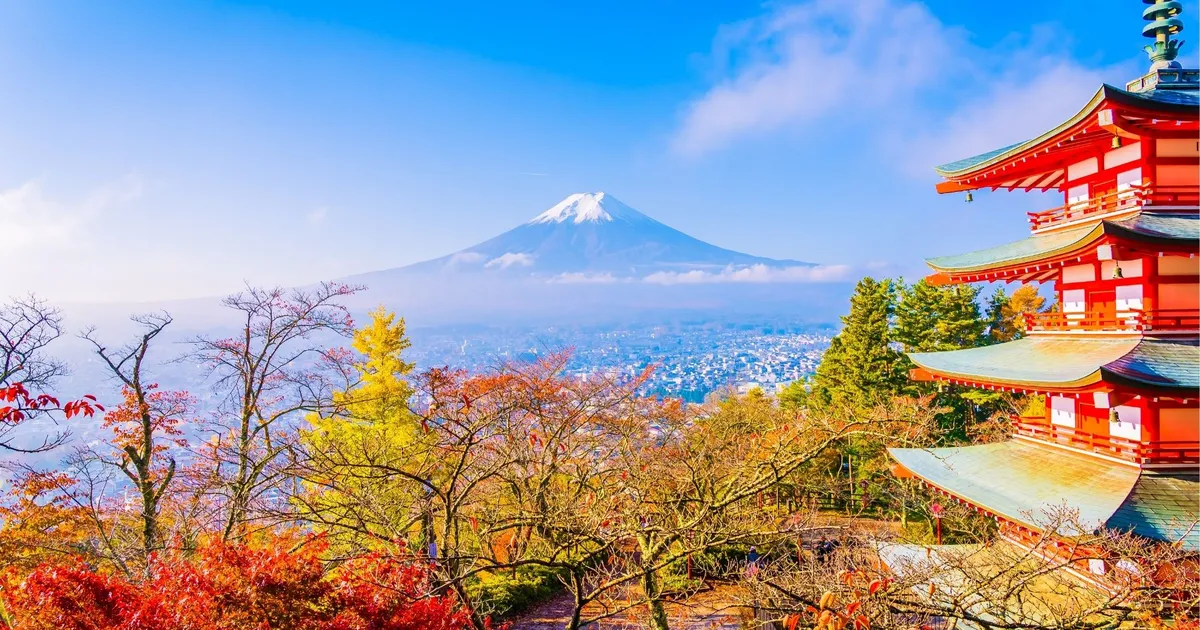
The 2026 Fujikawaguchiko Autumn Leaves Festival runs from Saturday 7 November to Sunday 29 November. The Momiji Corridor on the north shore of Lake Kawaguchi is lit from sunset until 21:00, entry is free, and the maples are forecast to peak at around 13–21 November, so aim for those dates. Sort out your way back before you plan your photos: the last sightseeing bus to Kawaguchiko Station leaves more than two hours before the lights go off. Our guide to Mount Fuji in November covers the weather, visibility and crowds for the rest of the month.
Check Availability
Quick facts: the 2026 festival
| Dates | Sat 7 Nov – Sun 29 Nov 2026 (announced 10 July 2026 by the Fujikawaguchiko Tourism Federation) |
| Light-up | Sunset (about 16:30–16:45) to 21:00 |
| Stalls | Usually 9:00–19:00 (the pattern from past years; the 2026 notice does not repeat it) |
| Venue | Momiji Corridor (Momiji Kairo), Nashi River, north shore of Lake Kawaguchi |
| Entry | Free |
| Peak forecast | Weathernews: peak colour from about 16 Nov, leaves start falling about 29 Nov |
| Access | Red Line sightseeing bus from Kawaguchiko Station to the “Itchiku Kubota Art Museum” stop (about 20 min), then a short walk |
| Information | Fujikawaguchiko Town Tourism Division 0555-72-3168; Tourism Federation 0555-28-5177 |
Official 2026 dates and hours, and the outdated ones to ignore
On 10 July 2026 the Fujikawaguchiko Tourism Federation posted the 2026 notice on its official site (fujisan.ne.jp). It gives the festival dates as 7–29 November and the illumination as sunset to 21:00, at the “special festival venue” around the Momiji Corridor. The federation’s official X account confirmed that the light-up runs on the same dates as the festival. Weathernews and tenki.jp (Japan Weather Association) both list the same 21:00 finish.
Watch out for outdated information. Plenty of pages already carry the correct 2026 dates but still show old hours:
- A 21:30 finish: still listed on some Japanese guides, carried over from previous years.
- A 22:00 finish: shown on several English-language sites, including some local tour operators.
- “1–30 November” with lights from 16:30 to 22:00: a generic template some sites reuse every year. The 2026 festival does not start on 1 November.
The dates change from year to year. The 2024 festival began on 26 October and the 2025 one on 1 November, so this year’s 7 November start is about a week later than last year’s. If sources disagree, go with the federation’s notice.
The 2026 notice gives only the dates and the light-up hours. It does not repeat the daytime stall hours, the parking arrangements or what happens in bad weather. In past years the stalls ran 9:00–19:00, and Weathernews still lists those hours, but treat them as likely until the town publishes the festival details.
The venue: what the Momiji Corridor is
The Momiji Corridor is a short stretch of the Nashi River (Nashigawa) on the quieter north shore of Lake Kawaguchi, a few minutes’ walk from the lake and right next to the Itchiku Kubota Art Museum. Huge old Japanese maples lean in from both banks, so at peak you walk through a tunnel of red and orange.
How many trees? Sources disagree, most likely because they count differently. tenki.jp describes about 100 giant maples along roughly 350 m. Yamanashi Prefecture’s official tourism site counts about 60 maples along roughly 150 m of both banks. The Tourism Federation says the wider lakeshore has 400–500 maples, reflected in the lake when they are at their best in early to mid November.
What’s at the festival: food stalls (grilled skewers, warming dishes such as hōtō noodle stew, local sweets) and a craft market with handmade goods from local artisans. On cold evenings there are usually heaters or bonfires near the venue. There are toilets and a shop on site.
Is it free? Yes. The corridor is an open outdoor area with no ticket or reservation. You pay only for food, crafts and nearby attractions such as the museum.
When will the leaves peak in 2026?
Here is what the forecasters said as of 16 October 2026:
- Weathernews (spot forecast for Lake Kawaguchi): peak colour from around 16 November, with leaves starting to fall around 29 November. Both dates are one day later than its earlier forecast (15 and 28 November).
- tenki.jp / Japan Weather Association: gives the 2026 viewing window as “early to late November”. The corridor was still fully green (青葉) on 16 October. JWA’s national forecast of 1 October says eastern Japan will peak on time or later than usual, because temperatures are expected to stay above average into November.
- Japan Meteorological Corporation (second forecast, 1 October): expects maples in eastern Japan to turn at about the usual time, with another update due in early November. It gives no date for Kawaguchiko itself, so use Weathernews and tenki.jp for this spot.
- Last year for comparison: according to Walkerplus, the 2025 peak was roughly 11–19 November.
Our recommendation: aim for 13–21 November. Before about 12 November you will probably see a mix of green and orange. After about 24 November, expect thinning trees and a red carpet of fallen leaves, pretty in its own way but not the classic shot.
Why opening day isn’t peak day
The festival dates are fixed months in advance, but the leaves follow the weather. According to Japan Weather Association forecasters on tenki.jp, maples start turning once overnight lows fall below 8 °C and reach full colour about three weeks later, so a warm autumn pushes the peak back. 2026 is forecast to stay warm, so the first week of the festival (7–12 November) will probably still be partly green. Book flexible dates if you can, and check the Weathernews and tenki.jp spot pages a week before you go.
The night light-up: what to expect and how to photograph it
Once the sun sets, at around 16:30–16:45 in mid-November, ground-level spotlights make the maple canopy glow red and gold against the dark sky. On clear evenings you can still make out Fuji’s snowy outline behind the corridor for a little while after sunset. After that, the trees are the whole show.
When to arrive: around 16:00. You get the last of the daylight with Fuji in view, then blue hour (roughly 16:45–17:15), when the lit leaves stand out best against a deep-blue sky. At weekends the crowds are worst from about 17:00 to 19:00, and the last hour before 21:00 is usually calmer.
Photography tips:
- Fuji silhouette: shoot just after sunset from the lakeside end of the corridor. The mountain fades into the dark quickly.
- Tripods: the paths are narrow and crowded. Use a compact tripod only where you won’t block people, and never set one up on the walkway at busy times. Hand-holding at a higher ISO (1600–3200) with image stabilisation often works better than fighting for tripod space.
- Reflections: on still evenings the river under the bridges reflects the lights.
- Drones: don’t. Japanese rules restrict flying over festival crowds.
For more viewpoints around the lakes, see our guide to the best places to see Mount Fuji.
Getting there
From Kawaguchiko Station
Red Line sightseeing bus (Kawaguchiko Sightseeing Bus): board at bus stop 1 in front of Kawaguchiko Station and ride to stop 17, “Itchiku Kubota Art Museum” (久保田一竹美術館). It takes about 20 minutes, then it’s a few minutes’ walk to the corridor. Buses leave the station every 15 minutes from 9:00 to 17:45. A single ride costs a few hundred yen (check the fare chart on board). The 1-day pass is ¥1,500 and the 2-day pass ¥2,000 (children ¥750 and ¥1,000), and both also cover the Green (Lake Saiko) and Blue Lines. IC cards such as Suica and PASMO are accepted.
On the current regular timetable, the last Red Line bus back leaves the Itchiku Kubota Art Museum stop at 18:32 and reaches the station at 18:54. That is more than two hours before the light-up ends, and no extra night buses had been announced for 2026. If you stay late, budget for a taxi or a long walk.
Taxi: about 10 minutes from the station in normal traffic. Taxis are scarce on festival evenings, so ask your hotel to book one or have a taxi app ready.
Walking: about 6 km along the eastern and northern shore, roughly an hour and a quarter. It’s a pleasant walk by day, but dark and cold at night.
Driving and parking: about 15 minutes from Kawaguchiko IC. In past years free temporary car parks (about 150 spaces near the main venue) opened during the festival. As of mid-October, nothing had been announced about 2026 parking or traffic plans. Expect jams on the north-shore road at weekends.
From Tokyo
- Highway bus from Busta Shinjuku: about 1 hour 45 minutes, ¥2,000–2,200 one way, with frequent departures all day.
- Fuji Excursion limited express (direct from Shinjuku to Kawaguchiko): about 1 hour 53 minutes to 2 hours, ¥4,200 in total. Regular trains leave Shinjuku at 7:30, 8:30, 9:30 and 10:30, and come back from Kawaguchiko at 14:08, 14:58, 16:48 and 17:41. There are also extra seasonal trains, such as the weekday-only 93/94 services in November. All seats are reserved.
- Day tour: the easiest option if you don’t want to deal with timetables. Check that the tour stops at the maples and when it returns, because coach days usually head back to Tokyo before dark. The Mt. Fuji Heritage Tour: Traditional Villages, Lakes & Shrine builds the seasonal maple tunnel into a coach day with Oishi Park, Chureito Pagoda and Oshino Hakkai, at 4.5/5 from 555 reviews and from $53 per person. If you want to be at the corridor at dusk, a private car lets you set the timing: the From Tokyo: Mount Fuji Private Tour With English Guide has a customisable route, 4.9/5 from 880 reviews and costs from $319 for the group, so ask the driver-guide to finish at the Momiji Corridor at sunset.
The Tokyo to Mount Fuji transport guide compares the bus, the train and the car in detail, and bus vs train vs tour in winter covers November to February.
Key times at a glance
| What | Time |
|---|---|
| Festival period | 7–29 Nov 2026 |
| Light-up | Sunset (about 16:30–16:45) to 21:00 |
| Stalls (past years) | About 9:00–19:00 |
| Red Line: first and last departure from Kawaguchiko Station | 9:00 / 17:45 |
| Red Line: last bus from the Itchiku Kubota Art Museum stop | 18:32 (reaches the station 18:54) |
| Last highway bus, Kawaguchiko to Busta Shinjuku | 20:15 (arrives 22:00). From the October timetable; a new timetable starts 1 Nov |
| Last train connection to Shinjuku | 21:16 Kawaguchiko, Otsuki 22:16, Shinjuku 23:56 (¥2,580, 2 changes) |
| Last Fuji Excursion to Shinjuku | 17:41 (arrives 19:40) |
What this means for a day trip: a same-day round trip from Tokyo does not work with the full light-up. You can see the first part of the illumination and still make the 20:15 bus if you take a taxi from the corridor at around 19:30. To stay until 21:00, stay the night.
Nearby autumn spots to combine
- Momiji Tunnel: a stretch of the north-shore road (Kohoku View Line) where maples arch overhead. It’s further west, about 15 minutes by car from the corridor, and usually at its best in early to mid November. Because it’s a road, stay on the verge and watch for traffic.
- Oishi Park: at the end of the Red Line (stop 20). It’s free and has one of the best views of the lake and Fuji on the north shore. Its kochia bushes turn red in mid-to-late October and fade to gold-brown by early November.
- Itchiku Kubota Art Museum: at the end of the corridor, showing kimono textile art in a beautiful garden. Adults ¥1,500. Open April to November, 10:00–17:00 (last entry 16:30). A good choice for a rainy or cloudy afternoon.
- Mt. Fuji Panoramic Ropeway: from 1 November 2026 the adult round trip goes up to ¥1,200 (child ¥600), from ¥1,000. Hours are shortened for inspections on 25–26 November (last ride up 15:00, last ride down 15:20), and the ropeway closes for annual maintenance 7–18 December. Expect queues on festival weekends.
- Chureito Pagoda (Fujiyoshida): the five-storey pagoda with Fuji behind it, 398 steps up. The autumn colour here usually comes a little earlier than at the lake. Fujiyoshida cancelled its 2026 cherry-blossom festival because of overtourism; Forbes reported that the festival drew about 200,000 visitors a year to a city of about 46,000–47,000 residents. Behave well here. Our Chureito Pagoda visitor guide has the access rules.
- Lake Saiko: quieter and reachable on the Green Line. The thatched-roof village of Saiko Iyashi no Sato Nenba is lovely in autumn colour.
- Fuji-Q Highland area: one train stop from Kawaguchiko, with the theme park and easy access to Fujiyoshida.
If Fuji is hiding behind cloud, our Mount Fuji visibility guide explains the odds by hour and where to go instead.
Crowds and timing
Weathernews’ 2026 Kawaguchiko page lists about 200,000 visitors over the festival period, though other sources give higher numbers (Rurubu cites 600,000 visitors the previous year). Japanese holidays affect crowds more than anything else:
- Culture Day (Tue 3 Nov) falls before the festival starts in 2026, so it won’t affect the corridor directly.
- The Labor Thanksgiving three-day weekend (Sat 21 – Mon 23 Nov) falls right in the forecast peak window. Expect the busiest days of the season, with packed buses and traffic jams.
| Period | Foliage (forecast) | Crowds | Verdict |
|---|---|---|---|
| 7–8 Nov (opening weekend) | Mostly green, turning | Moderate to busy | Atmosphere, not colour |
| 9–12 Nov (weekdays) | Turning | Light | Good value, partial colour |
| 13–15 Nov (Fri–Sun) | Near peak | Busy at the weekend | Strong choice; go on the Friday |
| 16–20 Nov (weekdays) | Peak | Moderate | Best overall |
| 21–23 Nov (3-day weekend) | Peak to just past | Very busy | Early morning only |
| 24–29 Nov | Past peak, falling leaves | Moderate | Red carpet, thinning trees |
Time of day: early morning (7:00–9:00) gives the clearest Fuji views and almost empty paths. The tour coaches arrive around midday. Evenings have a lively atmosphere, but it’s crowded once the light-up starts.
Sample itineraries
One day from Tokyo (daytime colour and the early light-up)
- 7:30 Take the Fuji Excursion or an early highway bus from Shinjuku.
- 9:30 Arrive at Kawaguchiko Station and buy a Red Line 1-day pass. Ride the Panoramic Ropeway while the morning view is clear.
- 11:30 Take the Red Line to Oishi Park and have lunch with a lake view.
- 13:30 Visit the Itchiku Kubota Art Museum, then the Momiji Corridor in daylight.
- 16:00–17:15 Stay for sunset and the blue-hour light-up.
- Return: catch the 18:32 Red Line, or take a taxi to the station by around 19:30 for the 20:15 bus to Shinjuku (book seats in advance).
Two days (the better way to do it)
- Day 1: arrive by lunchtime and check in. Ride the ropeway or visit Chureito Pagoda, then get to the corridor around 16:00 and stay for the full light-up. Take a taxi back to your hotel.
- Day 2: catch the sunrise view of Fuji from the lakeshore, then walk the corridor again while it’s empty in the morning light. Visit the Momiji Tunnel or Lake Saiko before heading back to Tokyo.
For which shore to sleep on and which hotels face Fuji, see our guide to where to stay at Lake Kawaguchiko.
Weather and what to wear at night
Lake Kawaguchi sits about 830 m above sea level, so it’s much colder than Tokyo. In November, average highs are about 14–16 °C and average lows about 1–3 °C, and by late November evenings beside the lake can drop to around freezing. Standing still under the lights makes it feel colder still.
Pack a down or insulated jacket, a thermal base layer, a hat, gloves (touchscreen-friendly if you’re taking photos), warm socks and comfortable shoes. Disposable hand warmers (kairo) are sold at every convenience store. Keep your phone charged and online for live bus times and maps; the cold drains batteries quickly. Our guide to what to wear at Mount Fuji in November and winter has the full list.
Thinking of going higher up the mountain? The Fuji Subaru Line 5th Station guide covers the road and what is open in late autumn, and our guide to climbing Mount Fuji in November or winter explains why the trails above it are closed.
Etiquette and overtourism
The Fuji Five Lakes towns are welcoming, but they are struggling with the number of visitors. Crowds at the “Mt. Fuji Lawson” photo spot blocked roads and walked onto private property, so on 21 May 2024 Fujikawaguchiko put up a black screen 20 m wide and 2.5 m high. It was taken down on 15 August 2024 ahead of a typhoon. On 3 February 2026, Fujiyoshida cancelled the Arakurayama Sengen Park cherry-blossom festival at Chureito Pagoda. Mayor Shigeru Horiuchi explained: “For Fujiyoshida City, Mount Fuji is not just a tourist attraction; it is our very way of life.” You can help keep autumn events running:
- Take your rubbish with you. There are very few public bins.
- Stay on paths and out of private gardens, driveways and fields, even for the perfect shot.
- Don’t stop in the road to take photos, especially on the Momiji Tunnel stretch.
- Keep tripods compact and out of walkways, and don’t shake branches or pick leaves.
- Eat in the stalls’ designated areas, and keep your voice down in residential lanes late at night.
Frequently Asked Questions
When is the Fujikawaguchiko Autumn Leaves Festival 2026?
7–29 November 2026, at the Momiji Corridor on the north shore of Lake Kawaguchi.
What time does the Kawaguchiko light-up end in 2026?
At 21:00, according to the official Tourism Federation notice. Sites that list 21:30 or 22:00 are using old information.
Is the Momiji Corridor free?
Yes. There’s no ticket or reservation. Food, crafts and the nearby museums cost extra.
When is peak autumn colour at Kawaguchiko in 2026?
Weathernews forecasts the peak from about 16 November, with leaves starting to fall from about 29 November. Aim for 13–21 November.
How do I get from Kawaguchiko Station to the Momiji Corridor?
Take the Red Line sightseeing bus to the “Itchiku Kubota Art Museum” stop (about 20 minutes), then walk for a few minutes. A taxi takes about 10 minutes.
Can I see the light-up and return to Tokyo the same night?
Only part of it. The last Red Line bus leaves at 18:32, so after that you need a taxi to the station for the last highway bus (20:15) or a late train connection (21:16, arriving in Shinjuku at 23:56). Staying the night is much easier.
Will I see Mount Fuji from the Momiji Corridor?
Yes on clear days, especially in the morning. Afternoon cloud often hides Fuji, and after dark you can see only a faint outline for a short time after sunset.
How cold is Kawaguchiko at night in November?
Average lows are about 1–3 °C, and late-November nights can get close to freezing, so dress for winter.
Facts to re-check close to your date
- Light-up hours and any 2026 festival details (stalls, parking, traffic control, rain policy) on the Tourism Federation site (fujisan.ne.jp).
- The latest Weathernews and tenki.jp foliage updates. Japan Meteorological Corporation’s next forecast is due in early November.
- The Red Line timetable and fares (Fujikyu Bus), especially any extra festival services.
- The November highway bus timetable (a new schedule starts 1 November) and last-bus times.
- Extra seasonal Fuji Excursion trains and seat availability.
- Panoramic Ropeway fares (new from 1 November), the shortened hours on 25–26 November and the closure on 7–18 December.
- Itchiku Kubota Art Museum opening days.
Tour prices are the GetYourGuide starting prices for the listings named; ratings and review counts were re-checked on each listing on 17 October 2026. Last updated 17 October 2026.
Related reading
- Best Mount Fuji day tours from Tokyo for November and winter — which coach, combo and private tours suit the festival weeks
- Lake Kawaguchiko: the complete visitor guide — the four shores, the cruise and the cycle loop
- Chureito Pagoda visitor guide — the earlier autumn colour, and the 2026 access rules
- Is Mount Fuji visible today? — the odds by month and by hour
- Compare all six private Fuji tours — side by side, with live prices
Your Own Car, Your Own Day at Mount Fuji
Rated 4.9/5 by 675 travellers. Hotel pickup in Tokyo, an English-speaking driver-guide, and an itinerary you set yourself — with free cancellation up to 24 hours before.
Check Availability & Book