Kawaguchiko vs Hakone in November
Kawaguchiko or Hakone in November 2026? Fuji visibility data, autumn leaf timing, costs from Tokyo, onsen and crowds compared, plus a two-day route that links both.
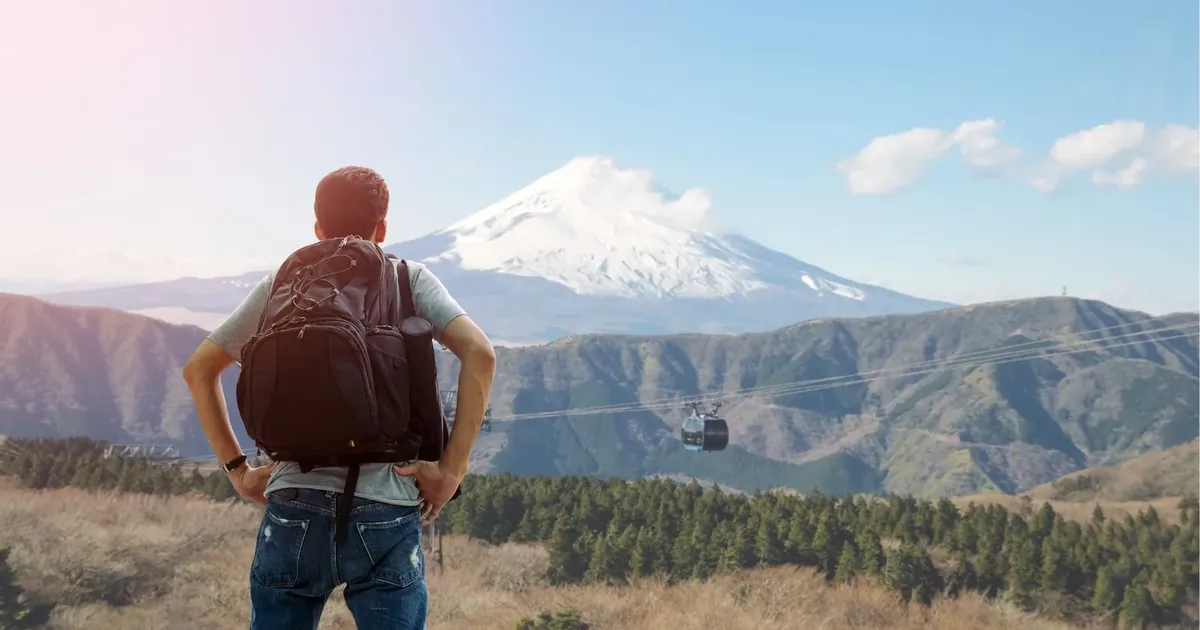
If seeing Mount Fuji is your main goal in November 2026, choose Lake Kawaguchiko. Choose Hakone if you want onsen, museums and a varied day where Fuji is a bonus. Kawaguchiko sits at the mountain’s foot with an open sightline across the lake, and in one year of forecast-based scores it was “Fuji visible” at least as often as the Hakone side in every month. Hakone sees Fuji from farther away, over ridges, but has the hot springs, the art and more to do when cloud rolls in.
Check Availability
The verdict at a glance
- For Fuji views: Kawaguchiko. It’s closer, the view is open, and the forecast scores rate it visible more often, especially in the afternoon.
- For onsen, ryokan and rainy-day backups: Hakone, with a deeper ryokan tradition, big museums, the ropeway and the Lake Ashi pirate ships.
- For autumn leaves: Kawaguchiko peaks around mid-November, during the Momiji Corridor festival from 7 to 29 November. Hakone’s colour runs from late October at Lake Ashi to late November or early December in Gora and Yumoto.
- Cheapest from Tokyo: Kawaguchiko by highway bus (about ¥2,200 one way).
- Can’t decide? Do both in two days via Gotemba; the route is below.
This guide belongs to our November and winter series. For the month as a whole, start with Mount Fuji in November 2026.
Kawaguchiko vs Hakone side by side
| Lake Kawaguchiko (Fuji Five Lakes) | Hakone (Lake Ashi area) | |
|---|---|---|
| Fuji views | Big, close and open; lake reflections | Smaller, framed over ridges; about 30 km from the summit at Lake Ashi |
| Visibility scores, November 2025 | 27 of 30 mornings, 27 of 30 afternoons | 24 of 30 mornings, 18 of 30 afternoons |
| Autumn leaves, 2026 forecast | Lakeside peak ~15 November; festival 7–29 November | Lake Ashi late October–early November; Gora ~15–19 November; Sengokuhara ~23 November; Yumoto late November–early December |
| Onsen and ryokan | Good lakeside onsen hotels, many with Fuji-view baths | Excellent; one of Japan’s classic ryokan towns |
| Access from Shinjuku | Bus ~1h45, about ¥2,200; Fuji Excursion train ~1h54, ¥4,200 | Romancecar ~80 min, ¥2,470; Freepass ¥7,100 (plus the ¥1,200 Romancecar fee) |
| Getting around | Retro sightseeing buses; two-day pass ¥2,000 | Freepass loop: train, cable car, ropeway, boat, buses |
| Crowds | Heavy at Chureito, the north shore and the Momiji Corridor at weekends | Heavy on the loop (Gora–Owakudani) and on Route 1 |
| Suits | Photographers, Fuji-first travellers, budget trips | Onsen lovers, art fans, couples, rainy forecasts |
Fuji views: what the data says
How often can you see Fuji from each side?
The most useful dataset comes from isfujivisible.com, which scores both the north side (Kawaguchiko) and the south side (Hakone and Lake Ashi) twice a day. These are forecast-derived scores, not observations, and the archive covers a single year (August 2025 to July 2026), so read them as a strong guide and nothing firmer.
- November 2025: the north side scored visible on 27 of 30 mornings and 27 of 30 afternoons; the south side on 24 of 30 mornings but only 18 of 30 afternoons.
- Full year: north 63% of mornings and 52% of afternoons; south 48% and 29%.
- Winter (December–February): north 82–100% of mornings; south 68–90%.
- The north side matched or beat the south in every month of the archive.
In November both sides are good in the morning, but if you can only visit in the afternoon, Kawaguchiko is the safer bet. Hakone’s problem is geometry: you look at Fuji over the caldera ridges from farther away, so a layer of low cloud that leaves Kawaguchiko’s lake-level view open can hide the mountain from Hakone completely.
Check the live cameras the night before and on the morning itself. Our Mount Fuji visibility guide explains how the odds change through the day.
Where Kawaguchiko sees Fuji
- North shore and Oishi Park: the classic wide view across the water, with the Momiji Corridor and the lakeside promenade nearby. Calm early mornings give the best reflections.
- Mt. Fuji Panoramic (Kachi Kachi) Ropeway: a quick ride up for a raised view over the lake to Fuji. The operator’s revised fares from 1 November 2026 put an adult return at ¥1,200 (child ¥600), up from ¥1,000.
- Chureito Pagoda (Fujiyoshida): the five-storey pagoda framing Fuji, reached by 398 steps. Go early; it’s one of the most crowded spots in the region.
- Lakes Saiko, Shoji and Motosu: quieter alternatives a Blue or Green Line bus ride away.
Where Hakone sees Fuji
Much of Hakone has no Fuji view at all: Hakone-Yumoto, Miyanoshita and most of Gora don’t. These spots do:
- Lake Ashi and the Moto-Hakone torii: the signature shot of Hakone Shrine’s “Peace Torii” in the water with Fuji behind. The Moto-Hakone waterfront and the sightseeing cruise also have open sightlines.
- Hakone Ropeway (Sounzan–Owakudani–Togendai): Fuji appears ahead on clear days, especially around Owakudani.
- Komagatake (Hakone Komagatake Ropeway from Hakone-en): probably Hakone’s best full-length Fuji view, from the summit area. The Freepass doesn’t cover it (holders get a discount); it runs from about 9:00 to 16:30.
- Onshi-Hakone Park: a lakeside park with a classic view across Lake Ashi to Fuji, plus autumn colour on the outer rim.
- Hakone Skyline, Daikanzan and Otome Pass: ridge-top viewpoints, easiest by car or on a tour; buses on the Gotemba side serve Otome Pass.
Hakone’s views are beautiful but framed and smaller; Kawaguchiko’s are bigger and more reliable. If you want both in one guided day, the Tokyo: Mt. Fuji Tour, Hakone Ropeway, Owakudani, Lake Ashi coach (from $54, 4.6/5 from 8,444 reviews) covers the ropeway, Owakudani and Lake Ashi for little more than a Kawaguchiko-only bus.
Autumn leaves in November 2026
Kawaguchiko
Weathernews forecasts the Kawaguchiko lakeside peak from around 15 November 2026, with leaves starting to fall around 28 November. tenki.jp gives a broader early-to-late November window for the Momiji Corridor. The Fujikawaguchiko Autumn Leaves Festival runs from 7 to 29 November 2026, and the Momiji Corridor is lit from sunset to 21:00, according to the Fujikawaguchiko Tourism Federation. Our Fujikawaguchiko Autumn Leaves Festival 2026 guide has the details.
Hakone
Hakone’s colour moves downhill through November, which gives you a longer window:
- Lake Ashi: usually late October to early November, the earliest in Hakone.
- Hakone Wetland Botanical Garden (Sengokuhara): Weathernews peak ~12 November.
- Hakone Gora Park: Weathernews peak ~15 November.
- Hakone Museum of Art moss garden (Gora): Weathernews says ~19 November, but tenki.jp’s 2026 forecast is later, late November to early December, which suits visitors later in the month. The museum opens daily throughout November.
- Chōan-ji temple (Sengokuhara), with its hundreds of stone rakan statues: Weathernews peak ~23 November.
- Hakone-Yumoto: usually colours from late November and peaks in early December.
Event: the 73rd Hakone Daimyo Gyoretsu (feudal lord procession) passes through Hakone-Yumoto on Tuesday 3 November 2026 (Culture Day), according to the Hakone-Yumoto Tourism Association. Expect road closures and crowds around Yumoto that day.
For leaf-peepers: for Fuji and red maples in one frame, go to Kawaguchiko in mid-November. For a trip in the last week of November, Hakone’s gardens are likely in better shape.
Getting there from Tokyo: time and cost
Getting to Kawaguchiko
- Highway bus (Busta Shinjuku to Kawaguchiko Station): about 1h45 and about ¥2,200 one way, with reserved seats and roughly two departures an hour. It’s the cheapest option, but expressway traffic on autumn weekends can add serious delays. Book on the operators’ Highway Buses booking site.
- Fuji Excursion limited express (Shinjuku to Kawaguchiko, direct): about 1h54 and ¥4,200 one way, fare plus limited express fee. Only a few direct trains run each day, and every seat is reserved.
Getting to Hakone
- Odakyu Romancecar (Shinjuku to Hakone-Yumoto): about 80 minutes and ¥2,470 one way on paper tickets (¥1,270 fare plus ¥1,200 limited express fee), slightly less when booked online. Details are on Odakyu’s Romancecar page.
- Hakone Freepass: ¥7,100 for two days from Shinjuku (¥7,500 for three days; ¥6,000 for two days from Odawara). It covers the regular Odakyu return trip plus unlimited rides on Hakone’s trains, cable car, ropeway, pirate ship and designated buses. The Romancecar fee (¥1,200 each way) is extra, which makes Odakyu’s own combined example ¥8,300. Buy it on Hakone Navi’s Freepass page.
- Shinkansen to Odawara: the fastest route for JR Pass holders; then buy the Odawara version of the Freepass.
Getting around locally
- Kawaguchiko: the Red Line sightseeing bus loops the east and north shores every 15 minutes, with Green and Blue Lines to Saiko and beyond. The pass costs ¥1,500 for one day or ¥2,000 for two. It’s simple, going from one stop to the next.
- Hakone: the “loop” chains train, cable car, ropeway, boat and bus. It’s fun, but it fills a whole day: Odakyu’s own model course allows about 10 hours. Watch for the 17:55 last cable car, and think about going anticlockwise (bus to the lake first), which the operator itself suggests because the usual direction “tends to be congested.”
Traffic: November weekends are peak season at both. In Hakone, buses crawl on Route 1 and around Owakudani; in Kawaguchiko, lakeshore roads near the festival back up. Go on a weekday, leave early and take the train where you can. Our Tokyo to Mount Fuji transport guide compares every option, and bus vs train vs tour in winter covers the cold months.
Set up mobile data (an eSIM or pocket Wi-Fi) before you leave Tokyo: live bus trackers, cameras and timetables make both places far easier.
Kawaguchiko: pros, cons and things to do
Things to do beyond Fuji: the Itchiku Kubota Art Museum (kimono art in a beautiful garden), Oishi Park, the Panoramic Ropeway, lake cruises, Oshino Hakkai’s spring-fed ponds, the lava caves near Lake Saiko (Fugaku Wind Cave and Narusawa Ice Cave), Chureito Pagoda and, for families who like rides, Fuji-Q Highland. The Fuji Subaru Line to the 5th Station (toll ¥2,800 by car) usually stays open in November, but from 16 November the gate opens only at 9:00 and winter snow can close the upper section; last winter the 5th Station was reachable until 18 January 2026. Our guide to climbing Mount Fuji in November or winter covers the road in winter.
Pros
- The best and most reliable Fuji views in the region
- The cheapest access from Tokyo
- Simple sightseeing buses; easy to switch between viewpoints
- Lakeside onsen hotels with Fuji-view rooms and baths
Cons
- Fewer indoor backups if Fuji hides
- Crowded hotspots: on 3 February 2026 Fujiyoshida City cancelled the Arakurayama Sengen Park (Chureito) cherry blossom festival, which usually draws more than 200,000 visitors, over overtourism. Fujikawaguchiko put up a 2.5 m by 20 m black mesh screen at the “Lawson Fuji” photo spot in May 2024 but took it down in August 2024, so that view is open again
- Higher (around 830 m) and colder than Tokyo, so dress for it: our Mount Fuji November and winter packing list covers the layers
Staying over: for sunrise reflections, book a room on the north shore facing the mountain (where to stay at Lake Kawaguchiko names the hotels). Rooms with a lake-and-Fuji view sell out first for festival weekends.
For a guided Kawaguchiko-only day, the Tokyo: Mt Fuji & Oishi Park & Lake Kawaguchi & Oshino Hakkai coach (from $49, 4.8/5 from 5,794 reviews) takes in Oishi Park, the lake and Oshino Hakkai. For your own car and driver, the Mount Fuji Private Tour With English Guide costs from $319 per group (4.9/5 from 880 reviews) and lets you change the route on the morning if cloud sits on one side.
Hakone: pros, cons and things to do
Things to do beyond Fuji: the Hakone Open-Air Museum (¥2,000; ¥1,900 with the Freepass), the Pola Museum of Art (¥2,200; ¥2,000 with the Freepass), the Hakone Museum of Art’s moss garden, Hakone Shrine, the Lake Ashi pirate ship, the ropeway over Owakudani, and dozens of onsen.
Owakudani in 2026: the Japan Meteorological Agency lowered Hakone’s volcanic alert to Level 1 (the lowest on its five-level scale) on 7 October 2019, and Owakudani reopened to visitors in mid-November 2019. The station area, including the famous black eggs (kuro-tamago), is open. The 700 m Nature Research Trail reopened in 2022 only as a guided walk that needs an advance reservation; children must be of elementary-school age or older, and people with respiratory or heart conditions can’t join. The ropeway can suspend service for volcanic gas even on a Level 1 day, so check its status before you go.
Pros
- Japan’s classic onsen-and-ryokan escape, close to Tokyo
- Strong rainy-day options (museums, baths, gardens)
- A fun transport loop with a cruise and a ropeway
- A longer autumn colour season than Kawaguchiko’s
Cons
- Fuji is smaller, farther away and hidden more often, especially in the afternoon
- The loop has many changes and bottlenecks at weekends
- Ropeway winter inspections: Odakyu’s notice of 28 September 2026 closes the Sounzan–Owakudani section from 7 to 24 December 2026 and Owakudani–Togendai from 12 January to 26 February 2027, with substitute buses. Hours shorten to 9:00–16:15 in December and January.
Staying over: a ryokan with a private open-air bath is the Hakone splurge. Lakeside hotels at Moto-Hakone or Hakone-en put you closest to the Fuji views; Hakone-Yumoto is easiest for the Romancecar home.
For a coach day that pairs the 5th Station area with a Lake Ashi cruise, the Tokyo Mt Fuji 5th St & Hakone Cruise Bus Tour w/Bullet Train costs from $151 (4.4/5 from 5,368 reviews) and returns to Tokyo by bullet train. In winter the upper Subaru Line can close, so the 5th Station stop depends on the road.
Crowds, weather and hotel costs
- Crowds: both are busiest on November weekends and on the 3 and 23 November holidays. At Kawaguchiko, reach Chureito and the north shore before 8:00–9:00. In Hakone, start the loop early or run it anticlockwise.
- Weather: Kawaguchiko (around 830 m) is usually colder than lakeside Hakone (Lake Ashi around 720 m), and Owakudani sits above 1,000 m. Expect frosty mornings at both by late November, and occasional snow from December.
- Hotel costs: Fuji-view rooms cost noticeably more at both. In Kawaguchiko, north-shore lake-and-Fuji rooms sell out first for festival weekends; in Hakone, ryokan with private baths are the most expensive. Book festival weekends early and compare weekday rates, which are often noticeably lower.
Which should you choose?
| You are… | Choose | Why |
|---|---|---|
| A first-timer, and Fuji is the dream | Kawaguchiko | Highest odds of a big, clear view |
| A photographer | Kawaguchiko (plus Chureito) | Reflections, foreground maples, sunrise; see the best places to see Mount Fuji |
| An onsen and ryokan lover | Hakone | A deeper ryokan tradition and more choice |
| A family | Kawaguchiko for Fuji-Q; Hakone for the pirate ship, the ropeway and the black eggs | Both work; it depends on the children |
| A day-tripper | Kawaguchiko by bus or on a tour | Simpler logistics and cheaper; see the best Mount Fuji day tours for November and winter |
| Staying overnight | Either: Kawaguchiko for sunrise, Hakone for an evening onsen | One night lets you see Fuji at its clearest hour |
| On a budget | Kawaguchiko | About ¥2,200 for the bus plus ¥1,500–2,000 for the bus pass |
| After luxury | Hakone | Top ryokan with private baths |
| An art lover, or facing a rainy forecast | Hakone | Museums and onsen don’t need Fuji |
If you want both regions and a driver who can switch the order on the morning, the Tokyo: Mt. Fuji & Hakone Private Custom Tour English Driver costs from $315 per group (4.8/5 from 807 reviews).
A two-day route: Kawaguchiko and Hakone via Gotemba
Day 1: Kawaguchiko
- Take a morning highway bus from Shinjuku (~1h45, about ¥2,200).
- Buy a two-day sightseeing bus pass and ride the Red Line to the Panoramic Ropeway, then the north shore and Oishi Park.
- Late afternoon: the Itchiku Kubota Art Museum or a lake cruise.
- Evening: the Momiji Corridor light-up (7–29 November), then an onsen dinner at a Fuji-view hotel.
Day 2: sunrise, then across to Hakone
- Sunrise on the north shore, or an early visit to Chureito.
- Fujikyu bus, Kawaguchiko Station to Gotemba Station: the reserved limited express takes about 55 minutes (¥2,300; ¥2,200 online), or the regular unreserved bus takes about 1h10–1h35 via Oshino Hakkai (¥1,750). Express departures are limited, so book ahead.
- Odakyu Hakone highway bus, Gotemba Station to Togendai: about 35–40 minutes, ¥1,080; no reservation needed, pay on board.
- From Togendai, take the ropeway up past Owakudani (black eggs, Fuji views), then the cable car and the Tozan train down via Gora (Hakone Museum of Art, Open-Air Museum) to Hakone-Yumoto. Or take the pirate ship south to Moto-Hakone for the torii.
- Evening: an onsen in Yumoto, then the Romancecar back to Shinjuku (~80 min). Better still, stay a second night in a Hakone ryokan and return on day 3.
Tip: if you add a Hakone night, buy the Freepass from Odawara for day 3, or pay per ride on day 2. If you travel between 7 and 24 December, the Sounzan–Owakudani ropeway section is closed for inspection, so expect a substitute bus. Rather have it guided? A combined Fuji and Hakone coach day does both regions in one long day from Tokyo, at the cost of a short stop at each.
Frequently Asked Questions
Is Kawaguchiko or Hakone better for seeing Mount Fuji?
Kawaguchiko. It’s closer and the view is open, and in isfujivisible’s forecast archive the north side matched or beat Hakone’s side every month: 27 of 30 mornings against 24 of 30 in November 2025.
Can you see Mount Fuji from Hakone in November?
Yes, often, especially in the morning, but not from everywhere. Your best bets are Lake Ashi (the Moto-Hakone torii, Onshi-Hakone Park), the Hakone Ropeway near Owakudani, and Komagatake. Afternoons are much less reliable on the Hakone side.
When do autumn leaves peak at Kawaguchiko and Hakone in 2026?
Kawaguchiko peaks around mid-November (Weathernews forecasts from about 15 November), during the festival from 7 to 29 November. Hakone starts at Lake Ashi in late October and finishes in Hakone-Yumoto in early December; Gora’s gardens are best in mid-to-late November.
Can I visit Kawaguchiko and Hakone in one day?
You can, but you’d spend most of the day on buses. Do one a day, follow the two-day Gotemba route above, or take a combined guided tour.
How much is the Hakone Freepass in 2026?
¥7,100 for two days from Shinjuku, ¥7,500 for three days, or ¥6,000 for two days from Odawara. The Romancecar limited express fee (¥1,200 each way) is extra.
Is Owakudani open, and can I eat black eggs in 2026?
Yes. Hakone’s volcanic alert is at Level 1, and the Owakudani station area and black-egg shops are open. The ropeway may pause for volcanic gas or high winds, and sections close for winter inspection in December 2026 and January–February 2027, with substitute buses.
Which is cheaper, Kawaguchiko or Hakone?
Kawaguchiko is cheaper to reach (about ¥2,200 by bus against ¥2,470 by Romancecar) and to get around (a ¥1,500–2,000 bus pass against ¥7,100 or more for the Freepass). Hakone’s ryokan also tend to cost more.
Is it worth going in December to February instead?
For Fuji views alone, yes: winter is the clearest season, with the north side scoring visible on 82–100% of mornings. Expect colder weather, the Hakone Ropeway inspection closures and possible snow closures on the Fuji Subaru Line.
Check before you travel
Schedules and conditions shift through November, so check these a few days ahead:
- Hakone Ropeway inspection closures (7–24 December 2026 and 12 January–26 February 2027) on Hakone Navi.
- The Weathernews and tenki.jp autumn leaf forecasts for the Momiji Corridor, Gora and Sengokuhara, updated weekly.
- The Hakone Daimyo Gyoretsu route, times and traffic restrictions on 3 November.
- Fuji Excursion seats and the number of direct trains on your day.
- Highway bus fares and the Gotemba–Kawaguchiko limited express timetable.
- Hakone Freepass prices and the Romancecar fee.
- Hakone’s volcanic alert level and Owakudani gas status (JMA, Hakone Navi).
- Fuji Subaru Line winter hours and snow closures.
- Hotel and ryokan rates for festival weekends and the 3 and 23 November holidays.
Related reading
- What to wear at Mount Fuji in November and winter: temperatures, layers and packing checklists
- Hakone day trip from Tokyo: the loop, the pass and how long it takes
- Mount Fuji and Hakone in one day: what a combined day looks like hour by hour
- Fuji Five Lakes compared: which lake to base yourself at
Your Own Car, Your Own Day at Mount Fuji
Rated 4.9/5 by 675 travellers. Hotel pickup in Tokyo, an English-speaking driver-guide, and an itinerary you set yourself — with free cancellation up to 24 hours before.
Check Availability & Book