Lake Kawaguchiko: The Complete Visitor Guide
The lake cruise, swan boats and the 20 km cycle loop, the two north-shore museums, which shore to stay on, where to eat hoto, and the fireworks and autumn-leaves calendar.
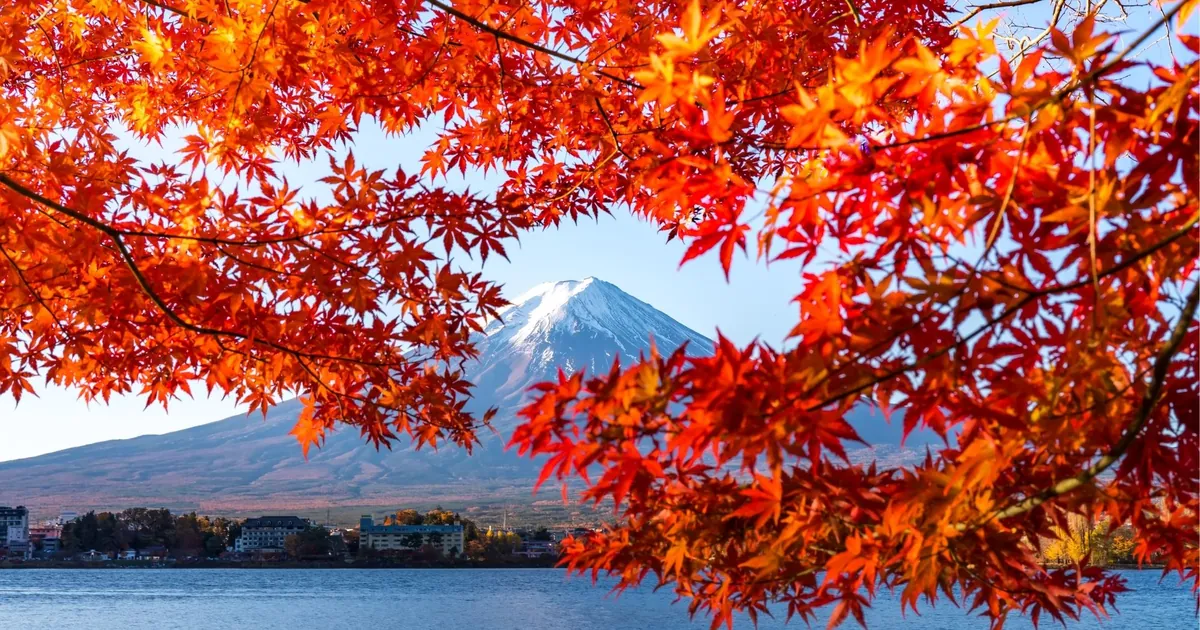
Lake Kawaguchiko is the most practical base for a Mount Fuji trip, and it is easy to treat the lake itself as something you look across on the way to somewhere else. There is a 20 km shoreline you can cycle in an afternoon, a sightseeing boat and swan pedal boats from the east shore, two museums on the north shore (one of them holds three stars in the Michelin Green Guide), and a pot of hoto noodles at the end of the day. The town is best with a night there, and better with two, because Fuji spends many days behind cloud and a second morning is the cheapest way to give yourself another chance of seeing it.
Check Availability
The four shores, and which one you want
The lake is big enough that “staying at Kawaguchiko” can mean four quite different things. Where you sleep, eat and spend the day depends on which shore you pick. Get the map in your head first.
- East and south-east: the hub. Kawaguchiko Station, the hot-spring ryokan district, most of the hotels and restaurants, the Funatsu boat pier, the swan and pedal-boat rentals, the Mt. Fuji Panoramic (Kachi Kachi) Ropeway and the Ohashi Bridge. This is where you arrive, sleep, eat and get out onto the water.
- North shore: the views. The best Fuji views on the lake and the biggest sights — Oishi Park and the Kawaguchiko Natural Living Center, the Kubota Itchiku and Music Forest museums, the cherry-blossom promenade near the Music Forest, and the Momiji Corridor (Maple Corridor). Restaurants and other services thin out here; come by bus or bike.
- West and north-west: the quiet end. Largely undeveloped and scenic. The photographers’ “Momiji Tunnel”, a maple-lined stretch of road and a prime autumn shot, is out this way.
- South shore: the calmer side. Yagizaki Park with its lavender, birdlife and Fuji-view lawn, a handful of hotels — among them the Royal Hotel, whose Kaiun no Yu baths take day visitors — and the Green Line bus heading west toward Lake Saiko.
Pick a base by the one thing you care about most. For the view, a lakefront or hillside room facing Fuji on the east or north shore. For convenience or a tighter budget, an inn or hostel near the station. For an onsen splurge, the eastern hot-spring ryokan. If you are still choosing between Kawaguchiko and the other four lakes, our Fuji Five Lakes comparison sets out why this lake is the default base and when one of the others suits better.
On the water
The sightseeing cruise. The main pleasure boat is the Ensoleillé — French for “sunny” — and the current vessel is branded “Appare”. It is a classically styled boat with an enclosed lower cabin and an open upper deck for all-round views, and it leaves from the Funatsuhama pier, about a 10-minute walk north of Kawaguchiko Station and close to the lower ropeway station. The loop takes about 20 minutes and costs roughly ¥1,000 for adults and ¥500 for children one way. Boats run about every 30 minutes from 9:00, with the last sailing as late as about 17:30 in midsummer and earlier in winter. A combination ticket with the Panoramic (Kachi Kachi) Ropeway costs less than buying the two separately.
On a clear day the view of Fuji from the upper deck is spectacular. Repeat visitors point out that you get very nearly the same view for free from the shore, so treat the cruise as a pleasant extra and not the centre of a day. A separate boat also runs roughly hourly between the Funatsu pier and Oishi Park on the north shore, taking about 15 minutes for ¥1,000 one way according to japan-guide, which makes it scenic transport to the best viewpoint on the lake.
Swan boats, pedal boats and speedboats. Swan-shaped pedal boats are a lakeside fixture, rented from operators including the Tozawa Center on the northern shore and NaturaBase at Funatsu. Typical NaturaBase rates: a swan boat costs ¥2,000 for two people for 30 minutes, plus ¥500 for each extra person up to four; a single water-cycle is ¥2,000 and a tandem ¥3,000, summer only. Another operator advertises swan and panda pedal boats at about ¥2,000 for 30 minutes, and some shops take cash only. A 15-minute speedboat ride runs about ¥6,000 per group of up to five, April to October: a driver-guided mini tour with photo stops, and some operators use Hello Kitty and Sanrio-themed boats. Reviewers consistently advise going before about 10:30, when the light on Fuji is better and the water is calmest.
Kayaking and canoeing. Guided early-morning kayak and canoe tours, some of which serve coffee out on the water, launch from the calmest and most Fuji-facing parts of the lake, and they are among the highest-rated water experiences here. Guides usually collect you from local hotels.
Fishing. Kawaguchiko is one of the Kanto region’s best-known largemouth black bass fisheries — local anglers call it a bass “mecca”, and 50 cm fish are possible — and it also holds wakasagi (lake smelt), rainbow trout and crucian carp. Fishing is permitted, but every angler needs a fishing permit (遊漁券, yūgyoken) issued through the Yamanashi Prefecture Fisheries Cooperative. A one-day ticket bought in advance costs ¥1,100 for high-school age and older, including a ¥200 fishing tax, and ¥1,600 if you buy it at the lake; junior-high age and younger, and disabled anglers, pay ¥450. Worms are now banned as bait for environmental reasons, though spinnerbaits, rubber jigs and natural-material pork rind are exempt. Tackle can be rented at the lakeside, and guided charters, which arrange the permit for you, run all year, mostly from the north side near Oishi Park.
Cycling the shoreline
The lakeside loop is about 20 km (12.5 miles), almost entirely flat and well paved, with a dedicated cycle path along much of the shore. It is one of the most beginner-friendly rides in Japan. Expect 1.5 to 2 hours of pedalling, or 3 to 4 hours once you stop for photographs.
Rentals cluster around Kawaguchiko Station. Standard bikes start at around ¥500–600 an hour or roughly ¥1,500 a day, and e-bikes commonly cost ¥1,500–4,000 a day. Take the e-bike: the price gap is small and your legs will feel the difference by the north shore. Reserve ahead in cherry-blossom and autumn seasons, when e-bikes sell out fast. Named shops include NaturaBase, Rental Cycle Fujinokura and several outfits near the station; some rent from inside a café, so you can pick up a drink before setting off. Riding in winter is discouraged because of ice.
A bike is also the easiest answer to the north shore. It is often quicker than waiting for a bus there, and you can stop wherever the mountain comes into view.
Museums and gardens around the lake
Kubota Itchiku Art Museum (久保田一竹美術館). The cultural highlight of the lake, set in woodland on the north shore. It shows the kimono of Itchiku Kubota (1917–2003), who revived Tsujigahana, a lost silk-dyeing technique from Japan’s Muromachi period (1333–1573). The centrepiece is his unfinished masterwork Symphony of Light, a series of kimono designed to be displayed side by side so that together they form one picture, with Mount Fuji among its scenes. The buildings are part of the visit — Okinawan coral limestone and a massive timber gallery — along with the gardens, a waterfall and a tea room. The museum was awarded three stars in the Michelin Green Guide Japon 2009.
- Admission: ¥1,500 adults, ¥900 university and high-school students, ¥400 junior-high and elementary pupils, per the official site.
- Hours: 10:00–17:00 from April to November (last entry 16:30) and 10:00–16:30 from December to March (last entry 16:00).
- Closed: generally on Tuesdays, but closing days shift from month to month. Check the official calendar.
- Getting there: Red Line Retro Bus to the “Kubota Itchiku Bijutsukan” stop, about 25 minutes.
Kawaguchiko Music Forest Museum (河口湖 音楽と森の美術館). Opened in 1999 as the UKAI Kawaguchi Music Box Forest and renamed in 2020, this is a European-styled cross between a theme park and a museum, devoted to automatic musical instruments. The collection includes antique music boxes; a French fairground organ from 1905 that fills an entire hall and plays every 30 minutes; a 20-metre dance organ in the Organ Hall with 43 automated figures; and a German orchestrion built in 1912 for the first-class salon of the Titanic, which was finished after the ship had sailed and never went aboard. Rose gardens with more than 720 varieties, canals, a chapel and cafés sit beneath Fuji views. The museum is run by the Ukai Group, which also runs Hakone’s Glass Forest.
- Admission is tiered: roughly ¥1,800 for adults on weekdays, ¥2,100 at weekends and on public holidays, and ¥2,300 in high season, per the official site. A LINE or online-ticket discount of about ¥200–300 is often available.
- Hours: typically about 10:00–17:30, last entry 17:00. Closing days have historically been Tuesdays and Wednesdays, and hours change with the season. Check before you go.
Kawaguchiko Museum of Art (河口湖美術館). A smaller municipal museum with changing exhibitions and a permanent collection of Fuji-themed paintings and photographs. Admission is about ¥800, with Tuesday closing.
Yamanashi Gem Museum and Herb Hall. The Gem Museum (about ¥600) displays gemstones and large crystals, and half of it is a shop. The free Herb Hall is mostly a herb-garden shop, with a perfume hall behind it.
Oishi Park and the Kawaguchiko Natural Living Center (north shore). The lake’s premier flower-and-Fuji photo spot, with lavender from late June to mid-July and red kochia bushes in autumn; our guide to the best places to see Mount Fuji covers it as a viewpoint in depth. The adjacent Natural Living Center has a Fuji-view café, souvenir shops, products woven from local Oishi-tsumugi silk, and seasonal jam-making with local blueberries. Both are free and always open.
Yagizaki Park (south shore). The quieter lavender counterpart to Oishi Park, about a 25-minute walk from the station, with seasonal flowers, a grassy Fuji-view slope and good bird-watching. It is also one of the venues for the Winter Fireworks.
Fuji-Q Highland. Japan’s famous park of record-breaking roller coasters sits just outside town by Fuji-Q Highland Station, about five minutes from Kawaguchiko by train. It is a destination in its own right and needs planning of its own; it appears here for orientation only.
Where to stay
Kawaguchiko’s accommodation falls into three practical clusters.
- Lakefront onsen ryokan and resort hotels (east and south-east shore). The hot-spring district at the eastern end is where most of the classic Fuji-view onsen properties are: Konansou, on the shore 10 minutes’ walk from the station, with a rooftop foot bath; Kukuna; Kasuitei Ooya; Fuji Lake Hotel; and the large garden resort Hotel Kaneyamaen, whose VIP annex Bessho Sasa gives every room a private open-air bath facing Fuji. This is the place for a Fuji-view room, a kaiseki dinner and an onsen, while still walking distance from the station and the boat pier.
- Hillside hotels with elevated views. Mizno Hotel sits on a hilltop with Fuji views from every room, and La Vista Fuji Kawaguchiko is styled after Provence, with balconies facing the mountain. Both give up walkability for height, which pays off at sunrise and in the golden hour. The luxury Fufu Kawaguchiko sits in quiet woodland away from the busy shore, designed to frame the mountain.
- Budget and mid-range near the station. Around Kawaguchiko Station you will find family inns (Kawaguchiko Station Inn), hostels (K’s House Mt. Fuji) and guesthouses. They are the most convenient choice for buses, trains, restaurants and bike hire, though Fuji views are limited or distant. This is the base we would recommend for first-time visitors and anyone without a car.
How to choose. To wake up to Fuji, book a lakefront or hillside Fuji-view room, and confirm that the room faces the mountain, because many face the lake or the garden instead. For convenience and budget, stay near the station. For an onsen treat, the eastern hot-spring ryokan are the strongest choice. Rates climb sharply at weekends and in the cherry-blossom and autumn seasons, and they swing so widely by season that nightly prices are not given here; check live rates.
What to eat
Hoto (ほうとう). Yamanashi’s signature dish: thick, flat noodles simmered in a rich miso broth with pumpkin, mushrooms and other vegetables, served in a cast-iron pot. The best-known name is Hoto Fudo, which has several branches around the lake. Its Higashikoiji branch is a striking white, cloud-like shell designed by architect Takeshi Hosaka, with Fuji views. A bowl costs somewhere around ¥1,080. Kosaku is another well-known chain, with a branch in front of the station that stays open late.
Beyond hoto. The area also serves Yoshida udon, extra-firm noodles that are more a Fujiyoshida speciality; wakasagi (lake smelt) tempura; basashi (horse sashimi); tofu made with Fuji spring water; local Koshu wine and Fujizakura craft beer; and soft-serve ice cream in local flavours such as lavender, grape and peach. The standard souvenir is Fujiyama Cookies, Fuji-shaped shortbread sold in the station shops.
Lakeside cafés. Cafés and Western restaurants dot the shore, including bakeries and terrace cafés with Fuji views, and the Natural Living Center café at Oishi Park, where the mountain is right in front of you. Fuji Ohishi Hana Terrace, next to Oishi Park, gathers cafés and shops together, including parfait spots that use Yamanashi fruit.
Plan meals around the opening hours. For the most-visited of the five lakes, Kawaguchiko’s dining can feel limited, and many places close early, often by 19:00–20:00. Many udon shops open only from about 11:00 to 14:00. Build lunch around where you want to eat, and do not count on finding somewhere late in the evening.
Getting around without a car
The Kawaguchiko Sightseeing “Retro Bus” (Red Line). This is the loop you want. Launched in 2005 by Fujikawaguchiko town and Fujikyu, it runs from Kawaguchiko Station along the eastern and northern shores, stopping at the ropeway and boat pier, the Music Forest, Kubota Itchiku and Museum of Art, Herb Hall, and the Natural Living Center at Oishi Park. A one-day pass costs ¥1,500, and two-day passes are also sold. The passes also cover the Green (Saiko) and Blue lines and the ordinary local buses in the area; our Five Lakes comparison has the frequency of each line. Buses leave from Terminal 1 in front of the station, some accept contactless credit-card payment, and services stop fairly early in the evening.
Walking. The walk from the station to the boat pier takes about 10 minutes, and Yagizaki Park is about 25 minutes on foot. The lake is too big to walk the whole shore in a visit, so combine the bus for the far north shore with walking around the station and the east shore.
Bikes. For the north shore and the shoreline in general, a rental bike — ideally an e-bike — is often faster and more pleasant than waiting for a bus, and you can stop anywhere for a photograph.
Do you need a car? No. Within the town the Retro Bus, a bike and your feet cover everything, and a car becomes a liability in peak-season congestion and during the road closures that come with events (see the calendar below). A car only makes sense if you are combining Kawaguchiko with the harder-to-reach western lakes of Saiko, Shoji and Motosu. For the journey from Tokyo itself, our transport guide prices the train, the highway bus and the drive.
Seeing the lake on a tour
If you are already staying at the lake, the Kawaguchiko private tour with a local guide starts from Fujiyoshida, Fujikawaguchiko or Narusawa, spends six hours with a licensed local guide, re-plans the route around the clearest weather on the day, and includes local food recommendations. It rates 4.99 stars from 52 reviews at $471, and there is a full breakdown here. It does not go up to the 5th Station, so if that is on your list, read our Fuji Subaru Line 5th Station guide and pick a different day for it.
Coming from Tokyo for one day, the Mount Fuji Private Tour With English Guide lists Lake Kawaguchiko and Oishi Park for the reflected view among its stops. It is the most-reviewed Fuji-only private day on the site, at 4.94 stars from 666 reviews and $309 for the vehicle, with its own page here. The Private Mount Fuji Tour With Pickup and Drop-Off also names Lake Kawaguchi and Oishi Park, with the guide accompanying you at each stop, at 4.88 stars from 295 reviews and $350, broken down here.
By coach, the Mt Fuji, Oishi Park and Lake Kawaguchi tour covers six photo spots including the lake, at 4.91 stars from 338 reviews for $49. The Mt Fuji, Chureito Pagoda, Lake Kawaguchi and Oshino Hakkai tour is the highest-volume version of the classic circuit, at 4.83 stars across 4,350 reviews for $49, and it includes walking time by Lake Kawaguchiko and Oishi Park. Neither gives you a night at the lake, which is the single biggest improvement you can make to your odds of seeing the mountain.
The lake’s calendar
Lake Kawaguchiko Fireworks Festival (Kojosai, 湖上祭). The town’s biggest summer event, with roots going back to 1917 and held every year in early August, with the main display on 5 August. In 2026, according to the town’s official event site, the main fireworks ran from 19:45 to 20:40 on 5 August, with traffic restrictions on the lakeside roads and car parks from 17:00 to 22:00. About 10,000 fireworks light up the lake over two evenings, including large shakudama shells and a “Musical Star Mine” set to music, and crowds are counted at around 120,000. Viewing is free and there is no paid seating. The recommended vantage points are Oike Park and the Funatsuhama and Hirahama shores, or across the lake at Nagasaki and Oishi Park for a Fuji backdrop. Because the lakeside roads close from about 17:00, use public transport, or better still, sleep in town.
Fujikawaguchiko Autumn Leaves Festival (紅葉まつり). In recent years this has run from 1 to 30 November, centred on the Momiji Corridor on the north shore near the Kubota Itchiku museum, with around 400–500 maples, food stalls and evening illumination until about 21:30. Weekends are very crowded; go early in the morning or on a weekday. The nearest bus stop is Kubota Itchiku Art Museum on the Red Line. If you would rather someone else handled the timing, the Mt. Fuji Heritage Tour through traditional villages, lakes and shrines builds the seasonal maple tunnel into a coach day alongside Oishi Park, at 4.48 stars from 550 reviews for $53. That is the lowest rating of the tours named on this page.
Kawaguchiko Winter Fireworks (冬花火). A cold-weather event that has run since 1998. Fireworks go up from about 20:00 to 20:20 at weekends, from around late January until 23 February, which is Mt. Fuji Day, from the lakeside venues of Oike Park, Tatami-iwa and Yagizaki Park. The crisp winter air makes for especially vivid bursts and reflections on the lake. Dress very warmly, and confirm the dates for the coming season.
Lavender and herb season (late June to mid-July). Lavender peaks from late June to mid-July at Oishi Park on the north shore and Yagizaki Park on the south. The long-running Kawaguchiko Herb Festival ended as a branded event after its 2025 edition; the lavender and both free parks remain.
What has changed in 2025 and 2026
Overtourism is being managed. Kawaguchiko has become a showcase for Japan’s response to overtourism. The best-known symbol is the barrier at the Lawson convenience store photo spot, first put up in 2024 to stop crowds blocking traffic for the shot of the shop with Fuji behind it; our Five Lakes comparison tracks how it has come down and gone back up since. Measures at the Chureito Pagoda are covered in our Chureito Pagoda visitor guide. The wider picture is heavy visitor numbers in cherry-blossom season (mid-April) and the autumn-leaves season (early to mid-November), with congestion on buses and roads. Japan’s national strategy of congestion maps, express buses, manners signage and a programme covering 100 regions by 2030 increasingly reaches the area. The practical takeaway: come early in the day, and avoid peak weekends where you can.
New places to stay. Small, design-led properties keep opening on the north shore. HOTORI no HOTEL BAN, a small hotel beside the Music Forest with Fuji-view outdoor baths, is now a named stop on the Red Line bus. Check the current status of any single property before you book.
Lake conditions. Bass-fishing rules tightened with the worm ban to protect water quality. No major algae problems or closures stood out in current sources, but check conditions locally if you plan to swim or fish.
What is worth your time, and what to skip if you are short of it
Worth it: cycling or walking the north shore; Oishi Park on a clear morning; the two big museums, with Kubota Itchiku the pick for culture and the Music Forest for families; and basing yourself here to give yourself the most chances of a clear Fuji.
Skippable if time is short: the Kachi Kachi ropeway summit, where some visitors find the view underwhelming, with fencing and town buildings in the frame, and the north-shore lake views better; and the sightseeing cruise, which is pleasant but shows you the view you can see free from the shore.
Above all, Fuji is shy. The mountain is often hidden by cloud even in otherwise fair weather, and your best chances are before about 9:00 and again in the late afternoon. Our Mount Fuji visibility guide sets out the odds month by month and hour by hour. Build in flexibility, and stay two nights if you can.
What we would do
With one full day, based in town. Rent an e-bike early and ride the north shore to Oishi Park for the classic Fuji-and-flowers shot before the crowds arrive. Stop at the Kubota Itchiku museum, ride back along the shore, and finish with hoto at Hoto Fudo. Skip the ropeway and the cruise unless the weather is flawless and you have time to spare.
With two nights (our recommendation). Spend day one as above. On day two, add the Music Forest museum, a swan boat, pedal boat or kayak session on the calm morning water, Yagizaki Park or the Momiji Corridor depending on the season, and a lakeside café. Two nights give you two mornings to catch a clear Fuji instead of one.
Choosing your base:
- For the view: a lakefront or hillside onsen room facing Fuji, on the east or north shore.
- For convenience or budget: an inn or hostel near the station.
- For an onsen splurge: the eastern hot-spring ryokan — Kaneyamaen and its Bessho Sasa annex, Konansou, or Kasuitei Ooya.
Logistics. Buy a one-day or two-day sightseeing bus pass when you arrive, reserve e-bikes ahead in the peak seasons, leave the car out of town, and put water activities and viewpoints before about 10:30.
When to change the plan. If the morning forecast shows clear skies and little haze, put the ropeway, the cruise and the outdoor viewpoints first that day. If Fuji is hidden, switch to the museums and save the viewpoints for the next clear window. If your visit falls on an event date — 5 August for Kojosai, a November weekend, or a fireworks weekend in January or February — expect road closures and heavy crowds, travel without a car, and book somewhere within walking distance of the lakeshore.
The caveats that matter
Prices, hours and event dates change. Museum admissions, seasonal boat times and bus timetables change from year to year. The Music Forest museum’s closing days and exact hours in particular could not be fully confirmed from its official operating information; check them directly before you go.
Fuji is never guaranteed. Cloud frequently hides the mountain even on days that are otherwise clear.
Some figures come from individual operators and traveller reports. Swan-boat and pedal-boat rates and bike-hire prices vary by shop and by season.
Distances and travel times are approximate and depend on traffic, especially in the peak seasons.
Tour prices are the GetYourGuide starting prices for the specific listings named, and vary by operator, season, group size and inclusions. Ratings and review counts were re-sourced from each listing on 15 September 2026.
Related reading
- Fuji Five Lakes: which one should you visit? — Kawaguchiko against the other four, and the bus lines between them
- The Fuji Subaru Line 5th Station — the half-day trip up the mountain from Kawaguchiko
- The best places to see Mount Fuji — Oishi Park and eleven other viewpoints, ranked by what you want from them
- Is Mount Fuji visible today? — the odds by month and by hour
- Oshino Hakkai visitor guide — the spring-fed village 25 minutes away by bus
- Chureito Pagoda visitor guide — one train stop away, and the 2026 access rules
- Compare all six private Fuji tours — side by side, with live prices
Your Own Car, Your Own Day at Mount Fuji
Rated 4.9/5 by 666 travellers. Hotel pickup in Tokyo, an English-speaking driver-guide, and an itinerary you set yourself — with free cancellation up to 24 hours before.
Check Availability & Book