Mount Fuji at Christmas and New Year 2026–2027
Visiting Mount Fuji over Christmas or New Year 2026–2027? Holiday dates, what's open on 25 December and 1 January, weather, transport, shrine visits and private day tours from Tokyo.
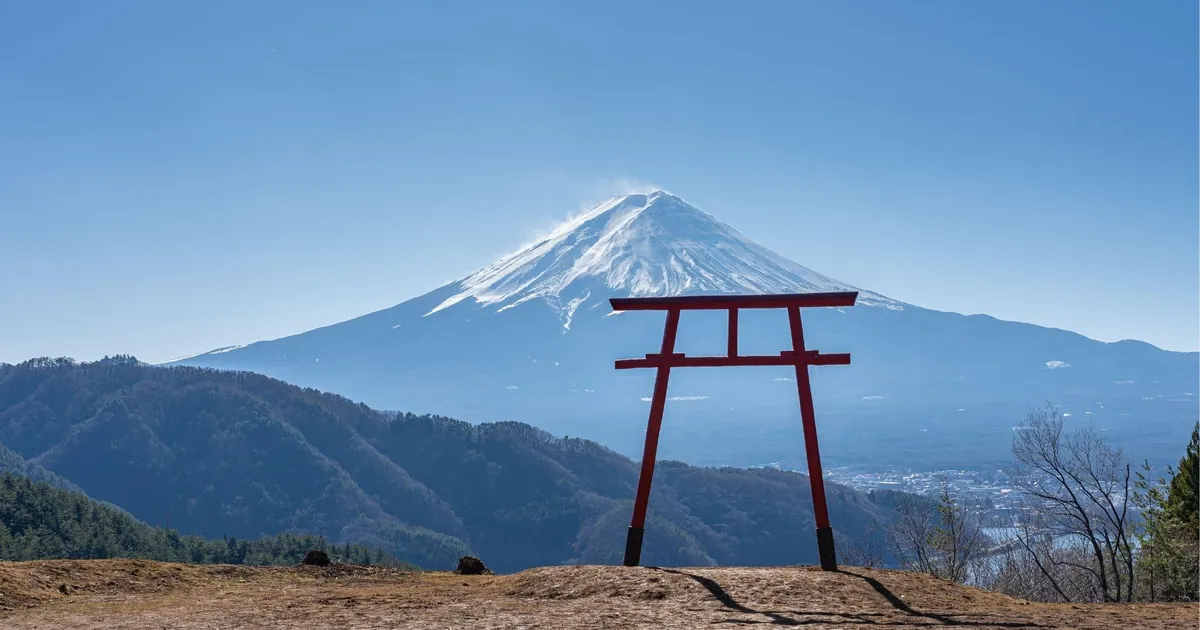
Yes, you can visit Mount Fuji over Christmas and New Year 2026–2027, but the two weeks feel very different. Christmas Day is an ordinary working day in Japan, so 24–26 December plays out like any winter sightseeing trip to the Fuji Five Lakes. The New Year holiday, roughly 29 December to 3 January, is Japan’s biggest domestic travel week: trains and roads are busy, some restaurants and attractions close or shorten their hours, and shrines fill up for hatsumōde, the year’s first shrine visit. For views and photos, pick Christmas week. For New Year customs, pick New Year and stay a night at the lakes.
On either date, a private car lets you reorder the stops around cloud and closures: the From Tokyo: Mount Fuji Private Tour With English Guide (from $319 per group, 4.9/5 from 931 reviews) collects you in Tokyo and lets you agree the route with your driver-guide on the morning. Ask the operator to confirm your exact date before you pay, because holiday availability varies, and read our breakdown of the English-guide tour for what it includes.
Check Availability
Christmas or New Year at Mount Fuji?
| Question | Christmas: 24–26 December 2026 | New Year: 31 December 2026 – 3 January 2027 |
|---|---|---|
| Public holiday in Japan? | No | 1 January is a national holiday, and many businesses close from about 29 December to 3 January |
| Can you visit the Fuji Five Lakes? | Yes, weather permitting | Yes, weather permitting |
| Restaurants and attractions | Most keep normal hours; check each one | More closures and shorter hours; check every stop |
| Atmosphere | An ordinary winter sightseeing day with some seasonal decorations | Shrine visits, families on holiday and crowds |
| Snow on the mountain | Usually snow-capped; snow at the lakes is not guaranteed | Usually snow-capped; snow or ice lower down varies |
| Day trip from Tokyo | Practical | Practical, with extra time for traffic and changed hours |
| Overnight stay | Optional | Recommended if you want New Year’s Eve or an early shrine visit |
| Best for | Simple sightseeing and clear views | New Year traditions and a winter break |
Choose Christmas week if Mount Fuji is one day in a busy Tokyo itinerary and you want the fewest holiday complications. Choose New Year if the customs matter to you as much as the view, and plan the meals, the room and the trip back before you go.
Holiday dates for 2026–2027
| Date | Day | What it means for your trip |
|---|---|---|
| 24 December 2026 | Thursday | Christmas Eve; restaurants may run set menus, so book |
| 25 December 2026 | Friday | Christmas Day, which is not a national holiday in Japan |
| 26–28 December 2026 | Saturday–Monday | A weekend, then the start of year-end travel |
| 29–30 December 2026 | Tuesday–Wednesday | Heavy travel out of the big cities; some businesses start their break |
| 31 December 2026 | Thursday | New Year’s Eve (Ōmisoka); some sites close early |
| 1 January 2027 | Friday | New Year’s Day (Ganjitsu), the main shrine-visit day |
| 2–3 January 2027 | Saturday–Sunday | More hatsumōde, full hotels and the trip home |
| 4 January 2027 | Monday | Many businesses reopen; some crowds remain |
The Japan National Tourism Organization describes the late-December to early-January oshōgatsu season as a time of higher prices, bigger crowds and closures. Japan-guide.com expects the 2026–2027 travel peak out of the big cities between 29 and 31 December, and back towards them between 2 and 4 January, especially 3 January. Those are forecasts of the usual pattern, so check the traffic news for your own day.
Weather around Mount Fuji at Christmas and New Year
Nearly every visitor stays at the lakes and villages around the mountain, and the summit is far colder than the towns. Kawaguchiko, at about 860 m, averages a high of 8.5 °C and a low of −2.9 °C in December and 5.5 °C and −5.7 °C in January (Japan Meteorological Agency, 1991–2020). If you’re staying on past the holiday, our guide to Mount Fuji in January 2027 covers the rest of the month.
Expect freezing mornings at Lake Kawaguchiko and Lake Yamanaka, with a chance of snow or icy paths. In direct sun the middle of the day can feel mild, but the temperature drops fast once the sun sets, at around 16:30 in late December. Winter often gives you a white summit against a blue sky, and cloud can still hide the whole mountain on any day.
Does Mount Fuji have snow at Christmas?
Usually, yes: by late December the upper mountain normally has a snow cap, though its size changes with each snowfall. A white summit does not mean snow on the ground at Lake Kawaguchiko, Oshino Hakkai or the Chureito Pagoda. If you want to play in the snow, book a snow park or ski area and check that it is open.
Can you climb Mount Fuji on New Year’s Day?
No. Don’t plan a summit climb over Christmas or New Year. The official trails are closed outside the summer season, and the winter mountain has ice, severe wind and no open huts. The roads to the 5th Stations can be closed too. The official Mount Fuji climbing website sets out the season, and our Mount Fuji winter guide covers the sightseeing you can do instead.
Things to do near Mount Fuji over the holidays
1. Photograph Mount Fuji from Lake Kawaguchiko
The north shore of Lake Kawaguchiko is the classic winter photo spot, with several lakeside viewpoints facing the mountain. Combine a short walk with a café stop, if one is open. On a one-day trip, go to the lake early, while the light lasts, instead of waiting for a particular attraction to open.
Best for: couples, photographers, first-time visitors and anyone who wants an easy scenic stop.
2. Visit the Chureito Pagoda, if the steps are safe
The Chureito Pagoda, above Fujiyoshida, gives you the famous red pagoda framed by Mount Fuji. You climb 398 steps to the viewpoint, and frost or ice makes them slippery. The viewpoint may be reachable when nearby shops are closed, but don’t assume the path is safe in every weather. Wear shoes with grip, take your time and pick a level viewpoint for anyone who can’t manage stairs. Our Chureito Pagoda visitor guide covers the climb.
Best for: active travellers and early-morning photography.
3. Walk Oshino Hakkai’s ponds and lanes
Oshino Hakkai’s spring-fed ponds give you a different foreground from the lake views, and you can enjoy them outdoors without relying on a museum. Shops, restaurants and stalls may run shorter hours around New Year, so visit in daylight and don’t count on the food stalls. Our Oshino Hakkai visitor guide has the layout.
Best for: families, culture lovers and varied photos.
4. Soak in an onsen with a mountain view
A hot spring is a good way to end a cold sightseeing day. Some hotels and ryokan at Lake Kawaguchiko and Lake Yamanaka have baths facing Fuji, but day-use access, private baths and holiday admission rules vary widely, and some baths are for overnight guests only. Check the property’s own website, and book a room if the onsen is the point of your trip.
Best for: couples and anyone staying the night.
5. Make a New Year shrine visit
The first shrine visit of the year is called hatsumōde. Fujiyoshida has historic shrines tied to Mount Fuji, among them Kitaguchi Hongu Fuji Sengen Shrine. Expect a festive mood, people praying and queues in early January. A shrine visit is a cultural stop and not a Fuji viewpoint. It can be crowded, so go quietly and follow the shrine’s rules.
Best for: travellers who want a Japanese New Year.
6. Stay a quiet night by the lake
A night at a ryokan on Lake Kawaguchiko or Lake Yamanaka makes the trip slower and easier. You get a second chance at the view if the first day is cloudy, a warm dinner and often an early-morning look at the mountain. New Year rooms can sell out early, and rooms with a private onsen bath go first.
Best for: couples, families with young children and photographers.
What’s open around Mount Fuji on Christmas Day?
Christmas Day is not a national holiday in Japan, so a 25 December day trip runs much like any other winter weekday. That still doesn’t mean every attraction or restaurant is open: some close on a regular weekday, some are in seasonal maintenance and some keep special hours.
For Christmas Day, mix outdoor scenery you can count on with one or two indoor stops you can book. Check the official page of each place you plan to visit, especially ropeways, museums, amusement parks and onsen. The Mt. Fuji Panoramic Ropeway closes for its annual inspection for part of December, so check its notice before you plan a ride.
A practical Christmas Day plan: leave Tokyo early, photograph the mountain at Lake Kawaguchiko, have lunch by the lake, walk a village or viewpoint in the afternoon and be back before late evening.
What’s open near Mount Fuji on New Year’s Day 2027?
It depends on the place. Outdoor viewpoints are usually there to visit, weather permitting, but toilets, restaurants, car parks, boats, ropeways, museums and shops vary, and some of them close for maintenance that has nothing to do with the holiday.
Use this checklist when you book:
| Stop or service | What to check for 1 January |
|---|---|
| Lakeside viewpoint | Public access, parking and the day’s weather |
| Shrine | Hatsumōde crowds and traffic control |
| Chureito Pagoda | Ice on the steps, plus local access and parking rules |
| Oshino Hakkai | You can usually see the ponds; don’t rely on shop hours |
| Mt. Fuji Panoramic Ropeway | Its 1 January timetable and weather status, directly with the operator |
| Restaurants | Book where you can, and have a backup |
| Private driver or guided tour | That the operator runs on your date, and where pickup is possible |
| Local bus or train | The holiday timetable, first and last departures and seat reservations |
| Onsen | Day-use access, holiday prices and any restrictions |
A listing that says “open year-round” does not confirm its hours on 1 January 2027.
Itinerary 1: a Christmas Day private tour from Tokyo
Best for: first-time visitors who want the famous viewpoints in one day without holiday complications.
| Approximate time | Stop | What to do |
|---|---|---|
| 6:30–7:00 | Leave Tokyo | Early hotel pickup or a departure from a bus or rail terminal |
| 9:00–10:00 | Chureito Pagoda | Photograph the pagoda and mountain if the steps are safe |
| 10:30–11:30 | Oshino Hakkai | Walk between the ponds and through the village |
| 12:00–13:00 | Lunch | A restaurant you have checked; warm up indoors |
| 13:30–15:00 | Lake Kawaguchiko | Viewpoints and a short lakeside walk |
| 15:00–15:30 | Start back | Leave daylight and traffic margin |
| 17:30–19:30 | Arrive in Tokyo | Depends on traffic and your hotel’s location |
These times are a sample plan, not a tour’s timetable or a promised drive time. Road conditions and holiday traffic can change the day a lot.
Why a private car helps: the three main stops are spread out. With a driver you can switch the order when the cloud moves or a lunch place is closed. Pick a tour that confirms it runs on 25 December; a listing open “every day” may not.
Itinerary 2: New Year’s Eve, 31 December 2026
Best for: sightseeing followed by a calm evening at a ryokan.
- Leave Tokyo in the morning for the Fuji Five Lakes.
- Start at Lake Kawaguchiko or whichever viewpoint is clear, and follow the cloud.
- Have lunch at a restaurant you know is open on 31 December.
- Check in to your ryokan in mid- or late afternoon.
- Eat the ryokan’s dinner or another meal you have booked; don’t count on finding a walk-in restaurant after dark.
- For a shrine visit, read the shrine’s own visiting information and plan how you’ll get there and back.
Don’t expect fireworks or a Western-style midnight countdown. New Year’s Eve in Japan is mostly family time and temple or shrine visits, and any fireworks need an official announcement before you plan around them. The Lake Kawaguchiko winter fireworks run in late January and February, not at New Year.
Itinerary 3: New Year’s Day 2027 around Mount Fuji
Best for: the scenery plus a first taste of Japanese New Year customs.
| Time | Plan | What to watch for |
|---|---|---|
| Early morning | A Fuji viewpoint | Sunrise views aren’t guaranteed; dress warmly |
| Late morning | Kitaguchi Hongu Fuji Sengen Shrine | Allow time for hatsumōde crowds |
| Lunch | A restaurant you have booked or confirmed | Closures and short menus are common |
| Afternoon | Lake Kawaguchiko shore | Keep the last stop outdoors and flexible |
| Late afternoon | Back to Tokyo, or another night | Leave traffic margin, especially near shrines |
For an easier day, stay the night of 31 December and start from the lake instead of trying to fit a dawn viewpoint, a busy shrine and a Tokyo round trip into one day.
Should you book a private Mount Fuji tour over New Year?
Between 29 December and 3 January a private tour saves you transfers and lets you skip a stop that turns out to be closed. It won’t clear a traffic jam, promise the weather or open a closed road. Compare the total price for your group, the stops and the cancellation terms with a coach tour or the train.
When a private tour makes sense
- Families with children: fewer changes and room for warm-up breaks and naps. Check that child seats are available and what they cost.
- Groups of three to six: one car can cost less than several coach seats, depending on the vehicle size and the operator’s price.
- Photographers: early starts and longer stops at fewer viewpoints.
- Travellers with limited mobility: you can pick stops with less walking, though many famous viewpoints have stairs or uneven ground.
- New Year travellers: a custom route can stick to places you have confirmed are open.
If you only want a seat and a fixed route, the Tokyo: Mt Fuji & Oishi Park & Lake Kawaguchi & Oshino Hakkai coach tour (from $49 per person, 4.8/5 from 6,447 reviews) covers the Chureito Pagoda, Oishi Park and Oshino Hakkai; check that it runs on your holiday date. Our private tour vs group day trip guide compares the prices by group size.
Questions to ask the operator before you pay
- Do you run on my exact date? Say 25 December or 1 January, not “Christmas week”.
- Is hotel pickup included? Which areas, and at what extra charge?
- How many hours are included? Are overtime and expressway tolls extra?
- Can the route change if roads are icy or the mountain is in cloud?
- Are entry tickets, meals, parking and child seats included?
- What happens to my booking in severe weather? Refund, new date or neither?
- Does the driver speak English, and is a licensed guide included? A driver and a guide are not always the same service.
For more day-trip routes, see the winter itineraries from Tokyo in our winter guide.
Getting from Tokyo to Mount Fuji over the holidays
Highway bus
Direct highway buses run from Shinjuku and other Tokyo terminals to Kawaguchiko. On a normal day the Shinjuku bus takes about 1 hour 45 minutes and costs ¥2,000 one way booked online or ¥2,200 at the counter. Over the holidays, expressway delays and sold-out departures are more likely, so reserve a seat and leave plenty of time before any onward flight or train.
Train
The train avoids motorway traffic, though holiday crowds and full reserved seats are possible. The Fujikyu Railway runs from Otsuki to Kawaguchiko, and the Fuji Excursion limited express runs through from Shinjuku on some services. Check the holiday timetable and reserve seats where you can. Our bus vs train vs tour in winter guide compares the three.
Rental car
A car reaches more viewpoints, but icy roads, winter tyres, parking rules and holiday traffic make it a poor choice for anyone new to winter driving. Check the rental terms, the tyres and the road conditions, and never drive on a closed road.
Private transfer
A private car can make the trip easier for a family or group, but it sits in the same traffic. Ask about service hours, vehicle size, winter equipment and fees for overtime or detours.
Don’t plan a tight same-day connection between a Mount Fuji trip and an international flight during the New Year rush.
Can you visit the Mount Fuji 5th Station at Christmas or New Year?
Don’t count on it. The Fuji Subaru Line on the Yamanashi side is the only 5th Station road that stays open into winter, and only when snow and ice allow; from December to February its toll gate opens from 9:00 to 16:00. On the Shizuoka side, as of 10 November 2026 the Fujinomiya and Subashiri roads had closed for the winter, and the Gotemba road is set to close on 17 November. Our Fuji Subaru Line 5th Station guide explains how the winter closure works.
A tour sold as “Mount Fuji 5th Station” does not guarantee you’ll get there on 25 December or 1 January. Ask the operator what replaces it, and choose a lower sightseeing route if your dates are fixed.
Winter alternatives: Lake Kawaguchiko, Oshino Hakkai, the Chureito Pagoda and safe lakeside viewpoints give you the famous views without a mountain road.
Where to stay for Christmas or New Year
Lake Kawaguchiko: the most practical base for a first visit, with the widest choice of hotels, restaurants, transport and viewpoints.
Lake Yamanaka: quieter and closer to nature, or the place for a particular Fuji view. You’ll rely more on a car to get around.
Fujiyoshida: handy for the historic shrines, the town and the Chureito Pagoda. Check how far the hotel is from the station or bus stop.
Tokyo: best if you don’t want to change hotels. An early day trip works but leaves less slack for crowds and weather.
Our guide to where to stay at Lake Kawaguchiko names Fuji-view hotels on each shore.
Holiday booking checklist
- Confirm dinner as well as the room; many ryokan serve meals at set times.
- Check the check-in deadline and the rules for arriving late.
- Ask whether the onsen is private, shared or open to day visitors; not every room has a private bath.
- Book two nights if a clear view of Fuji matters a lot to you.
- Choose free cancellation when the price gap is small, and read the deadline.
- Ask whether the hotel runs a shuttle, especially if you have luggage or children.
Planning for cloud, snow and short hours
Winter gives you good photo chances, but you can’t count on seeing the whole mountain on any date. Build the day around the two or three stops that matter most, each with a realistic bad-weather fallback.
| Problem | What to do |
|---|---|
| Cloud on the summit | Try another viewpoint if the forecast shows it clearing; otherwise enjoy the villages, food and an onsen |
| Snow or ice on the stairs | Skip the Chureito climb and use a level viewpoint |
| Ropeway closed for wind or the holiday | Go to an outdoor lakeside viewpoint instead of waiting |
| Restaurant closed | Book a meal or keep two checked backups |
| Holiday traffic | Cut a stop, leave earlier and avoid tight evening bookings |
| A bad-weather day | Two nights give you more chances to see Fuji than one fixed day |
For the cloud odds by month and hour, see our Mount Fuji visibility guide, and for fallback stops, our guide to what to do when Fuji is hidden by clouds.
What to wear at Mount Fuji over Christmas and New Year
Pack for mornings below freezing; Tokyo’s milder winter is the wrong guide. Bring a warm base layer, a fleece or jumper, a windproof insulated coat, gloves, a hat and shoes with grip. Add sunglasses and sunscreen for bright days outdoors. Keep children well wrapped up and keep photo stops short if they get cold quickly.
If snow or ice is forecast, check the path before you try a viewpoint with steps or steep slopes. For a lot of walking, winter shoes matter more than smart trainers. Our Mount Fuji winter packing list has outfits by month.
What a Mount Fuji holiday trip costs
Your biggest costs are transport, the hotel and whether you hire a private car. Ask for the price on your exact holiday date and for your group size, since a general figure can be out of date.
| Trip type | What you pay for | How to keep the cost down |
|---|---|---|
| Independent day trip | Return bus or train fares, local transport, meals, any entry fees | Stay around Lake Kawaguchiko and visit fewer places |
| Coach tour | A per-person price, plus meals and optional tickets | Check which stops are included and that it runs on the holiday |
| Private day tour | One price for the car and driver, possible tolls, parking, overtime and tickets | Split it across your group and book a realistic length |
| Night at a ryokan | Room, meals, local transfers and a possible holiday supplement | Compare meal plans and cancellation terms |
A return Shinjuku–Kawaguchiko bus ticket costs from ¥4,000 per person booked online. Christmas isn’t priced like New Year in Japan: prices depend on the company, the weekday, the hotel and local demand. Equally, a coach tour with a year-round listing may not run on 1 January. Our Mount Fuji private tour cost guide breaks down the private-tour prices.
Frequently asked questions
Is Mount Fuji open on Christmas Day 2026?
The Fuji Five Lakes area is open to visit on Christmas Day, weather and local access permitting. The summit trails are closed for the winter. Check each restaurant and attraction for its 25 December hours.
Is Mount Fuji open on New Year’s Day 2027?
You can visit the lower viewpoints, towns and shrines around Mount Fuji, subject to weather and any temporary closures; the summit is closed. Attraction and restaurant hours may change on 1 January.
Is Christmas Day a holiday in Japan?
No. 25 December is not a national holiday in Japan, although some businesses run seasonal menus or events.
Is New Year’s Day a public holiday in Japan?
Yes. 1 January is a national holiday, and in 2027 it falls on a Friday.
Is 31 December a good day to visit Mount Fuji?
Yes for the scenery, especially if you stay the night at the lakes, but expect closures and heavy holiday traffic. Book your restaurant, room and trip back in advance.
Can I see a snow-covered Mount Fuji at Christmas?
Usually, yes: the peak normally has a snow cap by late December. Cloud can still hide the mountain, and the lake towns may have no snow on the ground.
Will it snow at Lake Kawaguchiko over Christmas?
It can, but it isn’t guaranteed. The lakes and the summit have very different weather, so check a local forecast a few days before you go.
Are Mount Fuji private tours available on 1 January?
Some operators run on New Year’s Day and others don’t. Confirm availability, price, pickup and hours for 1 January 2027 before you book.
Are buses from Tokyo to Kawaguchiko running over New Year?
Don’t assume they are cancelled or running as normal. Check the official timetable, seat availability and service notices for your date, and expect road delays.
Can I visit the Chureito Pagoda in January?
Yes, it is a popular winter viewpoint, but access depends on the conditions. The steps can be icy and some paths or car parks may be restricted. Choose another viewpoint if it isn’t safe.
Is Lake Kawaguchiko a good place for New Year’s Eve?
Yes, for a quiet ryokan stay, an onsen and an early look at Mount Fuji. Don’t expect a countdown event or fireworks unless one is officially announced.
Where can I do hatsumōde near Mount Fuji?
Fujiyoshida has historic shrines such as Kitaguchi Hongu Fuji Sengen Shrine. Check the shrine’s visiting advice, expect queues and respect worshippers and the shrine’s rules.
Should I book one night or two around New Year?
One night works for a short break, but two nights give you more slack, especially if seeing Mount Fuji is the main goal. A cloudy day or heavy traffic matters less with a longer stay.
What if Mount Fuji is hidden by clouds?
Treat it as a winter day at the Fuji Five Lakes. Visit Oshino Hakkai, eat locally, walk a lake town or use an onsen you have confirmed is open. A different viewpoint may not show the mountain either.
Is Mount Fuji worth visiting over the 2026–2027 holidays?
Yes, as a winter sightseeing trip; climbing is off the table. Christmas makes for an easy day trip, and New Year gives you memorable customs in exchange for more planning around transport, closures and meals.
Which to choose: Christmas or New Year
For most first-time visitors based in Tokyo, 24–26 December 2026 is the easier window for a Mount Fuji day trip. Keep the route to Lake Kawaguchiko, Oshino Hakkai and one more viewpoint instead of trying to see everything in a day.
If you want Japanese New Year traditions, 31 December 2026 to 2 January 2027 can be the high point of the trip. Book a night at the lakes, confirm meals and transport, make a quiet shrine visit and keep the sightseeing light. Either way, a private car helps most when you want several stops and the freedom to change them; it can’t promise a clear view or open a closed road. Check your exact dates with each operator before you book, because holiday schedules change.
Where these facts come from
Checked 10 November 2026. Recheck holiday hours and operating details close to your trip.
- Holiday travel: the Japan National Tourism Organization’s December and January guides and travel FAQ.
- 2026–2027 travel peaks and typical closures: Japan-guide, visiting Japan during New Year.
- Climbing season: the official Mount Fuji climbing website.
- Shizuoka 5th Station roads: Shizuoka Prefecture, update of 10 November 2026.
- Shinjuku–Kawaguchiko bus fare and journey time: Fujikyu’s Shinjuku–Kawaguchiko bus page.
- Rail timetables: Fujikyu Railway.
- Temperatures: Japan Meteorological Agency 1991–2020 normals for Kawaguchiko.
Related reading
- Mount Fuji in December 2026: road closures, holidays and which week to pick
- Mount Fuji in winter 2026–2027: December, January and February compared, with day-trip itineraries
- Mount Fuji visibility guide: the odds by month and by hour
- Compare all six private Fuji tours, side by side with live prices
Your Own Car, Your Own Day at Mount Fuji
Rated 4.9/5 by more than 900 travellers. Hotel pickup in Tokyo, an English-speaking driver-guide, and an itinerary you set yourself — with free cancellation up to 24 hours before.
Check Availability & Book