Mount Fuji Climbing Season: Dates, Fees and Rules
The 2026 Mount Fuji climbing season trail by trail: opening dates, the ¥4,000 fee, the two booking systems, the 14:00 gate closure, gear checks, and the best weeks to climb.
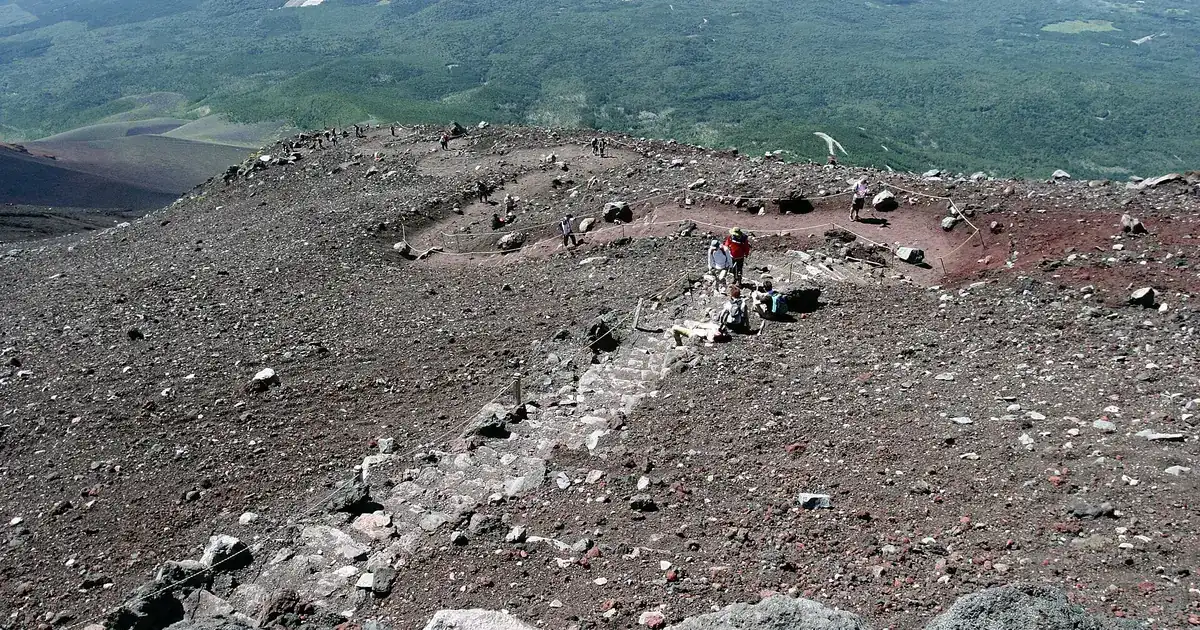
The Mount Fuji climbing season is short and tightly run. In 2026 the Yoshida and Subashiri Trails opened on 1 July and the Fujinomiya and Gotemba Trails, with the summit crater walk, on 10 July, and all four closed on 10 September. Every trail now charges a mandatory ¥4,000 fee and asks you to register online before you arrive, and every trailhead gate is closed from 14:00 to 03:00 to anyone without a mountain-hut booking. There are two booking systems, one for each side of the mountain, and one of them makes you pass a safety test first. Outside those dates, climbing above the 5th Stations is prohibited and dangerous: the huts are shut, the trails are under snow and ice, and there is no rescue cover. The rules change from year to year, so check them on the official site, fujisan-climb.jp, before you book anything.
Check Availability
The short version
- The dates barely move, but they are not guaranteed. For three years running the Yoshida Trail has opened on 1 July, the Shizuoka trails around 10 July, and every trail has closed on 10 September. What changed in 2026 was Subashiri moving its opening forward to 1 July, to match Yoshida; the two routes merge at the 8th Station. The prefectures set the dates after checking snow melt and trail safety and usually confirm them in spring, so treat them as scheduled, not certain.
- The fee is ¥4,000 on all four trails, replacing the old and confusing mix of a ¥2,000 Yoshida toll and a ¥1,000 voluntary donation. Children pay the full fee.
- One fee, two booking systems. Yoshida uses Yamanashi Prefecture’s online reservation system, which issues a QR code that you exchange for a wooden tag at the gate. The three Shizuoka trails use the FUJI NAVI app, which makes you complete a short e-learning course and pass a test before it issues the QR code you exchange for a wristband.
- The Yoshida Trail’s cap of 4,000 climbers a day was not reached on any day in 2024 or 2025, so on most days you can still decide close to the date.
- The gate now shuts at 14:00, not 16:00. It closed at 16:00 when it was installed in 2024 and has closed at 14:00 since 2025. Its target is “bullet climbing”, a sleepless overnight dash to the summit, and a hut booking is the only way past it in those hours.
- Climbing above the 5th Stations out of season is prohibited and dangerous. Both prefectures are looking at charging reckless climbers for their rescue, though neither has passed a rule yet.
- The rules appear to have helped on safety. Nine people died on the mountain in the 2024 season and none in 2025, though deaths returned in 2026.
- Within the season, early July and early September are the calmer windows. Avoid Obon week in mid-August and Saturdays.
2026 season dates, trail by trail
The official Mt. Fuji climbing site, fujisan-climb.jp, is run jointly by Japan’s Ministry of the Environment and the Yamanashi and Shizuoka prefectures. It lists the 2026 dates as:
- Yoshida Trail (Yamanashi) and Subashiri Trail (Shizuoka): 1 July to 10 September 2026
- Fujinomiya Trail, Gotemba Trail and the summit crater trail (Ohachi-meguri): 10 July to 10 September 2026
The Ohachi-meguri crater walk opens on 10 July, later than the Yoshida trailhead, because snow and hazards linger longer on the summit rim. From 1 to 9 July, then, only the Yoshida Trail is fully running (joined in 2026 by Subashiri) and the crater walk is closed. The walk is about 3.8 km, takes roughly 90 minutes and passes Kengamine, at 3,776 m Japan’s true highest point. It is free, and it closes in strong wind, snow or fog.
The same 1 July / 10 July / 10 September pattern held in 2022, 2023, 2024 and 2025. The dates are set by policy more than by the weather, so they change little from year to year, but the prefectures can delay an opening for late snow or unsafe trails, and they usually confirm the dates in spring. The only structural change for 2026 was Subashiri’s opening moving from 10 July to 1 July.
The Yoshida descending trail stays open until the morning of 11 September, which matters if you plan to reach the summit on the final night.
Our comparison of the four Mount Fuji trails covers how the routes themselves differ.
The ¥4,000 fee: what it is, who pays and how
The fee for 2026 is ¥4,000 per person, per climb, on all four trails. It is a mandatory toll, or facility-use fee (通行料), set by prefectural ordinance. It is not a donation.
How it got here:
- 2024: Yamanashi introduced a mandatory ¥2,000 toll on the Yoshida Trail only, plus a separate voluntary ¥1,000 conservation donation. The three Shizuoka trails were free.
- 2025: Yamanashi doubled the Yoshida toll to ¥4,000, and Shizuoka passed a bill on 17 March 2025 to charge ¥4,000 on its three previously free trails from May 2025. Yamanashi also folded the old ¥1,000 donation into the single ¥4,000 toll, so it no longer appears as a separate item.
- 2026: ¥4,000 on all four trails, unchanged.
Yamanashi gave its reasons for the 2025 increase in consultation with hut operators: rising local labour and material costs, and new safety spending on shelters against falling rocks on the descending trail, extra powers for rangers to instruct poorly equipped climbers, and new features in the reservation system, including same-day booking and gear checks.
Who pays: everyone. There is no discount for age, and children pay the full ¥4,000, as the Yamanashi prefectural page and the official FAQ confirm. The only exemption is for pre-arranged school activities (and, according to some guides, for holders of a Japanese disability handbook). Walking only the lower section between the foot of the mountain and the Yoshida 5th Station, or strolling the Ochudo Trail and the 5th Station area outside the gate, does not require the fee. On the Yoshida side it also applies to anyone who descends the Yoshida Trail, even after climbing another route.
What it pays for: trail maintenance, safety patrols and rangers, rescue and safety facilities, conservation and sanitation.
How to pay: online in advance is strongly encouraged. On the Yoshida Trail you pay through the Yamanashi reservation system by credit card or PayPay, or in cash on site at the 5th or 6th Station. On the Shizuoka side you pay in the FUJI NAVI app, or at the 5th Station reception. Mountain huts and mountain toilets are a separate matter and are overwhelmingly cash-only, so carry ¥100 coins for toilets, which cost ¥200 to ¥300 a visit.
The old ¥1,000 donation: gone as a separate payment on the Yamanashi side. Shizuoka still runs a voluntary Mt. Fuji Fund, from ¥1,000 a unit, separate from the mandatory fee, and donors receive a commemorative wooden plaque.
Booking your climb: the two systems in detail
Yoshida Trail (Yamanashi): the online reservation system. You reach it from fujisan-climb.jp. It takes your climbing date and the ¥4,000 payment, asks you to tick a set of safety pledges, and issues a QR e-ticket. Reservations for 2026 opened on 27 April 2026 at 13:00 Japan time. On the day you climb, the QR code is checked at the 5th Station reception and you receive a wooden tag, one per person, as proof; tags are handed out on the day, first come, first served. You can book right up to the day of your climb, but on a busy date the cap can close first. Cancellation is free until the day after payment; from two days after purchase the whole fee is forfeit, and cancellations for personal reasons, transport delays included, are not refunded. You get your money back only if the prefecture officially closes the trail. The daily quota is split into 3,000 advance places and roughly 1,000 same-day places.
Fujinomiya, Gotemba and Subashiri Trails (Shizuoka): the FUJI NAVI app. The steps are:
- Download the free Shizuoka Prefecture FUJI NAVI app from the App Store or Google Play.
- Complete the e-learning module, a short course of video and text on safety, rules and etiquette.
- Pass the Mt. Fuji test. You must answer every question correctly to receive the permit.
- Register your climbing details and pay the ¥4,000.
- Receive a QR-code permit, which you show at the trailhead to collect a wristband and a commemorative pin badge.
Pre-registration for 2026 opened on 8 May 2026, and the app works in seven languages. Refunds are available in full until the day of entry, but not once your permit has been checked on site. Do all of this before you leave home. Mobile signal at the trailheads, 2,000 to 2,400 metres up, is patchy, and a test is hard to finish in a crowded car park. Climbers without a smartphone can register at the 5th Station reception; allow about 30 minutes.
The 4,000-a-day cap on the Yoshida Trail
Yamanashi limits the Yoshida Trail to 4,000 climbers a day, not counting mountain-hut guests. The number comes from a 2018 study using GPS loggers, which found that more than 4,000 climbers a day caused dangerous congestion near the summit. If the count reaches 4,000, the 5th Station gate closes and climbers without an advance booking are turned away.
In practice the cap has not been reached. As japan-guide.com puts it: “A daily limit of 4000 hikers is maintained on the Yoshida Trail, but note that this number was not reached on any day in 2025 and 2024.” Yamanashi’s published permit figures for 1 to 15 July 2026 peaked at 3,361 on Saturday 11 July, comfortably below it. The three Shizuoka trails have no daily cap.
The 14:00 gate and the end of bullet climbing
The gates are closed from 14:00 until 03:00 the next morning. On the Yoshida Trail there is a physical gate at the Fuji Subaru Line 5th Station, and the Shizuoka trails apply the same restriction. Nobody may start up in those hours; you may come down at any time.
The hours changed after the first year. When Yamanashi installed the Yoshida gate in 2024, it closed from 16:00 to 03:00. For 2025 the closure moved two hours earlier, to 14:00 to 03:00, Shizuoka adopted the same hours, and the 14:00 cut-off carried into 2026.
Bullet climbing (弾丸登山) means climbing from the 5th Station straight through the night to reach the summit for sunrise, without sleeping in a hut. The authorities blame it for altitude sickness, exhaustion, hypothermia and injuries. The gate effectively ends it: between 14:00 and 03:00, the only way through is a confirmed mountain-hut booking. Hut guests can pass at any hour and are exempt from both the gate hours and the daily cap, though they still pay the ¥4,000 fee. Day climbers must start before 14:00 and come down the same day.
Our guide to Mount Fuji’s mountain huts covers how to book one, and what a night in one is like.
Climbing out of season: the law and the danger
Climbing above the 5th Stations outside the official season is prohibited, and the ban is enforced by reclassifying the trails under road law, with barricades and warning signs. This is a genuine tightening: the Yoshida Trail used to be classed as a prefectural road that had to stay open to the public, and it had to be reclassified before the gates could legally go up.
In practice, enforcement is limited and people enter anyway. A Yomiuri Shimbun analysis carried out with the location-data firm Location AI, reported on 2 June 2026, estimated that 8,000 to 12,000 people entered the trails in each closed season from 2019 to 2025, roughly 10,000 unauthorised climbers a year. Over that period, 79 people were involved in accidents on the mountain in the closed season, and 19 of them died. About half of the off-season climbers used the Fujinomiya Trail, the shortest route to the summit, and more than half were aged 50 or over.
The official position: the Council to Promote the Proper Use of Fujisan, made up of the Ministry of the Environment and both prefectures, says that people without enough knowledge, equipment and a climbing plan must not climb, especially out of season. Anyone climbing out of season must submit a climbing plan giving their route, schedule, equipment, group and emergency contact. Yamanashi makes a plan mandatory from 1 December to 31 March, and you can be refused entry even after filing one. The huts and public toilets above the 5th Station are closed, so climbers must carry portable toilets and bring them back down.
Charging for rescues: as of early September 2026, neither Yamanashi nor Shizuoka had passed a rule to bill off-season or reckless climbers for their rescue; the idea was still with working groups. Yamanashi’s official FAQ, updated on 27 March 2026, says rescues are a public responsibility under the Police Act and the Fire and Disaster Management Organization Act, paid for from public funds, and that charging climbers “will continue to be studied.” Local mayors, including Hidetada Sudo of Fujinomiya and Shigeru Horiuchi of Fujiyoshida, and a conference of five municipalities formally asked for such a system in June 2026, and both governors support it in principle but want the national government involved. The only precedent in Japan is Saitama Prefecture, which has charged for helicopter rescues on designated dangerous mountains since 2018, and it is the model both Fuji prefectures are studying.
What the conditions are like: out of season, Fuji is lethal. Wind chill on the summit falls to around −30°C, winds reach 40 to 50 metres a second, the ice can be hard enough to defeat crampons and ice axes, there is no phone signal, no hut is open and no rescue system is running. Snow and ice sit on the upper trails from roughly late October to late June, and from late April to June there is still avalanche risk. Out of season, Fuji is a technical mountaineering objective.
Why the rules came in
Mount Fuji became a UNESCO World Cultural Heritage site in 2013, as “Fujisan, sacred place and source of artistic inspiration.” UNESCO’s advisory body, ICOMOS, urged Japan at the time to manage the crowds, and by the tenth anniversary the problem had grown: visitors to the 5th Station roughly doubled, from about 2 million in 2012 to more than 5 million in 2019. Yamanashi’s governor, Kotaro Nagasaki, warned in a phrase AFP carried around the world that “Mount Fuji is screaming.” ICOMOS Japan repeated that the crowds had to be dealt with if the mountain was to keep its status.
The Ministry of the Environment counts climbers with infrared counters at the 8th Station on all four trails:
| Season | Climbers |
|---|---|
| 2019 | 235,646 (the last season before COVID) |
| 2020 | Season cancelled (COVID) |
| 2022 | About 160,000 |
| 2023 | 221,322 (the post-COVID rebound that set off the crisis) |
| 2024 | 204,316 (down about 8% after the Yoshida fee and cap came in) |
| 2025 | 205,100 (about the same as 2024; more than 60% used the Yoshida Trail) |
AFP reported a mid-season drop of 14% in 2024 and a preliminary count of about 178,000 up to 4 September. That preliminary figure is still quoted as the 2024 total in places, including on this site until September 2026; the Ministry’s season figure is 204,316.
The specific problems behind the rules: long queues on the trail waiting for the sunrise, climbers sleeping on the path or lighting fires when the huts were full, litter, and more ill-prepared hikers trying for the summit in T-shirts and sandals and then calling for rescue.
Has it worked? The safety record in 2025 was striking. On the Shizuoka side, News On Japan reported that climbing deaths fell from seven in 2024 to none in 2025, the first summer without a fatality in three years, with accidents down from 62 to 48 between 1 July and 31 August and far fewer rescue operations. For the whole mountain, CBS News, citing prefectural figures, summed it up: “There were no deaths in 2025 but there were nine deaths on the mountain in the 2024 season.” The police credited the entry restrictions and the compulsory pre-climb learning.
In 2026, deaths returned. At least three climbers had died by early August 2026:
- 17 July: a 65-year-old man from Nara Prefecture, climbing with a tour group, fell and hit his head between the 8th and 9th Stations on the Fujinomiya Trail, the season’s first death.
- 21 July: a 58-year-old Swiss man, Bernhard Sutter, managing director of the Swiss assisted-dying organisation EXIT, collapsed at about 3,010 metres at a hut near the 7th Station on the Fujinomiya route and was pronounced dead, as The Japan Times, AFP and CBS News reported. The same day, rescuers saved a 99-year-old Japanese woman, Tome Sagawa, on the same trail.
- Early August: a man died near the 8th Station on the Yamanashi side, the first death on that side in 2026, according to NHK.
The final death toll and climber count for 2026 had not been published by early September 2026; the Ministry’s figure usually appears in late September. Check the final numbers before quoting a season total.
The best time to climb within the season
- Early July, just after opening: fewer climbers and more hut beds free, but the least settled weather. The end of the rainy season brings a higher chance of rain, and from 1 to 9 July only the Yoshida Trail (and, from 2026, Subashiri) is open.
- Late July to late August, the peak: the most dependable weather, with everything open, but also the most crowded weeks. Japanese school holidays, from about 20 July to the end of August, fill the trails, and Obon week in mid-August, around 13 to 16 August, and Saturdays are the peak, with queues on the trail near the summit. In past years the heaviest days have seen up to about 7,000 climbers across the whole mountain.
- Early September: far fewer people and often settled weather, but this is the height of typhoon season, and mountain huts start closing in early September before the 10 September shutdown, so check that yours is still open.
Experienced climbers and japan-guide.com generally recommend weekdays in the third week of July or the first days of September for the best balance of open facilities, manageable crowds and free beds. Whatever the date, the summit sits around 0°C even in August, and commonly quoted estimates put the share of climbers who see a clear sunrise at only 30 to 40%, because of cloud. What the climb itself is like, from the altitude to the descent, is in our guide to climbing Mount Fuji.
What happens at the gate
At the 5th Station trailhead you show your QR-code permit, from the Yamanashi system or the FUJI NAVI app, at reception. Staff check it and give you a wooden tag on the Yoshida Trail or a wristband on the Shizuoka trails. If you have already paid, this is quick; if not, you pay on the spot, and cash is accepted.
Rangers check your equipment. For 2026 the Yoshida rules name three required items: warm clothing, two-piece rain gear (jacket and trousers), and proper hiking shoes. Climbers in trainers or sandals, or without rain gear, can be turned back. Between 14:00 and 03:00 you cannot pass without a hut booking, and if the Yoshida cap were ever reached, climbers without a reservation would be refused. You may come down at any hour; tell the staff at the gate.
2026 changes, and what may come in 2027
- In force in 2026: the ¥4,000 fee on all four trails; the two booking systems; the 14:00 to 03:00 gate; the 4,000-a-day Yoshida cap; compulsory gear checks; Subashiri’s opening moved to 1 July.
- No changes for 2027 had been announced as of September 2026. The fee, gate hours, cap and booking systems are expected to stay, but that is not guaranteed.
- A transport proposal, not a plan: Yamanashi dropped its idea of a light railway up the Fuji Subaru Line in November 2024 and is now studying a rubber-tyred, green-hydrogen vehicle provisionally called the Fuji Tram, to carry visitors from the foot of the mountain to the 5th Station and control numbers. It is a concept with no opening date and strong local opposition, not a 2027 measure.
- Rescue charges: still a proposal in both prefectures (see above).
Seeing Fuji up close in the climbing season without climbing
Most people on a Fuji trip in July and August are not climbing at all, and the climbing season changes their day too. The Fuji Subaru Line, the road to the Yoshida 5th Station, is closed to private cars from 18:00 on 3 July to 18:00 on 10 September in 2026, and visitors go up by shuttle bus from Fujisan Parking instead. Our 5th Station guide explains what is up there and how the shuttle works.
On a private day tour, that means asking the operator how they handle the shuttle before you book a summer date with the 5th Station on your list. The Mount Fuji Private Tour With English Guide includes the 5th Station among its stops when the road is open and otherwise works around the lakes, the Chureito Pagoda and Oshino Hakkai. It rates 4.94 stars from 675 reviews at $309 for the vehicle, with a full breakdown here. The Luxury Land Cruiser day tour from Tokyo builds its route around the 5th Station, at 4.80 stars from 263 reviews and $348, broken down here. Summer is also the season when Fuji is hardest to see from below; our visibility guide sets out the odds by month and hour.
What we would do
Stage 1: before you book flights, in spring. Confirm this year’s dates, fee and rules on fujisan-climb.jp. Choose your trail: Yoshida for a first climb and the easiest logistics from Tokyo, or Fujinomiya, Subashiri or Gotemba on the Shizuoka side. Note which of the two booking systems your trail uses.
Stage 2: as soon as bookings open (late April for Yoshida, early May for Shizuoka and the huts). If you want the sunrise, book a mountain hut first. It is the only way past the 14:00 gate, and the popular 8th Station huts on the Yoshida Trail sell out within days for August weekends. Then register your climb and pay the ¥4,000. On the Shizuoka side, do the FUJI NAVI course and pass the test early. Save your QR code to your phone’s wallet.
Stage 3: choose your date. Aim for a weekday in late July or the first week of September, and avoid Obon week and Saturdays. If a clear sunrise and open huts matter more to you than quiet trails, a weekday in the middle of the season is the best compromise. If you climb in early September, check that your hut is still open.
Stage 4: pack for the gate. Bring the three required items (warm layers, two-piece rain gear and real hiking shoes) or you can be refused entry. Carry cash, including ¥100 coins for toilets and ¥1,000 notes for the huts, because huts and toilets are cash-only.
Stage 5: the day of the climb. Arrive with your QR code ready, pass the gear check and collect your tag or wristband. If you are climbing in a day, start well before 14:00.
When to change the plan:
- If the Yoshida calendar shows your date filling up (it can close a busy date before the same-day places are released), move to a weekday or to a Shizuoka trail, which has no cap.
- If a typhoon is forecast, which is common in September, postpone. Refunds are given only when the trail is officially closed, so build a spare day into your trip.
- Do not try an out-of-season climb unless you are an equipped, experienced alpine mountaineer with a climbing plan filed. For an ordinary traveller, the July to September season is the only safe option.
The caveats that matter
Every date, fee and rule changes from year to year and depends on the weather. Check the official site (fujisan-climb.jp) and the Yamanashi and Shizuoka prefectural pages before you travel and again before you climb. Openings can be delayed by late snow.
The 2026 season totals were not final as of early September 2026. The three 2026 deaths described here, by early August, are a minimum, not a season total. The Ministry of the Environment usually publishes its final count in late September.
Watch for misdated figures. Some outlets attach the nine deaths and zero deaths figures to the wrong years. Nine is the 2024 season total, and zero is 2025.
The Fuji Tram and the rescue-charge rules are proposals, not law. Do not plan around them.
This page is a guide to the rules and logistics, not medical, mountaineering or safety advice, and it does not replace professional guidance.
Tour prices are the GetYourGuide starting prices for the listings named and vary with the operator, season, group size and inclusions. Ratings and review counts were checked on each listing on 18 September 2026.
Related reading
- Mount Fuji’s mountain huts — why the hut comes first, what it costs and what a night is like
- Every Mount Fuji trail compared — Yoshida, Fujinomiya, Subashiri and Gotemba side by side
- Climbing Mount Fuji: what it’s like — the altitude, the sunrise, the summit and the descent
- Fuji Subaru Line 5th Station — the Yoshida trailhead, the gate and the summer car ban
- Best time for a Mount Fuji private tour — how the climbing season shapes the sightseeing year
- Compare all six private Fuji tours — side by side, with live prices
Your Own Car, Your Own Day at Mount Fuji
Rated 4.9/5 by 675 travellers. Hotel pickup in Tokyo, an English-speaking driver-guide, and an itinerary you set yourself — with free cancellation up to 24 hours before.
Check Availability & Book