Mount Fuji Day Trip from Tokyo: The Complete Planning Guide
Train, coach or private car to Mount Fuji from Tokyo — real travel times, a realistic hour-by-hour day, the nine mistakes people make, and when to stay overnight instead.
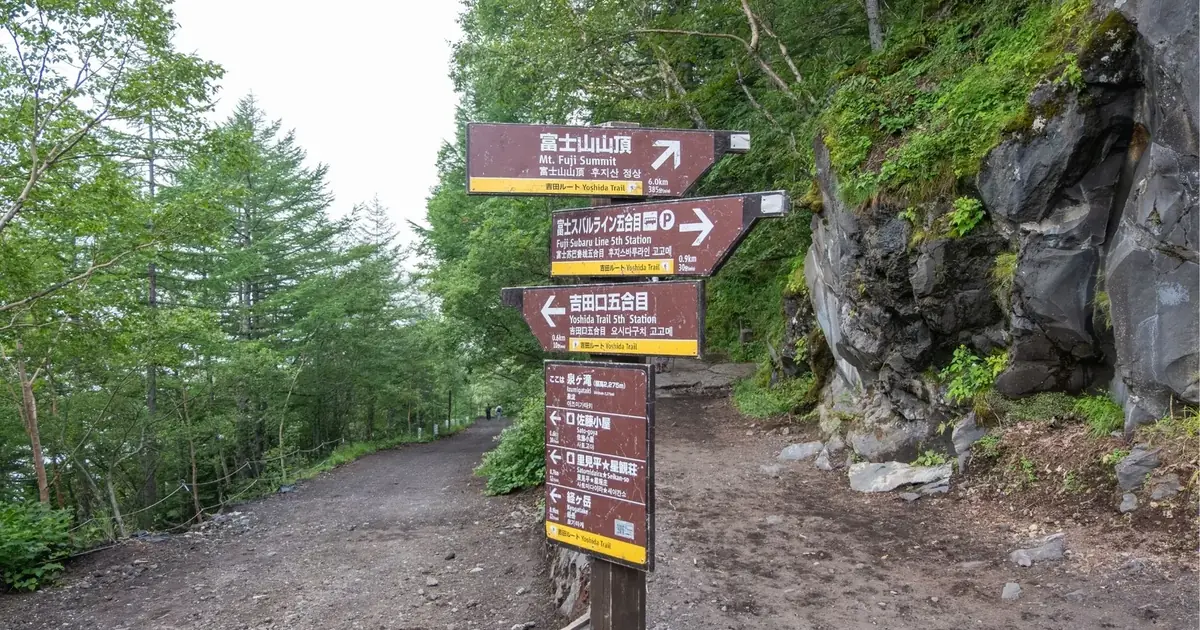
A Mount Fuji day trip from Tokyo is genuinely worth doing and entirely doable. The mountain’s base areas around Kawaguchiko and the Fuji Five Lakes sit between one hour fifty and two and a half hours from central Tokyo, so an early start buys you a full day of sightseeing and gets you back for dinner — realistically a 6:45–7:30 AM departure and a return around seven in the evening. The hard part is not the logistics. It is that the mountain is only fully visible on something like a hundred days a year, and the day-tripper’s whole advantage lies in being able to pick one of them.
Check Availability
What one day realistically holds
A Fuji day trip is a highlights trip, not a comprehensive one. In a single day from Tokyo you can genuinely do two or three anchor stops — a classic viewpoint (the Chureito Pagoda at Arakurayama Sengen Park, or Oishi Park on Lake Kawaguchi), plus the Fuji Subaru Line 5th Station and/or the spring-fed village at Oshino Hakkai — with a lunch of Yamanashi noodles somewhere in the middle. Trying to cram in more is the single most common planning mistake, and the one that turns a good day into a coach seat with a view of a car park.
All three ways of doing it converge on the same core sights. They differ in ease, flexibility and stress, not in destination.
| Route | Time from Shinjuku | Cost | What it’s really for |
|---|---|---|---|
| Fuji Excursion limited express (direct train) | ~1h54m | ¥4,200 one way | The independent traveller who books ahead |
| Highway bus (Busta Shinjuku → Kawaguchiko) | ~1h45m scheduled, traffic-exposed | ~¥2,000–2,200 | The lowest fare, at the highest schedule risk |
| Local trains (Chuo Line → Otsuki → Fujikyuko Line) | ~2h20m–2h40m | Cheapest rail | Only if the Excursion is sold out |
| Private car | ~1h25m in ideal traffic | Per vehicle | Door to door, no transfers, reorderable |
The Fuji Excursion runs four round trips daily plus seasonal extras. The first morning departure leaves Shinjuku at 7:30 AM and reaches Kawaguchiko about 9:28; the last return leaves Kawaguchiko at 17:41, back in Shinjuku around 19:48 on weekdays. The ¥4,200 one-way fare is a ¥2,580 basic fare plus a ¥1,620 express fee, per Fujikyu Railway’s official FUJI EXCURSION page. Seating is reserved and it sells out in peak seasons.
The highway bus is scheduled at 1h45m and departs roughly hourly, but it is exposed to expressway traffic that can add an hour or more. Local trains require a transfer at Otsuki with your luggage. A private car or taxi is the only option with no transfer at all.
To Hakone, the alternative Fuji-viewing day trip, the Odakyu Romancecar runs direct from Shinjuku to Hakone-Yumoto in about 80–90 minutes, one way around ¥2,470 including the limited-express surcharge. The Hakone Free Pass bundles the round trip with the area’s trains, cablecar, ropeway, pirate-ship cruise and buses. Hakone’s Fuji views are more distant than Kawaguchiko’s, but it offers a self-contained loop of attractions that still works when the mountain is hidden — which is exactly why the Hakone Ropeway, Owakudani and Lake Ashi coach tour is the most-booked Fuji day trip on the market at 4.6 stars from 8,444 reviews.
To Gotemba — 5th-station-adjacent, outlet shopping, Shizuoka side — allow about 1h40m from Shinjuku via the Odakyu “Romancecar Mt. Fuji” to Gotemba Station and a free 20-minute shuttle to the Premium Outlets, or roughly 2–2.5 hours by JR via Kozu.
The Fuji Subaru Line 5th Station (2,305 m) is a sightseeing destination year-round, snow permitting — you do not need to be a climber to go. From Kawaguchiko Station the local bus takes about 50 minutes and costs ¥2,000 one way, ¥3,400 return, with five buses a day on the off-season timetable from 1 October 2026 (cancelled when snow closes the road) and hourly service during the climbing season.
The 2026 rules that change how you get there
The climbing-season regulations matter even if you have no intention of climbing, because they govern access to the 5th Station.
- The 2026 climbing season runs 1 July to 10 September on the Yoshida Trail (Yamanashi side) and the Subashiri Trail; the Fujinomiya and Gotemba trails run 10 July to 10 September. Subashiri now opens on 1 July to align with Yoshida, because the two trails merge near the 8th station.
- A mandatory ¥4,000 entry fee applies on all four trails, up from ¥2,000 on the Yoshida Trail in 2024. Yoshida is capped at 4,000 climbers a day and requires online reservation; its gate closes 2:00 PM to 3:00 AM to curb overnight “bullet climbing”.
- The fee and the reservation apply to people passing the climbing gate to ascend. Visiting the 5th Station as a sightseer does not require the hiking fee.
- The private-vehicle “My Car” restriction on the Fuji Subaru Line runs, for 2026, from 6:00 PM on Friday 3 July to 6:00 PM on Thursday 10 September. During that window private cars — hybrids included — cannot drive up. You park at Fujisan Parking (Fuji Hokuroku Parking, ¥1,000) and transfer to a shuttle bus. This mainly affects self-drivers and some private tours in summer.
A realistic day, door to door
The controlling facts are simple: it is roughly two hours each way, and Fuji is most reliably visible before late morning. Every good plan therefore front-loads the day.
Self-guided by train — the independent traveller’s template:
- 6:15–6:45 AM — leave your Tokyo accommodation, get to Shinjuku Station.
- 7:30 AM — board the first Fuji Excursion; arrive Kawaguchiko about 9:28. Reserve this seat well ahead; it sells out in blossom season, Golden Week, summer and the autumn-foliage weeks.
- 9:30 AM–12:30 PM — buy a Kawaguchiko sightseeing bus day pass (the Red, Green and Blue Omni lines; around ¥1,500 for the two-day Kawaguchiko–Saiko–Motosuko pass) and hit two anchor sights: Oishi Park on the north shore for the classic lake-and-Fuji view, then Arakurayama Sengen Park for the Chureito Pagoda, 398 steps up.
- 12:30–1:30 PM — lunch on regional noodles: houtou, flat noodles in a miso-pumpkin stew, or Yoshida udon, thick and chewy in soy-miso broth. Many udon shops close by 2 PM, so don’t leave it late.
- 1:30–4:00 PM — one more stop: either the 5th Station (roughly 50 minutes by bus each way, so a half-day commitment in itself) or the gentler Oshino Hakkai spring village.
- Board a return train by 4:00–5:41 PM; back in Shinjuku by seven or eight.
Shared coach tour: pickup or assembly in Shinjuku or Tokyo Station is typically 7:30–8:30 AM, with weekend and holiday departures often consolidated to a single 7:30 AM Shinjuku start to beat traffic. These are roughly ten-hour days visiting three or four stops — commonly Arakurayama Sengen Park, Oishi Park, Oshino Hakkai and either the 5th Station or the Gotemba outlets — with a set lunch and an early-evening drop back in Shinjuku. The Mt Fuji, Oishi Park, Lake Kawaguchi and Oshino Hakkai tour, rated 4.8 from 5,794 reviews and from $49 a person, is the archetype. You trade flexibility for zero planning.
Private car: the standard format is a ten- to eleven-hour day with hotel pickup around 7:00–8:00 AM, a fully customisable route, and the ability to reorder stops on the fly based on the morning’s visibility. Best door-to-door efficiency, least walking. The Private Tour From Tokyo To Mount Fuji with Custom Itinerary — 4.9 stars from 433 reviews at $365 for a small group — is the best-proven version of it, and we have a full breakdown of that itinerary if you want the stop list. A handful of newer private listings score higher on paper — the Mount Fuji Private Customized Tour With English Guide holds a clean 5.0 stars at $317 — but from 114 reviews rather than 310, so treat the perfect score as less settled than the number suggests.
Itinerary variants by interest
Photography and viewpoints. Prioritise being at Arakurayama Sengen Park or the Oishi Park lakeshore at or shortly after sunrise, when cloud cover is lowest and the light is soft. This is the strongest argument for either a private car — where you control the timing — or an overnight stay. Add a second viewpoint (Lake Yamanaka’s Panorama-dai, or the Mt. Fuji Panoramic Ropeway) and keep midday free, since Fuji often clouds over by late morning.
Family-friendly. Fewest transfers and least walking wins. A private car, or a coach tour that minimises stair-climbing, is ideal. Note that the Chureito Pagoda’s roughly 398 stone steps — the Sakuya-hime Kaidan, the “Stairs of the Blooming Princess” — are hard going with strollers and small children; there is a longer sloped path alongside. Good anchors: Oishi Park (flat, flowers, lake), the Panoramic Ropeway, and Oshino Hakkai. Fuji-Q Highland suits thrill-seeking older kids; Fuji Safari Park near Gotemba suits younger ones.
Active but not summiting. Short of a full summit attempt — which is not a day trip — do the 5th Station for the high-altitude air and views, walk sections of the Ochudo trail, hike up to Chureito, or do a lakeshore or Panorama-dai walk near Lake Yamanaka. Remember the 5th Station bus is about 50 minutes each way.
Food-focused. Base yourself around Kawaguchiko and Fujiyoshida for houtou (Houtou Fudou, opposite Kawaguchiko Station, is the obvious one) and Yoshida udon — Fujiyoshida has dozens of small shops, many closing by early afternoon. Add spring-water tofu at Oshino Hakkai, wakasagi smelt tempura, Koshu wine, and a hoto-making experience. Carry cash; many small shops take nothing else.
Budget and backpacker. Highway bus from Busta Shinjuku at around ¥2,000, or local trains, plus the Omni bus day pass. Skip the paid attractions — the best views at Oishi Park, Chureito and the streets of Fujiyoshida are free. Start extremely early to get the most out of one expensive transit day.
Shopping and the Shizuoka side. If the Gotemba Premium Outlets are the draw rather than an afterthought, GetYourGuide sells a private Mt. Fuji and Gotemba Premium Outlets day tour that combines both. It rates 4.95 stars but from only 17 reviews, so treat that score as provisional — it is a new listing rather than a proven one.
Comparing the three approaches
Self-guided public transit — train or highway bus, plus local buses.
For: cheapest; full independence over timing and stops; you can wait for a clear-forecast day; the direct Fuji Excursion is comfortable, has luggage racks and requires no transfer. Against: real planning required — timetables, seat reservations, bus passes; local buses get very crowded and English signage is limited; highway buses are exposed to expressway delays; you must book the return in advance or risk standing, or being stranded; hauling luggage is miserable if you are flying the same day. Best for: confident, experienced travellers; budget travellers; solo travellers who start early.
Shared or group coach tour.
For: zero planning; one price covers transport, guide and usually lunch; luggage stays on the coach; the guide handles navigation; comfortable air-conditioned coach with Wi-Fi; strong value. Against: a fixed itinerary hitting the same crowded spots on a set clock; the pace can feel rushed; stops get cut for traffic or weather; it departs regardless of the forecast, so you cannot reschedule for a clear day; drop-off is usually Shinjuku only. Best for: first-time visitors, budget travellers who want it handled, anyone short on time who does not want to navigate.
Private car or private tour.
For: door-to-door hotel pickup; a fully flexible, reorderable itinerary; the ability to chase the clear-weather window and reach spots public transport cannot; least walking; ideal with luggage or a mixed-ability group. Against: the most expensive option; still subject to the summer My-Car restriction on the Subaru Line, where the car must park and transfer to a shuttle. Best for: families, older travellers, photographers wanting early light, groups splitting the cost, and anyone prioritising the clearest possible day.
This guide deliberately keeps pricing general. Our complete guide to private Fuji tours from Tokyo covers the formats and the market rates in depth, and the cost breakdown works through what is and isn’t included.
Which approach suits which traveller
- First-time visitors: a shared coach or private tour — remove the navigation risk. If going independently, use the direct Fuji Excursion, not the multi-transfer local route.
- Solo travellers: self-guided train plus the Omni bus pass is efficient and cheap; join a shared tour if you would like company and commentary.
- Families with young children: a private car — least walking, flexible around naps and meltdowns, luggage handled. If touring, choose the flat sights over the Chureito stairs. The Private Mount Fuji Tour With Pickup and Drop-Off, 4.9 stars from 325 reviews at $341, is the door-to-door version of exactly this, and we have a full breakdown of it.
- Older travellers: private car, strongly. The 5th Station sits at 2,305 m, so allow for slower pacing and thinner air.
- Photographers: a private car or an overnight stay for control over sunrise and early light. Coach-tour timing rarely gets you to a viewpoint before the morning cloud builds.
- Budget travellers: highway bus or local trains, free viewpoints, Omni pass.
- Limited time, layovers, one-day-only visitors: a shared full-day tour is the lowest-risk way to see the marquee sights without planning. Do not attempt this on the day of an international flight — traffic delays make it too risky.
Day trip or overnight?
In favour of the day trip: it is cost-efficient with no accommodation to pay for, it keeps a tight Japan itinerary intact, and — crucially — it lets you pick a clear-forecast day, because you are not locked into pre-booked lodging.
In favour of staying over: you get the reliably clear early-morning and sunset windows without a two-hour rush at each end; you can soak in an onsen, eat a proper kaiseki dinner, cycle the lakeshore; and, most importantly, you get a second morning to try again if day one is clouded over. Because Fuji is fully visible on only around a hundred days a year, an overnight materially raises the odds of actually seeing the mountain. Hakone and the north shore of Lake Kawaguchi are the classic bases.
Our honest verdict: if your Japan schedule is tight and the forecast for a specific day looks clear, a day trip delivers most of the payoff. If a cloud-free Fuji is a bucket-list priority, or you want the sunrise reflection shot, build in one overnight near Kawaguchiko or Hakone. The marginal cost buys a second chance at the view and a far less rushed day.
Nine mistakes people actually make
- Underestimating travel time and traffic. Highway buses can run an hour or more late; always have a train fallback and pre-book the return.
- Cramming in too many stops. Two or three anchors is the realistic ceiling. The 5th Station alone eats about two hours in round-trip bus time from Kawaguchiko.
- Not checking visibility before committing. A sunny Tokyo forecast says almost nothing about Fuji, which makes its own weather. Check live webcams and a dedicated visibility forecast the morning you go; mornings and winter are clearest.
- The Chureito Pagoda’s 398 steps and the queues. One traveller reported over two hours in line at the pagoda, which took out the whole morning. Go early.
- Leaving the Fuji Excursion seat or the return bus too late. Both sell out in peak seasons, and an unreserved return can strand you.
- Luggage on a flight day. Local buses and platform transfers are grim with suitcases. If you are flying out the same day, do not day-trip Fuji.
- Assuming you can drive up the Subaru Line in summer. During the My-Car restriction, 3 July to 10 September 2026, private vehicles are banned; you park and shuttle.
- Confusing “Mt. Fuji Station” with Kawaguchiko. Kawaguchiko is the sightseeing hub; Mt. Fuji Station (Fujisan) is mainly a local stop.
- Not carrying cash. Many noodle shops and some buses are cash-only, or awkward with foreign cards.
Season by season, and what to reconfirm
- Summer (climbing season, 1 July–10 September 2026). The Subaru Line is closed to private cars from 6 PM on 3 July to 6 PM on 10 September, with shuttle buses from Fujisan Parking starting 4 July. The 5th Station is at its busiest; the ¥4,000 hiking fee and the Yoshida reservation and gate rules apply to climbers. Obon week in mid-August and every weekend are peak congestion. This is also the cloudiest season for distant views — go at first light.
- Cherry blossom (late March–mid-April). Peak crowds at Arakurayama Sengen Park and the Fuji-Kawaguchiko Cherry Blossom Festival. During the festival on-site parking closes and drivers are routed to satellite lots. Book trains and tours well ahead.
- Autumn foliage (mid-October–late November). Excellent visibility odds and beautiful colour, especially mid-November around Lake Kawaguchi and the Momiji Corridor. Also crowded.
- Winter (December–February). Statistically the clearest views — December and January see Fuji fully visible on over 60% of days, and in the most recent Fuji City record February had the mountain fully visible at the 8:00 AM observation on 22 of 28 days. But the Subaru Line to the 5th Station can close temporarily for snow, and the 5th Station bus runs a reduced off-season schedule.
- Typhoon season (roughly August–October). Storms suspend buses and trains and close roads. Build in flexibility and watch the forecasts.
- The general visibility reality. Fuji is famously shy. A four-year webcam study checking the view at 6 AM, noon and 6 PM found the whole mountain visible on 840 of 1,461 days — about 57% of the time — with clarity consistently best in early morning and dropping as cloud builds through late morning into the afternoon. Our month-by-month guide breaks that down by season.
- What to reconfirm at the source before you travel: exact climbing-season dates and fees; the My-Car restriction window; Fuji Excursion and highway-bus timetables (JR East’s official timetable PDF states it is “accurate as of February 2026 and valid on and after 14 March 2026”); the 5th Station road and bus status in winter; and festival dates and parking rules. These rules changed recently and continue to evolve.
How to plan it, in four stages
Stage one — decide day trip versus overnight, first. If a cloud-free Fuji is a top priority, or your dates are flexible, book one night near Kawaguchiko or Hakone. Otherwise proceed with the day trip. The trigger to switch: your only possible day has a poor visibility forecast, or you want sunrise photography.
Stage two — choose the approach. Want it fully handled and cheap: a shared coach tour, booked roughly two to seven weeks ahead, because the popular ones sell out. Want independence at the lowest cost: self-guided on the direct Fuji Excursion, reserving seats the moment your date is fixed — reservations open about a month ahead. Want flexibility, early light, minimal walking, or you are a family or a group: a private car.
Stage three — lock the logistics. Reserve outbound and return transport together and never leave the return unbooked. Buy the Kawaguchiko Omni sightseeing bus day pass at Kawaguchiko Station if self-guiding. Pick two or three anchor stops at most, and slot in the 5th Station only if you are willing to give it half a day. Carry cash.
Stage four — the 48 hours before. Check Fuji visibility forecasts and live webcams; if you have any date flexibility, move the trip to the clearest morning. Reconfirm seasonal closures and shuttle rules, especially the summer Subaru Line and winter snow. Set an early alarm — aim to be moving out of Tokyo by 6:45–7:30 AM.
Three benchmarks that change the plan. Poor forecast visibility on your only date: switch to Hakone, which has more all-weather attractions, or reschedule. Travelling in summer with a rental car: assume you will park and shuttle, and budget the extra time. Flying out the same day: cancel the Fuji plan, the traffic risk is too high.
The caveats that matter
Verify every time-sensitive figure before you travel. Climbing-season dates, the ¥4,000 fee, the Yoshida reservation system, the Subaru Line My-Car restriction (3 July–10 September 2026) and all train and bus timetables are set annually and can shift with weather or policy. The official Mt. Fuji climbing site and the Fujikyu and JR East timetables are the authoritative sources; some third-party pages still display stale 2025 dates or the older ¥4,130 fare. For a winter trip, our bus vs train vs tour in winter guide has the November-to-February timetables and snow advice.
The exact 2026 My-Car restriction dates are corroborated by japan-guide.com and other current sources at 3 July–10 September, but the official fujisan-climb.jp page renders its dates in a graphic — do a final check there before relying on the exact times. There is likewise a minor cross-source discrepancy over whether the Subashiri Trail opens on 1 July, aligned with Yoshida, or on 10 July. Confirm on the official climbing site.
Travel times are typical, not guaranteed. Highway-bus durations in particular swing widely with expressway traffic.
Weather is the dominant uncertainty. No approach guarantees you will see the mountain, and the odds are poor outside the clear-winter-morning window.
This guide intentionally avoids specific pricing beyond broad framing. The companion articles on private tour formats and prices and on what a private tour costs carry the detailed comparisons.
Two minor source discrepancies are worth naming: the Kawaguchiko-to-5th-Station bus is variously given as 50 or 55 minutes, and the Fuji Excursion fare as ¥4,200 (official) or ¥4,130 (some sites). We have used the official and most recent figures throughout.
Related reading
- Mount Fuji private tours from Tokyo: the complete 2026 guide — every format, with real prices and the 2026 access rules
- What to expect on a Mount Fuji private tour — the day, hour by hour
- The best time for a Mount Fuji private tour, month by month — visibility odds through the calendar
- Private tour vs group day trip — the party size at which the maths flips
- Compare all six private Fuji tours — side by side, with live prices
Your Own Car, Your Own Day at Mount Fuji
Rated 4.9/5 by 675 travellers. Hotel pickup in Tokyo, an English-speaking driver-guide, and an itinerary you set yourself — with free cancellation up to 24 hours before.
Check Availability & Book