Every Mount Fuji Trail Compared
Yoshida, Fujinomiya, Subashiri or Gotemba? Start heights, climbing times, huts, the 2026 opening dates and fees, and which Mount Fuji trail suits a first climb.
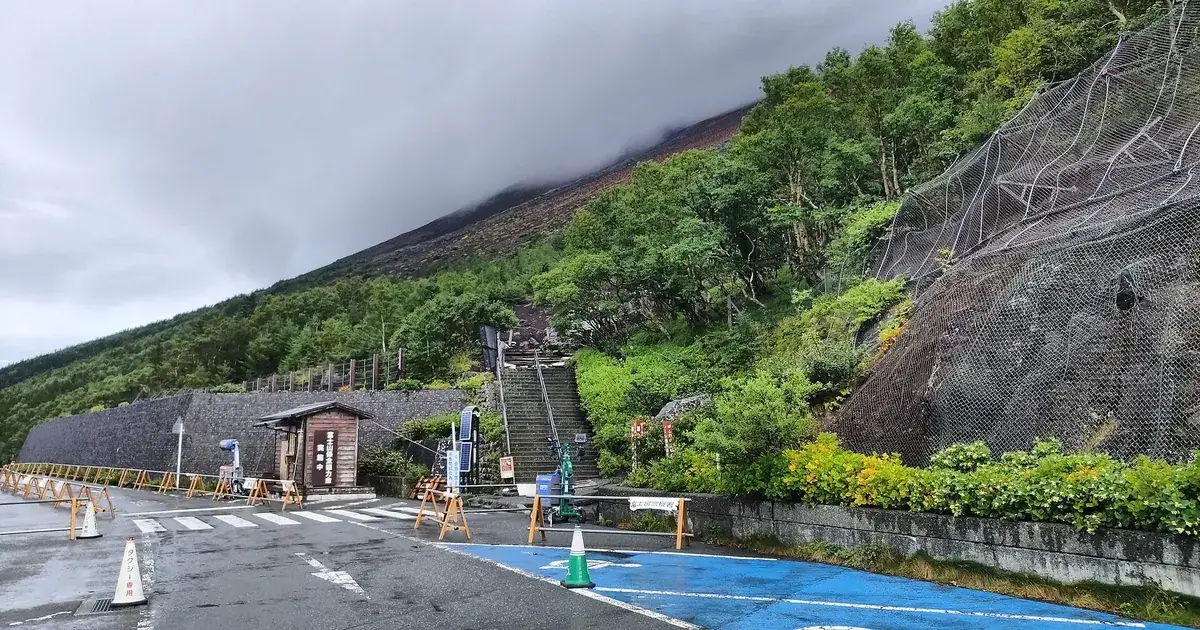
If this is your first time climbing Mount Fuji, take the Yoshida Trail. It is not a close call. Yoshida starts at 2,305 metres, higher than any practical alternative with the same support, and it has about 17 mountain huts, separate paths up and down, the best first-aid cover on the mountain and the easiest access from Tokyo, which is why roughly 60% of all climbers use it. The other three trails are better saved for a second climb. Fujinomiya is the shortest but the steepest, with one path shared by climbers going up and coming down; Subashiri is quieter and climbs through forest at first; and Gotemba is the longest and most committing, starting at just 1,440 metres with the fewest huts. In 2026 the trails also open on different days: Yoshida and Subashiri on 1 July, and Fujinomiya, Gotemba and the summit crater walk on 10 July, with all four closing on 10 September. A ¥4,000 fee applies on every route, and every trailhead gate is closed from 14:00 to 03:00 to anyone without a mountain-hut booking.
Check Availability
Four trails, four very different starting points
Mount Fuji has four officially maintained climbing routes: the Yoshida Trail on the Yamanashi side, to the north, and the Subashiri, Gotemba and Fujinomiya Trails on the Shizuoka side, to the east and south. They differ sharply in difficulty, distance, crowds and scenery, and as one guide warns, “choosing the wrong route may make the climb much harder than expected, or increase risks because there are fewer mountain huts.”
The biggest difference between them is where each one starts. All four begin at a “5th Station” partway up the mountain, but at very different heights: Yoshida at 2,305 m, Fujinomiya highest at roughly 2,380 to 2,400 m, Subashiri at 1,970 to 2,000 m, and Gotemba lowest at just 1,440 m. The higher the start, the shorter the climb.
Experienced climbers agree to an unusual degree. One editorial team with eight Fuji ascents across several routes puts it plainly: “my honest advice to first-timers is simple: take the Yoshida Route. No other route offers the same density of mountain huts, escape options if something goes wrong, or reassurance that help is nearby. Once you have that first ascent under your belt, the Subashiri, Fujinomiya, and Gotemba routes each offer something genuinely different and worth experiencing.”
The four routes at a glance
| Route | Side | 5th Station height | Climb to the 3,776 m summit | Ascent time | Descent time | Huts | Daily cap | Best for |
|---|---|---|---|---|---|---|---|---|
| Yoshida | North (Yamanashi) | 2,305 m | About 1,470 m | About 5–7 hrs | About 3–5 hrs | About 17 | 4,000 a day | First-timers; the default |
| Fujinomiya | South (Shizuoka) | About 2,380–2,400 m | About 1,400 m | About 5 hrs | Not published separately; same path as the ascent | Moderate number | None | Fit climbers who want the shortest route; arrivals from Kansai and the Tokaido side |
| Subashiri | East (Shizuoka) | 1,970–2,000 m | About 1,800 m | About 6.5–7 hrs (6.9 km) | About 3.5 hrs (6.2 km) | Few | None | Intermediate hikers; forest scenery; a sand-run descent |
| Gotemba | Southeast (Shizuoka) | 1,440 m | About 2,300 m | The longest of the four | About 2.5 hrs on the osunabashiri | About 4 | None | Experienced hikers who want solitude and a serious endurance day |
All times are approximate and leave out rests, hut stays, congestion, bad weather and time to acclimatise. Your own fitness and the conditions will change them considerably. The climb column is the difference between each 5th Station and the 3,776 m high point, rounded.
The Yoshida Trail: the default choice
Why it carries most of the traffic. The Yoshida Trail takes about 60% of all Mount Fuji climbers each year and is by far the most popular route on the mountain. Its advantages add up:
- The highest start among the well-supported routes, at 2,305 m on the Fuji Subaru Line 5th Station, so there is less climbing than on Subashiri or Gotemba.
- More huts than anywhere else, about 17, which means frequent chances to rest, use a toilet or buy food, and, more to the point, somewhere to shelter if the weather turns or someone in your group is struggling.
- The best safety cover: the Mt. Fuji Safety Guidance Center at the 6th Station, and first-aid stations at the 7th and 8th Stations in the peak season.
- Separate paths up and down, which avoids the two-way congestion on Fujinomiya.
- The best access from Tokyo: a direct bus from Shinjuku reaches the 5th Station in about 2.5 hours.
- The most guided climbs: more English-, Japanese- and Chinese-language guided tours leave from the Yoshida 5th Station than from any other trailhead.
- The fastest emergency response: with the most climbers comes the quickest access to mountain rescue.
What it costs you: crowds. Because it is so popular, Yoshida is the only trail with a daily limit, of 4,000 climbers, and the only one that asks you to book online in advance, through fujisan-climb.jp. On busy days the quota fills. Buying a place at the checkpoint on the day is possible, but not guaranteed.
Terrain: gentle gradients and well-kept paths, laid out with beginners in mind.
Our Fuji Subaru Line 5th Station guide covers the trailhead itself: the rest houses, the shrine, the gate and how to get there.
The Fujinomiya Trail: shortest but steepest
Fujinomiya starts from the highest trailhead of the four, which makes for the shortest ascent, at around 5 hours. That appeals to fit climbers who want to spend as little time on the mountain as possible. It is also the natural choice for anyone arriving from western Japan, along the Kansai and Tokaido corridor.
The drawbacks are real, though:
- A steady, steep gradient with some rocky scrambling. The route goes more or less straight up, with no easy stretches.
- One path for climbers going up and coming down, which causes congestion and makes for a less pleasant climb than Yoshida’s separate routes.
- Fewer escape options than Yoshida.
Difficulty: usually rated beginner-to-intermediate. The distance is short, but some sections are steep.
The Subashiri Trail: the quiet, forested option
Subashiri sits between Yoshida’s facilities and Gotemba’s remoteness. It starts at around 1,970 to 2,000 m, which means about 300 m more climbing than Yoshida.
The numbers: the official ascent is about 6.9 km and typically takes 6.5 to 7 hours; the 6.2 km descent takes about 3.5 hours, not counting breaks.
What makes it different: its forested lower slopes. Most of Mount Fuji is bare volcanic ground, but Subashiri begins among trees, with shade and a greener landscape, and it feels like a different mountain for the first stretch. The route then joins the Yoshida Trail at the 8th Station, so Subashiri climbers merge with the main sunrise crowd for the final push.
A better way down: Subashiri has a sand-run section on the descent, which is quicker and more fun than ordinary switchbacks.
The trade-offs: fewer huts, a longer distance, more climbing and more complicated logistics than Yoshida. It suits intermediate hikers who want the forest.
The Gotemba Trail: the endurance route
Gotemba is the longest of the four official routes and starts lowest, at just 1,440 m at the Gotemba New 5th Station, against roughly 2,000 to 2,400 m for the others. That adds up to far more climbing: about 2,300 vertical metres from the trailhead to the summit, the most of any route.
What you are signing up for:
- The longest trail on the mountain, with the fewest huts, about four in total.
- No facilities between the 5th and 7th Stations, roughly four hours with no shelter, water or toilets.
- Long gaps between water and shelter throughout, which makes it a route for experienced hikers only.
- Very few other climbers. This is the route for solitude.
The reward: the famous osunabashiri (大砂走り), a slope of volcanic ash roughly 5 km long that lets you more or less run down the mountain, in about 2.5 hours. It is the most enjoyable descent on Fuji by a wide margin, and for some climbers it is reason enough to choose the route.
Getting there: unlike the Fuji Subaru Line on the Yoshida side, the road to Gotemba’s trailhead is not closed to private cars during the climbing season. The bus from Gotemba Station takes about 30 minutes and cost about ¥1,280 one way when the source was researched; check the current fare.
Difficulty: advanced. The slopes are gentle, but the distances are long and the support is thin. Choose Gotemba “only when the long distance and limited support are deliberate parts of the objective.”
2026 season dates and rules by route
The trails open on different days, and this catches people out:
- Yoshida and Subashiri: open 1 July 2026
- Fujinomiya, Gotemba and the summit crater walk (Ohachi-meguri): open 10 July 2026
- All routes close on 10 September 2026
Some published guides wrongly give Subashiri’s opening as 10 July. The official schedule opens it on 1 July, with Yoshida, which makes sense because the two trails merge at the 8th Station. Snow, weather or trail conditions can still delay an opening, and the official confirmation usually comes in June.
Fees and registration in 2026:
- ¥4,000 per person per climb on all four routes, up from the ¥2,000 first charged on the Yoshida Trail in 2024.
- Yoshida: book in advance online through fujisan-climb.jp; 4,000 climbers a day at most.
- Fujinomiya, Subashiri and Gotemba: register in advance through the FUJI NAVI app, with no daily cap, which gives more flexibility on busy dates.
- Every trailhead gate is closed from 14:00 to 03:00 unless you hold a mountain-hut booking, a measure aimed at dangerous overnight “bullet climbing.”
The permit systems, the gate and the season rules are covered step by step in our climbing season guide.
A safety note for every route
Both Yamanashi and Shizuoka prefectures officially discourage arriving overnight by bus from Tokyo and heading straight for the summit with no rest and no time to acclimatise, which experienced guides call “one of the most dangerous things you can do on Mt Fuji.” The 14:00 to 03:00 gate closure exists to stop exactly that. What the climb itself is like, from the altitude to the summit sunrise, is in our guide to climbing Mount Fuji.
Which route we would choose
For a first Fuji climb: the Yoshida Trail. The case is overwhelming: the most huts, the best first-aid cover, separate paths up and down, the easiest access from Tokyo and the most English-language support. Book the ¥4,000 permit through fujisan-climb.jp early, because the daily cap fills on busy dates.
For a fit climber coming from western Japan who wants the shortest ascent: Fujinomiya. It is a sound second choice, as long as you accept the steeper gradient, the rocky scrambling and the congestion on a path shared in both directions.
For the forest, if you do not mind more complicated logistics: Subashiri. It is the best quiet option that is not extreme, with a sand-run descent and a merge onto the Yoshida Trail for the summit push.
If solitude and distance are the point: Gotemba, but only if you are experienced, self-sufficient and want a long endurance route with little support. The osunabashiri descent is the reward.
On a second or third climb, experienced guides warmly encourage switching to Subashiri, Fujinomiya or Gotemba. Each gives you something different from Yoshida.
Whichever route you choose, confirm this year’s opening date for your trail, because the four differ; register through the right system for your side of the mountain (fujisan-climb.jp for Yoshida, FUJI NAVI for the three Shizuoka trails); and spend time acclimatising at the 5th Station before you start up.
Seeing a trailhead without climbing
Not everyone who reads a trail comparison ends up on the mountain overnight. Of the four trailheads, only the Yoshida Trail’s 5th Station, at the top of the Fuji Subaru Line, is set up as a sightseeing stop in its own right, with rest houses, a shrine and views over the Fuji Five Lakes. The Mount Fuji Private Tour With English Guide includes it among its stops when the road is open, and is the most-reviewed Fuji-only private day on the site at 4.94 stars from 675 reviews and $309 for the vehicle, with a full breakdown here. The Luxury Land Cruiser day tour from Tokyo builds its whole route around the 5th Station, at 4.80 stars from 263 reviews and $348, broken down here.
Private cars cannot drive the Subaru Line from 18:00 on 3 July to 18:00 on 10 September 2026, so if your date falls in that window, ask the operator how they handle the shuttle from Fujisan Parking before you book. Our private versus group comparison covers what that changes in practice.
The caveats that matter
All times and distances are approximate. Official standard times leave out rests, hut stays, congestion, bad weather and acclimatisation, so a real itinerary takes longer. Fitness, pace and weather all change the actual times considerably.
Opening dates can move. Snow clearance, weather and trail inspections can delay an opening, and official confirmation usually comes in June. Check the official Mount Fuji climbing site before you book transport or a hut.
The rules change every year, and are still evolving. Fees, caps, gate hours and registration systems have all changed in recent seasons. Check them again before you travel.
Fares and heights vary slightly between sources. Fujinomiya’s trailhead is given as either 2,380 m or 2,400 m, and Subashiri’s as 1,970 m or 2,000 m. Treat them as approximate. The climb figures in the table are rounded from those heights.
This page compares the routes and nothing more. What the climb is like is covered in our guide to climbing Mount Fuji, and the Yoshida trailhead in our 5th Station guide. Booking a mountain hut is covered in our hut guide, and the full permit rules in our climbing season guide. Guided climbing tours are compared in our guide to guided Mount Fuji climbs.
Tour prices are the GetYourGuide starting prices for the listings named and vary with the operator, season, group size and inclusions. Ratings and review counts were checked on each listing on 18 September 2026.
Related reading
- Climbing Mount Fuji: what it’s like — the altitude, the sunrise, the summit and the descent
- Fuji Subaru Line 5th Station — the Yoshida trailhead, and what is there if you do not climb
- Tokyo to Mount Fuji: the transport guide — every bus, train and driving route, priced
- Mount Fuji day trip from Tokyo — the ways to do Fuji in a day, and the 2026 climbing rules in brief
- Best time for a Mount Fuji private tour — how the climbing season and the summer car ban shape the year
- Compare all six private Fuji tours — side by side, with live prices
Your Own Car, Your Own Day at Mount Fuji
Rated 4.9/5 by 675 travellers. Hotel pickup in Tokyo, an English-speaking driver-guide, and an itinerary you set yourself — with free cancellation up to 24 hours before.
Check Availability & Book