Mount Fuji in January 2027
Is January a good time to visit Mount Fuji? January weather at Lake Kawaguchiko, the snow cap, clear-view odds, the 5th Station road, New Year and holiday dates, itineraries and tours.
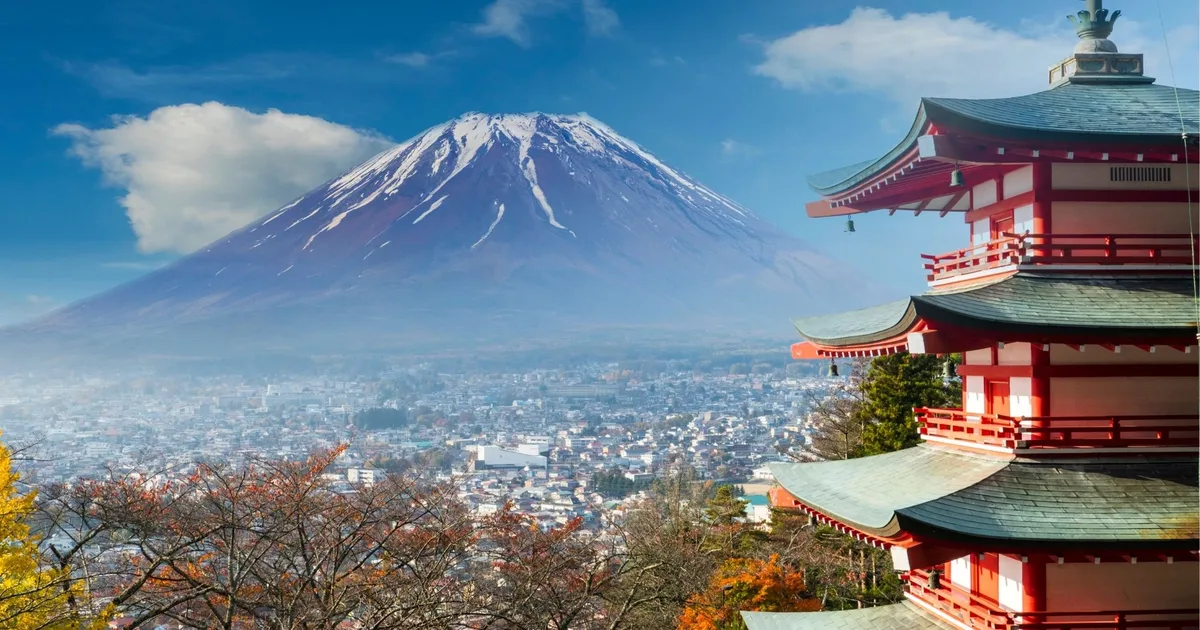
January is an excellent month to see Mount Fuji, above all from the Fuji Five Lakes, but you can’t climb it. The cold, mostly dry weather often gives you a crisp view of the snow-capped cone. Lake Kawaguchiko, the Chureito Pagoda, Oshino Hakkai and Lake Yamanaka make a rewarding day trip from Tokyo, as long as you dress for the cold and leave room for the weather to change your plans.
Check Availability
One day covers the classic viewpoints; a night at the lake gives you a second chance at clear skies and a quieter sunrise. A Mount Fuji private tour helps in January if you want several photo stops without waiting for infrequent buses in freezing weather.
Mount Fuji in January: quick answers
| Question | January 2027 answer |
|---|---|
| Is January a good time to visit Mount Fuji? | Yes, for snow-capped views, the lakes and photography. |
| Is Mount Fuji covered in snow? | The upper slopes are usually white; the snowline moves with each storm and thaw. |
| Will there be snow around Lake Kawaguchiko? | Possibly, not reliably. Expect freezing mornings, not a snow-covered shore. |
| Can you climb Mount Fuji in January? | No. The summit trails are closed outside the summer climbing season. |
| Can you reach the 5th Station? | Only on days the Fuji Subaru Line is open; don’t make it essential. |
| Average daytime high at Kawaguchiko | 5.5°C (41.9°F), Japan Meteorological Agency 1991–2020 normal |
| Average overnight low at Kawaguchiko | −5.7°C (21.7°F), same normals |
| Best time for views | Usually early morning, though the forecast on the day matters more. |
| Best first-time route | Lake Kawaguchiko, the Chureito Pagoda and Oshino Hakkai, in whatever order the cloud allows. |
| Time needed | A full day, or two days and one night for sunrise and a slower pace. |
Is January a good time to visit Mount Fuji?
For sightseeing, January is one of the best months. The white cone often stands out sharply against a blue sky, the lakes are free of the summer hiking crowds, and mornings are beautiful for landscape photos.
The area is much colder than Tokyo, though, and ice, snow and temporary road closures can complicate driving. The summit is closed to ordinary visitors, some attractions keep shorter hours, and a cloudy day can still hide the mountain completely.
January suits:
- First-time visitors who want photos of snow-capped Fuji and have no plan to climb it.
- Couples who want lakeside scenery and a night in a ryokan or onsen hotel.
- Families happy with short stops and warm indoor breaks.
- Photographers after crisp morning light and winter landscapes.
- Travellers from Tokyo who can leave early and keep the plan flexible.
It suits you less if you’re expecting a snowy village, a sure visit to the 5th Station or a mountain hike.
Mount Fuji January weather: how cold does it get?
Tokyo, Lake Kawaguchiko and Mount Fuji itself have very different temperatures. Many visitors dress for a Tokyo winter and are caught out by the cold beside the lakes, above all in the wind or while waiting for sunrise.
January weather at Lake Kawaguchiko
| Climate measure | January normal |
|---|---|
| Average daily high | 5.5°C / 41.9°F |
| Average daily low | −5.7°C / 21.7°F |
| Mean temperature | −0.4°C / 31.3°F |
| Monthly precipitation | 60.9 mm |
| Sunshine | About 212 hours in the month (sum of the January ten-day normals) |
Source: Japan Meteorological Agency climate normals, 1991–2020, Kawaguchiko station. These are long-term averages and not a forecast for January 2027.
Late January is usually colder than early January. Even when the midday sun feels fine in a coat, it can be well below freezing at a viewpoint first thing in the morning or after sunset. For the full winter picture, see our Mount Fuji in winter guide.
Does it snow in January at Mount Fuji?
The mountain is usually snowy; the lakeside is less predictable. The summit can carry deep snow while the streets and shore around Kawaguchiko stay completely dry. Snow does fall around the lakes, but it can melt, turn to slush or freeze into ice.
That matters when you choose a tour: a listing with photos of snowy trees and frozen shores can’t promise those conditions on your date. If playing in the snow matters to you, book a place or activity made for it and check conditions shortly before you go.
What about wind and ice?
A light wind makes a lakeshore stop feel much colder than the thermometer says. The steps up to the Chureito Pagoda and shaded paths get slippery after frost or snow. Wear shoes with a solid grip, and take icy stairs slowly even if the light is perfect.
Can you see Mount Fuji clearly in January?
January usually gives good viewing conditions, but no month, day or hour guarantees a view. Cold, dry days can be remarkably clear; low cloud, haze, snow or a passing front can hide part or all of the mountain. Measured at 8:00 from Fuji City, the whole mountain is visible on about 60% of January mornings, close to December’s 62%. Our Mount Fuji visibility guide explains the figures.
When is the best time of day?
If photos are your main goal, plan your first viewpoint for the morning. Haze and cloud often build later in the day, but not always: some days clear in the afternoon.
A sensible routine:
- Check a mountain-facing webcam the evening before and again before you leave Tokyo.
- Check cloud cover, snow or rain and road conditions as well as the temperature.
- Start with your most important photo stop while the mountain is visible.
- Have a cloudy-day alternative, such as an onsen, a museum or a relaxed village visit.
If the sky is fully overcast in the morning, a private driver can’t make Fuji appear. A driver can reorder the stops as the weather changes. Our plan for when Fuji hides behind cloud lists the best fallbacks.
Is January better than December or February for visibility?
All three months can give very good winter views. The differences lie more in temperature, holidays, snow and seasonal events than in one month being clearly better. January feels colder around Kawaguchiko than December and has the same snowy scenery. February brings festivals and snow events but can also bring disruptive storms.
For a month-by-month comparison, see Mount Fuji in December 2026; a February guide is on the way.
Best places to see Mount Fuji in January
Two or three main stops work better than six or seven scattered ones. Winter daylight is short, and driving takes longer when roads are busy or icy.
1. Lake Kawaguchiko: best all-round first stop
Lake Kawaguchiko is the easiest base for most first-time visitors. Its parks and promenades have open mountain views, and cafés, restaurants, museums and hotels let you warm up between stops. Our Lake Kawaguchiko in winter guide covers the lake’s viewpoints, ropeway and itineraries for the season.
Why go in January: bright winter light, a snow-capped Fuji and the chance of atmospheric lakeshore photos.
Good for: couples, first-time visitors, families and anyone using public transport.
Watch out for: icy waterfront paths, and reflections that depend on the wind more than the season.
2. Chureito Pagoda: the classic postcard view
The Chureito Pagoda viewpoint in Arakurayama Sengen Park frames Mount Fuji behind a five-storey pagoda. It is iconic even without cherry blossom or autumn leaves.
Why go in January: a clear sky and a snowy mountain make dramatic photos, sometimes with snow in the park after a storm.
Good for: photographers and anyone happy to climb stairs.
Watch out for: the climb to the viewing deck is 398 steps, and ice or snow can make it hard going or unsafe for some visitors. Allow time; it isn’t a step-free viewpoint. Our Chureito Pagoda visitor guide has the routes up.
3. Oshino Hakkai: best village stop
Oshino Hakkai has spring-fed ponds, traditional thatched houses and Fuji views from parts of the village. It pairs well with Lake Kawaguchiko or Lake Yamanaka.
Why go in January: a quieter winter feel on some weekdays, and stalls selling warm snacks.
Good for: anyone interested in traditional scenery, street food and short walks.
Watch out for: crowds still gather around the popular ponds, paths can be icy, and not every pond has a clear Fuji backdrop. See our Oshino Hakkai visitor guide.
4. Lake Yamanaka: best for wide, open lake views
Lake Yamanaka gives you open water, a big sky and winter scenery. It also draws photographers hoping to catch Diamond Fuji, when the sun appears to sit on the summit as seen from particular spots on particular dates and times.
Why go in January: cold, clear conditions and broad landscapes.
Good for: photographers, repeat visitors and private-car tours.
Watch out for: a more exposed, windy shore, and the need to check the right Diamond Fuji spot and date; it isn’t a sunset effect you can see from anywhere.
5. Oishi Park: best easy lakeside photo stop
Oishi Park on the north shore of Lake Kawaguchiko gives one of the best-known Fuji-and-lake panoramas, with very little walking from the car park or bus stop.
Why go in January: an open view and an easy stop on a loop around the lake.
Good for: families, older travellers and anyone who’d rather take photos than walk far.
Watch out for: the summer flower beds are bare. Go for the mountain-and-lake view instead.
6. Fujiyoshida streets and viewpoints: best town foregrounds
Fuji looks enormous rising behind the streets of Fujiyoshida. Some popular roadside spots cause traffic and safety problems, so use the public viewing areas and follow the local restrictions.
Why go in January: a snow-capped Fuji above the town on a clear morning.
Good for: photographers who want a foreground other than a lake.
Watch out for: never stop in a traffic lane, block a shop entrance or step into the road for a photo.
Can you visit Mount Fuji 5th Station in January?
Don’t assume so. The Fuji Subaru Line on the Yamanashi side opens and closes with the weather, ice, snow and road inspections, and the other high roads close for the season. Even when the lower section is open, the road may stop short of the 5th Station. Last winter it kept reaching the 5th Station until 18 January before snow closed the top; our Fuji Subaru Line 5th Station guide explains how to check on the day.
Reaching a 5th Station never means you can hike on to the summit. The summit trails are closed in January, and the official Mount Fuji climbing website warns that off-season climbs are dangerous and not part of normal visitor access.
Before you book a January tour that lists the 5th Station, ask:
- Is the stop weather-dependent?
- What replaces it if the road is closed?
- Do the time or price change if you can’t get up there?
- Is it a sightseeing stop only, with no off-season climb?
Best alternative: plan the day around the Fuji Five Lakes, which are rewarding even if the road to the 5th Station stays shut. Our Mount Fuji 5th Station in winter guide lists the closures and the best substitutes.
Best Mount Fuji day trip from Tokyo in January: three itineraries
These are sample schedules. They are not live timetables or fixed tour routes. Opening hours, traffic and winter roads can change the order.
Itinerary A: classic private sightseeing day (best for a first visit)
| Approximate time | Activity |
|---|---|
| 7:00–7:30 a.m. | Leave your Tokyo hotel by private car. |
| 9:00–9:45 a.m. | Chureito Pagoda, if the steps and weather allow. |
| 10:15–11:00 a.m. | Oshino Hakkai and a hot drink. |
| 11:30 a.m.–12:30 p.m. | Lunch around Kawaguchiko. |
| 12:45–2:00 p.m. | Lake Kawaguchiko and Oishi Park photo stops. |
| 2:00–3:00 p.m. | A flexible last stop, café or short lakeside walk. |
| 3:00–6:00 p.m. | Back to Tokyo; traffic changes this a lot. |
Why this works: the viewpoints come early, and the afternoon stays flexible. If the Chureito steps are icy, swap in a lake-level viewpoint. The From Tokyo: Mount Fuji Private Tour With English Guide (from $319 per group, 4.9/5 from over 900 reviews) runs this kind of day, with the stops agreed with your driver-guide on the morning.
Itinerary B: public transport and Kawaguchiko (best without a car)
Take an early limited-express train or highway bus from Tokyo to Kawaguchiko or Fujiyoshida. The Shinjuku highway bus takes about 1 hour 45 minutes and the Fuji Excursion train about 1 hour 54 minutes. Focus on Kawaguchiko Station, the north shore and one nearby attraction instead of trying to cover all five lakes.
A workable plan:
- Travel from Tokyo in the morning, on a reserved seat where you can.
- Check whether Fuji is out when you arrive and choose your first stop to match.
- Spend the late morning at a lakeside viewpoint.
- Have lunch near a bus stop or attraction.
- Add one museum, village or viewpoint with a realistic bus connection.
- Head back before it gets too late or too cold.
Who it suits: solo travellers and couples on a budget who are fine with fixed departures and fewer stops.
Common mistake: assuming the sightseeing bus, the local bus and the train run as often as each other or on the same holiday timetable. Check each leg in advance. Our Tokyo to Mount Fuji transport guide has the routes and fares.
Itinerary C: two days with an overnight stay (best for sunrise)
Day 1: arrive from Tokyo, explore Lake Kawaguchiko, visit a museum or viewpoint, and spend the evening at one of the ryokan and hotels around the lake. A room with a confirmed Mount Fuji view is worth paying extra for, though cloud can still hide the mountain. Our where to stay at Lake Kawaguchiko guide lists the rooms that face Fuji.
Day 2: check the sky at dawn, go to a north-shore viewpoint while it looks promising, then add Oshino Hakkai or Fujiyoshida before heading back to Tokyo.
A night at the lake helps most when the forecast differs between two mornings, and it takes the pressure off seeing everything in one day.
Private tour vs group tour vs independent travel in January
| Option | Best for | Advantages | Drawbacks |
|---|---|---|---|
| Private car and driver (our pick, from $319 per group, 4.9/5) | Families, photographers, groups of three to six, anyone with limited mobility | Door-to-door, flexible order, a warm car between stops | Higher total cost; snow can still close roads |
| Shared coach tour (our pick, from $49 per person, 4.8/5 from over 6,400 reviews) | Couples, solo travellers, straightforward sightseeing | No planning, low price per person | Fixed timetable, little time for photos or weather changes |
| Train and bus on your own | Budget travellers | Your own choices, no guide needed | More planning, slow connections between spread-out viewpoints |
| One night, self-guided | Sunrise lovers | A second chance at clear sky, an unhurried pace | Hotel cost; you still need local transport |
The shared coach option is the Tokyo: Mt Fuji & Oishi Park & Lake Kawaguchi & Oshino Hakkai day tour, which covers Oishi Park, Lake Kawaguchi and Oshino Hakkai.
When you book in January, compare what the price includes: Tokyo hotel pick-up, vehicle type, tolls, parking, guide language, admission fees, lunch, overtime rules, luggage space and cancellation terms. Some services give you a driver who is not a licensed guide, so check the listing. Our private tour vs group day trip comparison works through the costs.
Choose a route where the lakeside stops are still worth it if the high road closes. Our Mount Fuji private tours from Tokyo guide compares the options.
What to wear for a Mount Fuji January day trip
Pack for several hours outdoors at or below freezing, whatever your Tokyo weather app says.
- A warm, windproof coat: a well-insulated puffer or winter coat.
- Thermal layers: above all if you’ll arrive before 10 a.m.
- Warm trousers and socks: jeans alone feel cold in exposed, windy spots.
- Water-resistant shoes with grip: for frosty pavements, steps and slush.
- Gloves, hat and scarf: for lakeside photography.
- Sunglasses and sunscreen: winter sun and snow glare can be strong.
- Power bank: batteries drain faster in the cold.
- Water bottle and snacks: some stalls and cafés close for the season.
With children, bring spare gloves and an extra layer. If you plan a sunrise stop, expect it to feel much colder than at lunchtime. Our Mount Fuji winter packing list goes item by item.
What can you do near Mount Fuji if the mountain is hidden?
A cloudy January day is a let-down if the postcard photo was your only goal, but the Fuji area is still enjoyable without the summit.
Relax in an onsen
Try a bathhouse or a ryokan that takes day visitors. Check opening hours, booking rules, private-bath availability and tattoo rules before you go. A hot spring is a welcome end to a very cold morning.
Explore the Kawaguchiko museums
The lake has art and local museums that work as indoor alternatives. Check their winter schedules before you set off; some close on certain weekdays or over New Year.
Visit Oshino Hakkai or local cafés
The village is worth a visit for its ponds and food even when Fuji hides. Give yourself time to warm up instead of forcing an all-outdoor day.
Plan a gentle food-and-scenery day
Try hōtō, the thick noodle soup that is Yamanashi’s local dish, served bubbling in an iron pot with vegetables. Pair lunch with a short lakeside stroll when the weather allows.
Don’t answer poor visibility by driving further and further round the region unless the forecast shows it clearing somewhere. Wide cloud usually covers the whole area, so make the day pleasant instead of chasing the mountain.
January holidays, crowds and seasonal experiences
New Year’s week: January 1–3
New Year is one of Japan’s biggest holidays. Trains, roads near shrines and popular sights get busy, while some restaurants and museums shorten their hours or close. Many people make hatsumōde, the first shrine visit of the year. Check holiday opening times and allow extra travel time. Our Christmas and New Year at Mount Fuji guide covers the holiday week in detail.
Coming of Age Day: Monday, January 11, 2027
Coming of Age Day is a national holiday on the second Monday of January, which falls on 11 January in 2027. The long weekend brings more traffic and visitors, so don’t expect weekday conditions.
Kawaguchiko winter fireworks
Lake Kawaguchiko holds winter fireworks on selected evenings; in 2026 they ran from 24 January to 23 February. Don’t plan a January 2027 trip around a fireworks date until the 2027 programme is published on the Fujikawaguchiko tourism site. The display starts at 20:00, so it suits an overnight stay or a carefully planned late return better than a standard day tour from Tokyo.
Snow activities and ski resorts
If playing in the snow is the priority, pick a ski or snow-play park that is open, instead of hoping for natural snow beside Lake Kawaguchiko. Check opening dates, snowmaking, transport and equipment rules with the park. A snow day is a different trip from a classic Fuji photo tour.
January travel logistics: how to avoid winter surprises
How early should you leave Tokyo?
Around 7 a.m. is a sensible start for a private day trip in normal conditions. Photographers after sunrise may want to leave earlier, but think about icy roads in the dark. The drive from Tokyo to the Fuji Five Lakes usually takes two to three hours, longer in heavy traffic or bad weather.
Is it safe to drive yourself?
It can be, if you have winter-driving experience, a suitable car with winter tyres or chains where required, and current road information. Snow and black ice are real risks, above all in shaded or higher spots. If you’ve never driven in a Japanese winter, the train, the bus or a professional driver will be more relaxing.
Can you take a train in winter?
Yes. Trains run from Tokyo to Fujiyoshida and Kawaguchiko, with the details depending on your station and the service. Winter disruption happens, but a train avoids the highway traffic. Check the current timetable and whether the limited express needs a reserved seat.
Will attractions be open in January?
Most viewpoints and towns can be visited all year, but facilities don’t all run all year: museums, restaurants, buses, the ropeway, roads and seasonal attractions can keep shorter or weather-dependent hours. Around 1–3 January above all, check the official site of every stop you can’t miss.
Frequently asked questions about Mount Fuji in January
Is January a good time to see Mount Fuji?
Yes. The cold, fairly dry weather often gives excellent visibility, especially early in the day. Clear views aren’t guaranteed, so check the live cameras and forecast instead of booking on averages alone.
Is Mount Fuji fully covered in snow in January?
The summit and upper slopes are usually snowy, though how far down the snow reaches changes from year to year. The lakeshores may be snowy or completely clear.
Can tourists climb Mount Fuji in January 2027?
No, not as a normal tourist activity. The summit trails are closed outside summer, and winter mountaineering on Fuji is extremely dangerous. Choose the viewpoints around the mountain instead.
Can I visit Mount Fuji 5th Station in January?
Only when the road is open. Snow, ice and closures can stop you reaching the Subaru Line 5th Station, so treat it as a bonus, never a sure January highlight.
Is Mount Fuji colder than Tokyo in January?
Yes, especially around Lake Kawaguchiko early in the morning and after sunset. Kawaguchiko’s January average low is −5.7°C, so bring winter layers even if Tokyo feels mild that day.
Does Lake Kawaguchiko freeze in January?
Parts of the shore can ice over in very cold spells, but don’t expect a fully frozen lake. Never walk on lake ice unless an official, supervised activity allows it.
What is the best place to photograph Mount Fuji in January?
For a first visit, the north shore of Lake Kawaguchiko gives an easy panorama. The Chureito Pagoda has the iconic pagoda-and-mountain view but needs a stair climb. Lake Yamanaka is best for wide open-water views.
Is it worth booking a Mount Fuji private tour in January?
It can be, for a family or small group, anyone who wants several spread-out stops, or photographers who need a flexible schedule. A private tour doesn’t guarantee a view or get you past a closed mountain road.
Is one day enough for Mount Fuji in January?
Yes, for two or three stops. Two days are better if you want sunrise, a relaxed ryokan night or more room to work around the weather.
Can I see Mount Fuji from Tokyo in January?
On very clear days you can see Fuji from some high Tokyo viewpoints, but distance, haze, buildings and cloud get in the way. A day trip takes you much closer for the big Fuji-filled photo, though it still isn’t guaranteed.
Should I visit Hakone or Lake Kawaguchiko in January?
Choose Kawaguchiko if the priority is a close-up Fuji photo from the lakes. Choose Hakone if you care more about hot springs, art museums and a resort feel. Both can be cold and cloudy. Our Kawaguchiko vs Hakone comparison sets them side by side.
Are there winter fireworks at Lake Kawaguchiko in January 2027?
Probably, since the event runs every winter, but don’t count on a date until the organiser announces the 2027 calendar. If you go, check evening transport and book a hotel early.
Should I rent a car for Mount Fuji in January?
A car gives you flexibility, but winter tyres, closures and ice are serious concerns. If you haven’t driven on snow, a local driver, a guided tour or the train and bus will be easier.
Which month is better: January or February?
January is a strong choice for wintry scenery and cold, clear mornings. February is slightly warmer on average at Kawaguchiko and has more winter events, though snow and transport disruption are still possible. Choose by your dates, the events you want and the forecast; neither month promises a clearer view.
Final verdict: should you visit Mount Fuji in January 2027?
Yes. January is a strong month for a Mount Fuji trip if you’re ready for real winter weather. A snow-capped summit, clear mornings and the lakes make it one of the best outings from Tokyo. The safest and most rewarding plan is built on Lake Kawaguchiko, the Chureito Pagoda, Oshino Hakkai or Lake Yamanaka; leave the summit and any hoped-for 5th Station visit out of the plan.
For a simple day trip, choose two or three stops and leave early. For a special trip, stay a night so you can try a sunrise viewpoint. If flexibility and door-to-door comfort matter, compare Mount Fuji private tours from Tokyo with a winter-proof route in mind.
Related Mount Fuji planning guides
- Mount Fuji in December 2026: weather, snow, visibility and tours
- Mount Fuji in winter 2026–2027: the months compared
- Lake Kawaguchiko in winter 2026–2027
- Best Mount Fuji day tours from Tokyo in winter
- Coming next: Mount Fuji in February 2027
Sources
- Japan Meteorological Agency: Kawaguchiko monthly climate normals (1991–2020)
- Japan Meteorological Agency: Kawaguchiko temperature normals
- Official Mount Fuji Climbing Website: climbing season and off-season access
- Fujiyoshida City: Mount Fuji climbing FAQ
- Shizuoka Prefecture: Mount Fuji access-road status
Your Own Car, Your Own Day at Mount Fuji
Rated 4.9/5 by more than 900 travellers. Hotel pickup in Tokyo, an English-speaking driver-guide, and an itinerary you set yourself — with free cancellation up to 24 hours before.
Check Availability & Book