Mount Fuji in November 2026
Will you see Mount Fuji in November 2026? Visibility odds, temperatures, the snow cap, autumn leaves, festival dates, holiday crowds and which week to pick.
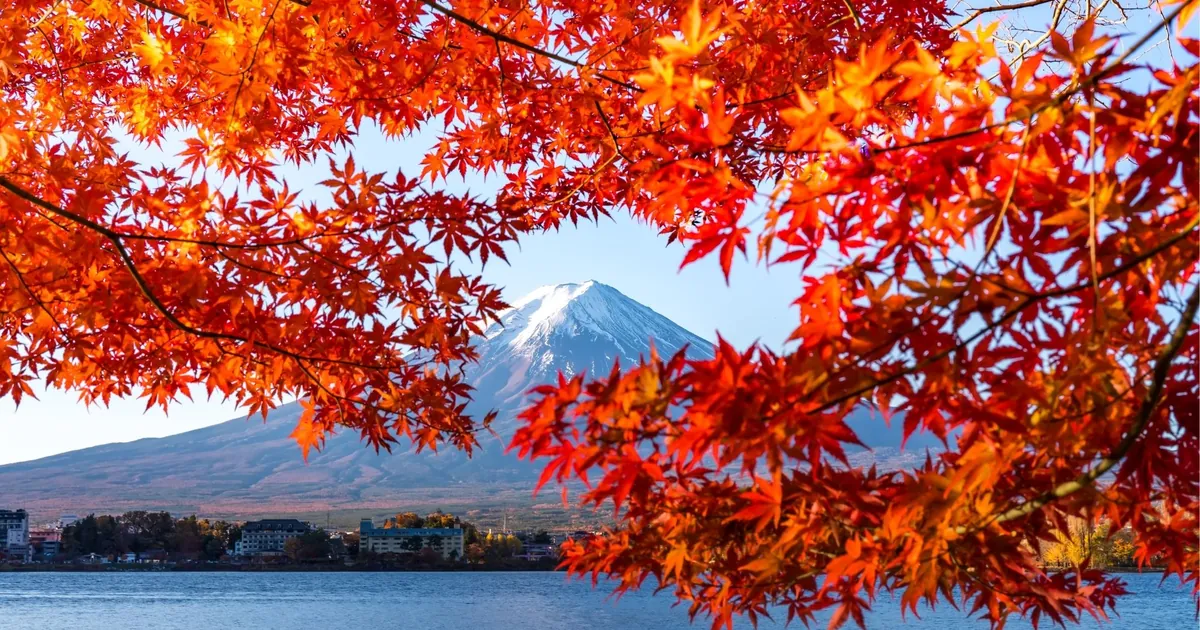
Yes, November is one of the best months of the year to visit Mount Fuji. You see the mountain far more often than in October, the maples around Lake Kawaguchi are forecast to peak in mid-November, and the crowds stay manageable if you avoid two holiday weekends. Plan for cold mornings, short days and a 5th Station that gets harder to reach as the month goes on, and aim for a weekday between 16 and 20 November with one night at the lake.
Check Availability
November 2026 at a glance
- Visibility: Fuji City’s 35-year record shows the whole mountain at 8:00 on 53.9% of November days, against 41.1% in October. In 2025 it was completely hidden on only 2 November mornings. Go early in the day and stay on the north side, around the Fuji Five Lakes.
- Leaves and events: the Momiji Corridor is forecast to peak around 16 November 2026, with the best window from 13 to 21 November. The Fujikawaguchiko Autumn Leaves Festival runs from 7 to 29 November 2026, lit from sunset to 21:00.
- Best dates: a weekday from 16 to 20 November, staying one night. Avoid the three-day weekend of 21–23 November if you can.
- Climbing: the trails are closed and you can’t climb, but the lakes are at their best.
Will I see Mount Fuji in November?
Probably, especially if you go early in the day. Across Fuji City’s 1991–2025 record, the whole mountain was visible at the 8:00 check on 36.6% of days through the year, falling to about 23% at noon and at 16:00. Cloud builds around a freestanding 3,776 m volcano even when Tokyo is sunny. November is the month the odds turn in your favour.
Visibility by month (the data)
Fuji City has checked the mountain from its city hall on the Shizuoka side at 8:00, 12:00 and 16:00 every day since May 1990. Here is how late autumn and winter compare, with lakeside temperatures from the Japan Meteorological Agency (JMA) 1991–2020 normals for Kawaguchiko:
| Month | Whole mountain visible at 8:00 (Fuji City, 35-year average) | 2025 at 8:00: full / partial / hidden days | Kawaguchiko average high / low (JMA normals) | What to expect |
|---|---|---|---|---|
| September | 27.2% | 6 / 11 / 13 | 23.8 °C / 14.8 °C | Typhoons and haze; poor odds |
| October | 41.1% | 10 / 8 / 13 | 18.3 °C / 8.7 °C | Improving, but often cloudy |
| November | 53.9% | 19 / 9 / 2 | 13.8 °C / 2.2 °C | Clear air, autumn leaves, frosty mornings |
| December | 61.7% | 19 / 7 / 5 | 8.5 °C / −2.9 °C | Excellent views, sub-zero dawns |
| January | 60.0% | 19 / 9 / 3 | 5.5 °C / −5.7 °C | Crisp and clear, the coldest month |
| February | 52.6% | 22 / 4 / 2 | 6.6 °C / −4.8 °C | 2025’s clearest month |
A second dataset points the same way. The forecast site isfujivisible.com scores the north side twice a day, and in its 2025 archive 90% of November mornings scored “visible”, against 32% in October. That is one season of model scores, not a long-term average, but it agrees with the city’s count.
Why November (and winter) beats October
Late typhoons and autumn rain fronts still stall over central Japan in October, and the air stays humid. In November dry continental high pressure builds in, the haze clears and long views get sharper in the cold air. December to February are clearer still. November is when near-winter visibility overlaps with autumn colour. Our Mount Fuji visibility guide has the full month and hour breakdown.
Best time of day: early morning
Go early. In Fuji City’s 2025 record the whole mountain was visible on 136 days at 8:00, 96 at noon and 91 at 16:00. The air settles overnight; after sunrise the slopes warm and cloud often builds by 10:00 or 11:00. November afternoons on the north side hold up better than at any time from spring to October, but sunrise to about 9:00 is still your safest window.
North side vs south side
- North side (the Fuji Five Lakes: Kawaguchiko, Yamanakako, Saiko and Motosuko, plus Fujiyoshida and the Chureito Pagoda): it sits in the drier lee of the mountain and matched or beat the south side every month in isfujivisible’s data, with 90% of November 2025 mornings scored visible against 80% in the south. This is the classic lake-and-Fuji view.
- South side (Fujinomiya, Fuji City, Hakone and Lake Ashi): it faces the moist Pacific air, so cloud builds sooner. You get festivals and quieter viewpoints, but the views are less reliable. Our Kawaguchiko vs Hakone in November guide compares the two sides in detail.
Weather and temperature in November
At the lakes (about 830–900 m)
JMA normals for Kawaguchiko give an average November high of 13.8 °C (57 °F) and an average low of 2.2 °C (36 °F). The record November low is −9.5 °C. The lakes run roughly 5 °C colder than central Tokyo. November is also fairly dry: about 76 mm of precipitation on average, against 230 mm in October.
Early vs late November:
- 1–10 November: pleasant days in the mid-teens and chilly evenings. Mornings are usually just above freezing.
- 11–20 November: daytime around 10–14 °C, and frost becomes common at dawn.
- 21–30 November: highs often in single figures and freezing mornings. A pre-dawn photo session by the lake feels much colder in the wind.
Days are short. Around Kofu the sun rises at about 6:29 and sets at about 16:35 on 23 November, so plan on roughly ten hours of daylight.
At the 5th Station (2,305 m)
The Fuji Subaru Line 5th Station has no JMA weather station, and published November estimates vary widely, from about 0–8 °C to as low as −10 °C at night. Plan on daytime temperatures around freezing, nights well below, and strong wind that can make it feel 5–8 °C colder. Snow and ice on the ground are possible from November. Dress as you would for a ski slope.
Is there snow on the peak in November?
Usually, but it isn’t guaranteed. The average date of Fuji’s first snow cap is 2 October, from the Kofu Local Meteorological Office’s record since 1894. Recent years have run late: 23 October in 2025, which Reuters reported as 21 days after the average, and 7 November in 2024. According to nippon.com’s Japan Data, citing the Kofu office, 2024 was the first year since records began that the mountain was still bare in November.
Two things are different in 2026:
- The method has changed. From the 2026–27 season, JMA no longer relies on staff sightings and judges summit snow from snow-depth analysis built from radar, satellite and AMeDAS data. It warns that the new dates can’t be compared directly with the old ones.
- As of mid-October 2026, no snow cap had been recorded. JMA’s table still showed no snow on Fuji in its mid-October update, and a cold snap on 7–8 October left no lasting snow.
On your trip that means a white cap is more likely in mid-to-late November than in early November, because an early dusting can melt within days. Treat snow as a likely bonus and check the live webcams the day before you go. Our best time to visit guide covers how the snow cap changes through the rest of the year.
Autumn leaves and November festivals
Peak timing at Lake Kawaguchiko
Colour starts high on the mountain in October and works down to the lakeshore in November. Japan Meteorological Corporation’s forecast of 30 September 2026 puts the Momiji Corridor peak around 16 November, with the best viewing from 13 to 21 November. Forecasts shift with the weather, so check the latest koyo (autumn leaves) map a week before you go.
Fujikawaguchiko Autumn Leaves Festival 2026
- Dates: Saturday 7 November to Sunday 29 November 2026, as announced by the Fujikawaguchiko Tourism Federation on 10 July 2026.
- Venue: the Momiji Corridor (Momiji Kairo) on the north shore of Lake Kawaguchi.
- Illumination: sunset to 21:00.
- Entry: free, with food and craft stalls.
Some sites still list 21:30 or 22:00 from earlier years, or “1–30 November”; the 2026 notice says 21:00. The festival opens on 7 November, but the trees will probably peak the following week.
Getting back at night: the last Red Line sightseeing bus back from the corridor leaves at 18:32, long before the lights go off. Book a taxi or stay on the north shore. Our Autumn Leaves Festival 2026 guide has the full bus times, two itineraries and the best hour to arrive.
Chureito Pagoda and other leaf spots
- Chureito Pagoda (Arakurayama Sengen Park, Fujiyoshida): the maples around the pagoda usually colour in the first half of November, a little earlier than the lakeshore. There are 398 steps, and you should arrive at sunrise. Overtourism is a serious problem here: Fujiyoshida City cancelled the park’s 2026 cherry blossom festival in February over traffic, litter and trespassing. Mayor Shigeru Horiuchi said Mount Fuji “is not just a tourist attraction; it is our very way of life”, so be considerate of the people who live there. Our Chureito Pagoda visitor guide covers the climb and the access rules.
- Momiji Tunnel and Oishi Park (north shore): quieter alternatives with the lake and Fuji in the same frame.
- Mt. Fuji Panoramic Ropeway: the adult return fare rises to ¥1,200 from 1 November 2026. The ropeway also closes for its annual inspection for part of December, so check the operator’s notice if you go late in the year.
Fujinomiya Festival (3–5 November)
On the south side, the Fujinomiya Festival (Akimiya) runs from Tuesday 3 November (a public holiday) to Thursday 5 November 2026 at Fujisan Hongu Sengen Taisha. Floats from 20 districts compete with Fujinomiya-bayashi festival music, a Shizuoka Prefecture intangible cultural property. The main evening gathering is traditionally on the 4th. The shrine is about 10 minutes’ walk from JR Fujinomiya Station, and entry is free.
Can you climb Mount Fuji in November?
No. The 2026 climbing season ended on 10 September, and the official trails are closed above the 5th Stations (above the 6th Station on the Fujinomiya Trail). Huts and first-aid stations are shut, phone coverage is patchy, and the upper mountain is icy and swept by wind. Our guide to climbing Mount Fuji in November or winter covers the rules, the penalties and what you can do instead, and the climbing season guide covers the summer season, which runs from early July to 10 September.
Is the Fuji Subaru Line / 5th Station open in November 2026?
Usually, but it depends on the weather:
- Fuji Subaru Line: the toll road to the Yoshida 5th Station runs all year. In November the gate is open from 4:30 to 17:00 from 1 to 15 November and from 9:00 to 17:00 from 16 to 30 November, with the last descent by 18:00. The toll is ¥2,800 return per car, cash only. In snow or ice it may open only to the 4th or 1st Station, or close completely.
- Buses: Fujikyu runs five departures a day from Kawaguchiko Station on the off-season timetable valid from 1 October 2026 (first departure 9:40, about 55 minutes, ¥2,000 one way or ¥3,400 return). Buses are cancelled when the road is closed and turn back at the 4th Station if that is as far as the road is open.
- Shops and restaurants at the 5th Station: many close for winter from around late November, with some open into December, depending on snow.
- Shizuoka side: the Fujisan Skyline to the Fujinomiya 5th Station and the road to the Subashiri 5th Station close for winter in November, on a date set by the snow each year.
Check on the morning itself: the Yamanashi Road Public Corporation posts the Subaru Line status, and Fujikyu posts bus notices. Our Fuji Subaru Line 5th Station guide covers what is up there and how the winter closure works.
Crowds and Japanese holidays in November 2026
| Date | What’s happening | Crowd impact |
|---|---|---|
| Sat 31 Oct – Tue 3 Nov | Culture Day (Tue 3 Nov); many people take Mon 2 Nov off for a four-day break | Busy; the Fujinomiya Festival starts |
| Sat–Sun 7–8 Nov | Opening weekend of the leaves festival | Busy, though the leaves are often not at peak |
| Sat–Sun 14–15 Nov | Near-peak foliage weekend | Very busy |
| Mon–Fri 16–20 Nov | Forecast peak window, on weekdays | The best balance |
| Sat 21 – Mon 23 Nov | Labour Thanksgiving three-day weekend | Peak crowds and heavy traffic; the leaves may be past their best |
How to beat the crowds:
- Be at the viewpoints by sunrise. Tour coaches from Tokyo usually arrive mid-morning.
- Visit the Momiji Corridor at night or on a weekday morning.
- Book highway buses and Fuji-view hotels weeks ahead for any November weekend.
- On busy days, swap the Chureito Pagoda or the corridor for Oishi Park, Lake Saiko or Lake Motosu.
Day trip vs overnight from Tokyo
A day trip works, but one night at the lake is better in November, for three reasons: sunrise is the clearest time of day, the light-up runs until 21:00, and an overnight stay gives you two mornings to see Fuji instead of one. Our Lake Kawaguchiko guide covers the shores and the town, and our guide to where to stay at Lake Kawaguchiko names Fuji-view hotels on each shore.
Getting there
- Highway bus (the cheapest): Busta Shinjuku to Kawaguchiko Station costs ¥2,200 and takes about 1 hour 45 minutes, longer in autumn weekend traffic, with departures roughly every 30 minutes. Keio and Fujikyu sell seats separately, so check both if one shows sold out.
- Fuji Excursion limited express: Shinjuku to Kawaguchiko direct for ¥4,200 one way, all seats reserved. Road traffic can’t delay it, but the first train doesn’t get you to the lake in time for sunrise.
- JR to Otsuki, then the Fujikyu Railway: a flexible fallback with one change.
- Guided day tour: the easiest option for a single day, as long as you choose one with an early start and stops that don’t depend on the 5th Station. The Tokyo: Mt Fuji & Oishi Park & Lake Kawaguchi & Oshino Hakkai coach tour (from $49, 4.8/5 from 5,794 reviews) stops at Oishi Park and Lake Kawaguchi, where the November colour is. For a group of three or more, or for the freedom to switch viewpoints when cloud comes in, the From Tokyo: Mount Fuji Private Tour With English Guide (from $319 per group, 4.9/5 from 880 reviews) lets you agree the stops with your driver-guide on the morning.
Our Tokyo to Mount Fuji transport guide compares the bus, the train and the car (bus vs train vs tour in winter covers the snow months), and our guide to the best Mount Fuji day tours from Tokyo for November and winter compares the tours. A working data connection helps too: you’ll want the live cameras and bus apps on the day.
What to pack for November at Mount Fuji
The essentials are below; our full Mount Fuji winter packing list adds outfits by month and by activity.
- A warm insulated jacket (light down or synthetic), essential at dawn and in the evening
- A base layer plus a fleece or sweater (layers work better than one heavy coat)
- Hat, gloves and a scarf or neck gaiter
- A windproof outer shell; the lakeshore and the 5th Station are windy
- Comfortable walking shoes with grip for the Chureito Pagoda’s 398 steps and frosty paths
- Hand warmers (kairo), sold at every convenience store
- Cash in yen, because the Subaru Line toll and some bus windows take cash only
- A power bank, since the cold drains phone batteries quickly
- Sunglasses and lip balm for the dry air and low sun
- A headlamp or phone torch for walks before dawn
- Extra layers for a 5th Station visit: thermal leggings and warmer gloves
What if Fuji is hidden?
Even in November some mornings are fully clouded. In Fuji City’s 2025 record at 8:00, Fuji was completely hidden on 2 of 30 November mornings, about one in 15, and only partly visible on 9 more. Check the live cameras before you leave, compare the north and south sides, and have a plan B: the lit Momiji Corridor, an onsen, the Itchiku Kubota Art Museum or Oshino Hakkai.
Verdict: Is Mount Fuji in November worth it?
Yes, for almost everyone except would-be climbers. November gives you near-winter visibility, autumn colour and a likely snow cap together, a combination no other month has.
Which part of the month suits you:
- 1–10 November: the Chureito Pagoda maples, the Fujinomiya Festival, milder temperatures and the easiest 5th Station access, with the gate open from 4:30. The lakeside leaves aren’t peaking yet, though, and a snow cap is less certain.
- 11–20 November: the best fit for most travellers, with peak colour in the Momiji Corridor, the festival in full swing and strong visibility. Pick weekdays.
- 21–30 November: the pick for photographers after a white cap and very clear air. Expect cold mornings, fading leaves, a 5th Station that may be closed or reachable only part of the way, and a packed weekend from 21 to 23 November.
If you can only make one plan: take the bus out on a weekday afternoon between 16 and 19 November, see the corridor light-up, sleep at the lake, and be on the north shore at sunrise.
Check these close to your date, because they can change: festival hours and parking, the leaf forecast, the snow cap, the Subaru Line and bus status, the Fujikyu and Keio timetables, and ropeway fares.
Frequently Asked Questions
Is November a good time to see Mount Fuji?
Yes. In Fuji City’s 35-year record the whole mountain is visible at 8:00 on 53.9% of November days, well ahead of October at 41.1%. In 2025 it was completely hidden on only 2 November mornings.
How cold is Mount Fuji in November?
At Lake Kawaguchiko, expect average highs around 14 °C and lows around 2 °C, with frost common later in the month. At the 5th Station (2,305 m) it is around freezing by day and well below at night, with strong wind.
Does Mount Fuji have snow in November 2026?
Usually by mid-to-late November, but it isn’t guaranteed. The average first snow cap is 2 October, but in 2024 it came on 7 November. As of mid-October 2026, JMA had not recorded snow on the summit.
When do the autumn leaves peak at Lake Kawaguchiko in 2026?
The Momiji Corridor is forecast to peak around 16 November, with the best window from 13 to 21 November. The maples at the Chureito Pagoda usually peak in the first half of November.
When is the Fujikawaguchiko Autumn Leaves Festival 2026?
From 7 to 29 November 2026 in the Momiji Corridor, lit from sunset to 21:00. Entry is free.
Can you climb Mount Fuji in November?
No. The official season ended on 10 September 2026 and the trails are closed. You can usually still visit the Fuji Subaru Line 5th Station by bus or car when the road is open.
Is a day trip from Tokyo enough in November?
It works by highway bus (about 1 hour 45 minutes from Shinjuku) or on a tour. One night at the lake gives you a sunrise view, the evening light-up and two chances at a clear Fuji.
Which side of Mount Fuji is better for views?
The north side, around the Fuji Five Lakes. It matched or beat the south side every month in recent forecast data, and it has the classic lake and pagoda viewpoints.
Related reading
- Mount Fuji visibility guide: the odds by month and by hour
- Fujikawaguchiko Autumn Leaves Festival 2026: dates, peak timing and the last buses back
- Can you climb Mount Fuji in November or winter?: the rules and what’s open instead
- Compare all six private Fuji tours, side by side with live prices
Your Own Car, Your Own Day at Mount Fuji
Rated 4.9/5 by 675 travellers. Hotel pickup in Tokyo, an English-speaking driver-guide, and an itinerary you set yourself — with free cancellation up to 24 hours before.
Check Availability & Book