Mountain Huts on Mount Fuji
Why a hut booking comes first on a Mount Fuji sunrise climb: 7th versus 8th Station, when bookings open, what a night costs, and what the bunks, curry and 1 a.m. wake-up are like.
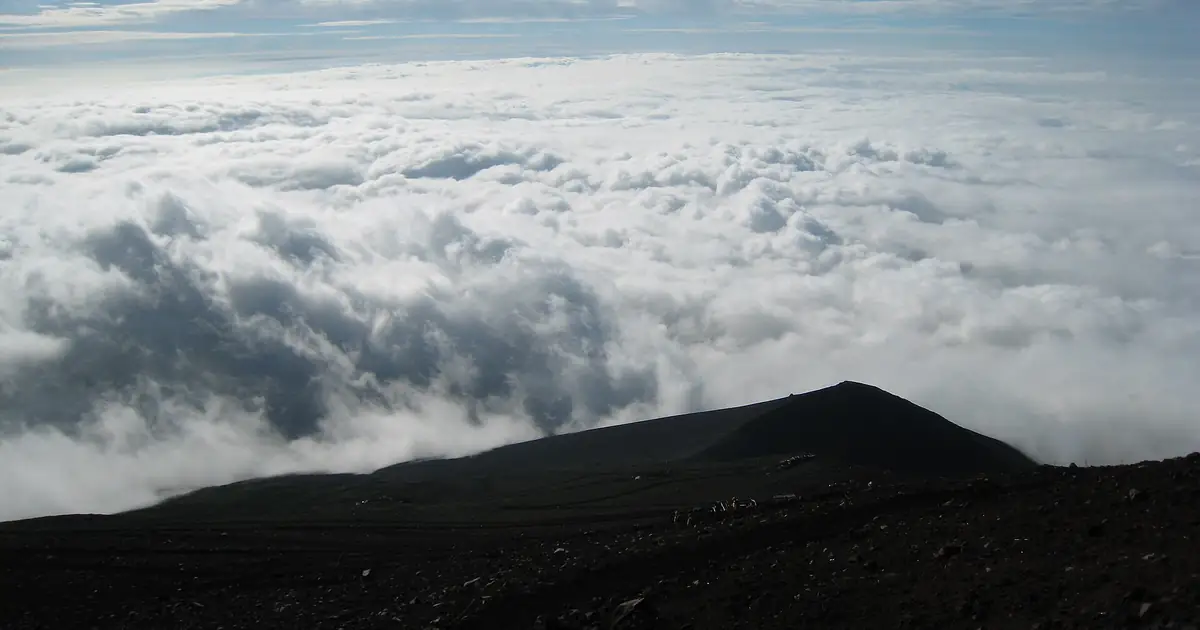
If you want to see the sunrise from the top of Mount Fuji, a mountain-hut booking is not optional. Since the gate rules came in, a confirmed hut reservation is the only way through the Yoshida trailhead gate after 14:00, and so the only legal way to be on the mountain overnight, in position for the summit at dawn. Book the hut first, then your climbing permit, then the bus. Bookings open hut by hut between late April and early May, and the popular 8th Station huts on the Yoshida Trail can sell out within hours of opening; August weekends go almost at once. And be honest with yourself about what you are booking: a place on a shared sleeping platform, sometimes behind a curtain, curry rice for dinner, a packed breakfast, a wake-up around 1 a.m. in the dark, and a bill of roughly ¥7,700 to ¥17,600 a night, often payable only in cash.
Check Availability
Why the hut comes first
A mountain hut does three jobs at once, and together they explain why it sits at the centre of any serious plan to climb Fuji:
- It splits the ascent over two days, which greatly reduces the risk of altitude sickness.
- It gives you a few hours of sleep before the summit push, which usually starts around 1:30 a.m.
- It is the only way past the Yoshida gate after 14:00.
Without a hut booking, you cannot climb the Yoshida Trail overnight for the sunrise. That is the whole equation.
The Yoshida Trail has the most huts, and above the 8th Station it merges with the Subashiri Trail, so the huts on that stretch serve climbers from both routes and get especially busy. If you are looking for an 8th Station hut in particular, where it sits matters as much as how comfortable it is.
On the Shizuoka trails (Fujinomiya, Subashiri and Gotemba) there is no staffed gate like the one at the Yoshida 5th Station, and you register through the FUJI NAVI app instead of the Yamanashi system. The same 14:00 to 03:00 entry restriction applies there to climbers without a hut booking, as our climbing season guide explains, and the huts on those trails are strongly recommended in any case and often full in the peak weeks.
The hut is the plan
The 2026 rules make the logic unusually simple. The trailhead gates close from 14:00 to 03:00 to anyone without a hut reservation, which effectively ends the one-day “bullet climb.” The realistic, safe way to see the sunrise is a two-day climb with a night in a hut on the 7th or 8th Station.
This is a safety argument as much as a logistical one. Roughly 30% of climbers are commonly said to suffer some altitude sickness, and splitting the ascent over two days, with a night above 3,000 metres, is one of the most effective protections an ordinary climber has. Our guide to climbing Mount Fuji covers the altitude, the summit and the descent in detail.
7th Station or 8th Station?
7th Station huts (Toyokan and Kamaiwakan, for example) help you acclimatise, but leave a long summit push of 4 to 5 hours from about 1:30 a.m.
8th Station huts (Taishikan and Hakuun-sō, for example) are what several guides call the ideal location. You sleep higher, so the morning climb to the summit is much shorter, 2 to 3 hours.
Above the 8th Station, Goraikōkan is the last hut on the Yoshida Trail below the summit, and it sells out almost immediately.
The trade-off in practice: the higher the hut, the shorter and less tiring the climb to the sunrise, which is exactly why the higher huts are the hardest to book. The 7th Station huts still help with acclimatisation and are far easier to get, and they are a sensible fallback if the 8th Station is full.
Booking: when, where and what goes first
When bookings open: hut reservations for the 2026 season opened hut by hut, from late April into early May, not all on one day. That matters: you may need to watch several huts’ opening dates, not wait for a single release.
How fast they go: the popular 8th Station huts with private rooms sell out within hours of opening. On the Yoshida Trail the best-known huts, Tomoekan, Taishikan and Ganso-muro, fill quickly, “with many August-weekend dates gone within days.”
Booking in English: the English-language booking site cited most often for Yoshida Trail huts is japanmountainhuts.com. Other booking platforms, such as Yamatan, also handle several huts, including Tomoekan, Hinodekan and Original 8th Tomoekan, and you can book directly on individual huts’ websites. Full payment up front is usually required to confirm a reservation.
The step people forget: you will need your booking confirmation to pass the gate after 14:00, so save it offline. Mobile signal on the mountain is unreliable.
What a night costs
Prices vary with the station, the day of the week and the type of space. Current published ranges:
- About ¥7,700 to ¥16,500 a night, depending on station, day and room type (the range given by one 2026 guide).
- ¥10,000 to ¥17,600 for a weekday night with dinner (usually curry rice) and a packed breakfast (another 2026 source).
- ¥14,000 to ¥17,000 per person for a basic shared sleeping space, dinner and a simple breakfast (a third current source).
Weekends and holidays cost more, typically ¥1,100 to ¥2,200 extra, above all during Obon in mid-August, and those dates sell out first.
Bring cash. Mountain huts, buses and most shops on the mountain do not take credit cards. Withdraw enough yen in Tokyo before you head for the trailhead. There is an ATM at the 5th Station, but queues build quickly.
The hut is a separate cost from the climbing fee. Even with a hut booked, you still pay the ¥4,000 climbing fee.
What a night in a hut is like
This is the part to be honest with yourself about, and first-hand accounts agree. One writer who has stayed in the huts lists the details that matter more than trail distances when you decide whether to book: “The communal sleeping platforms, the curtain-divided ‘private’ rooms, the curry rice dinner with miso soup, the 1:00 AM wake-up call in pitch darkness.”
What to expect:
- Shared sleeping platforms. Communal space is the norm and private rooms are the exception. Some huts sell curtain-divided compartments as “private,” which buys you privacy but not more room.
- Tight quarters. Even enthusiastic accounts mention “the tight quarters” alongside “the spectacular sunset above the clouds.”
- Simple, standard meals. Dinner is usually curry rice with miso soup, and breakfast is usually packed for you to take on the pre-dawn climb.
- A wake-up around 1 a.m., in complete darkness, for the summit push.
- Basic facilities. These are working mountain shelters above 3,000 metres, not hotels.
What makes up for it, according to the same accounts: the sunset above the clouds from outside the hut at dusk, a night sky full of stars, and being in position for goraikō, the summit sunrise.
The booking order that works
Current guides consistently recommend the same sequence:
- Book the hut first. It is the scarcest and least flexible part of the plan, and everything else fits around it.
- Then register your climb and pay the fee. Yoshida Trail registration opened on 27 April 2026; the Shizuoka trails use the FUJI NAVI app. Our climbing season guide walks through both systems.
- Then book the bus or other transport. This is the most flexible piece and can be arranged around the fixed hut date.
Getting this wrong, by booking transport or a permit first and then finding no hut beds left on that date, is a common and avoidable mistake.
Practical cautions
- Insurance: make sure your travel insurance explicitly covers hiking above 3,000 metres. A mountain rescue on Fuji can involve hundreds of thousands of yen in costs; the police and fire services’ rescues are paid for from public funds for now, but both prefectures are studying charging climbers, and hospital treatment after an evacuation is not free for visitors.
- Cancellation terms vary. The ¥4,000 climbing fee is non-refundable once your permit has been used, and cancellation after purchase is limited; bus and hut cancellation policies differ from operator to operator, so read the terms before you book.
- Do not try to get round the gate. The Yoshida gate is staffed and monitored, and bypassing it breaks the rules and can put you in danger.
- Take the conditions seriously. The summit is often close to 0°C even in August, and severe storms can arrive without warning.
If the climb is not for you this time
Plenty of people read this far and decide a night at 3,000 metres is not for them, and you can still stand on Fuji without climbing it. The Yoshida Trail starts at the Fuji Subaru Line 5th Station, 2,305 metres up, where you can eat, walk a level trail around the mountain’s flank and look out over the Fuji Five Lakes. The Luxury Land Cruiser day tour from Tokyo builds its route around the 5th Station, alongside Oshino Hakkai and the Chureito Pagoda, over twelve hours. It rates 4.80 stars from 263 reviews at $348 for the vehicle, with a full breakdown here. The Mount Fuji Private Tour With English Guide includes the 5th Station among its stops when the road is open, at 4.94 stars from 675 reviews and $309, broken down here.
Private cars are banned from the Subaru Line from 18:00 on 3 July to 18:00 on 10 September in 2026, so in those weeks ask the operator how they handle the shuttle from Fujisan Parking before you book. Our 5th Station guide covers what is up there.
What we would do
Book in this order, and start early: hut, then permit, then transport. Watch the individual huts’ opening dates from late April, and be ready to book the moment your hut opens if you want an 8th Station bed on an August weekend.
Go for an 8th Station hut if you can get one. A summit push of 2 to 3 hours instead of 4 to 5 makes a real difference at 1:30 a.m., in the cold, at altitude. But a 7th Station hut is far better than no hut: it still gives you time to acclimatise and gets you through the gate.
Aim for a weekday. You avoid the ¥1,100 to ¥2,200 weekend surcharge, compete with fewer people for beds and meet fewer on the trail. If you have any flexibility, avoid Obon week in mid-August altogether.
Bring cash for the hut, for toilets (¥100 coins; a visit usually costs ¥200 to ¥300) and for anything you buy on the mountain. Withdraw it in Tokyo instead of relying on the 5th Station ATM.
Save your booking confirmation offline before you lose signal. You cannot pass the 14:00 gate without it.
Check that your travel insurance explicitly covers hiking above 3,000 metres before you commit.
If your dates are sold out: try a weekday, settle for a 7th Station hut, or switch to a Shizuoka trail, which has no daily cap, though its huts also fill in the peak weeks.
The caveats that matter
Prices vary by hut, date, meal plan and type of space, and published ranges differ between sources: ¥7,700 to ¥16,500, ¥10,000 to ¥17,600 and ¥14,000 to ¥17,000 all appear in current 2026 guides. Confirm the final price with the hut when you book.
Booking windows open hut by hut and move from year to year. Check each hut’s opening date instead of assuming one release date for the whole season.
Some huts give prices only on request through their booking links, and weekend and peak-season rates run higher than the headline figures.
This page is about the huts. The permit and fee rules and the season dates are in our climbing season guide, the four trails are compared in our trail guide, and what the climb itself is like is in our guide to climbing Mount Fuji.
The rules and the huts’ operations change every year. Check the current rules on the official climbing site, fujisan-climb.jp, and current availability directly with the huts before you finalise your plans.
Tour prices are the GetYourGuide starting prices for the listings named and vary with the operator, season, group size and inclusions. Ratings and review counts were checked on each listing on 18 September 2026.
Related reading
- Mount Fuji climbing season: dates, fees and rules — the ¥4,000 fee, the two booking systems and the 14:00 gate
- Every Mount Fuji trail compared — which trail has the most huts, and which has almost none
- Climbing Mount Fuji: what it’s like — the altitude, the sunrise, the summit and the descent
- Fuji Subaru Line 5th Station — the Yoshida trailhead, and what is there if you do not climb
- Tokyo to Mount Fuji: the transport guide — every bus, train and driving route, priced
- Compare all six private Fuji tours — side by side, with live prices
Your Own Car, Your Own Day at Mount Fuji
Rated 4.9/5 by 675 travellers. Hotel pickup in Tokyo, an English-speaking driver-guide, and an itinerary you set yourself — with free cancellation up to 24 hours before.
Check Availability & Book