Mount Fuji Private Tours from Tokyo: The Complete 2026 Guide
Every format of private Mount Fuji tour from Tokyo — real prices by group size, how private compares with a coach, month-by-month visibility odds, and the 2026 access rules.
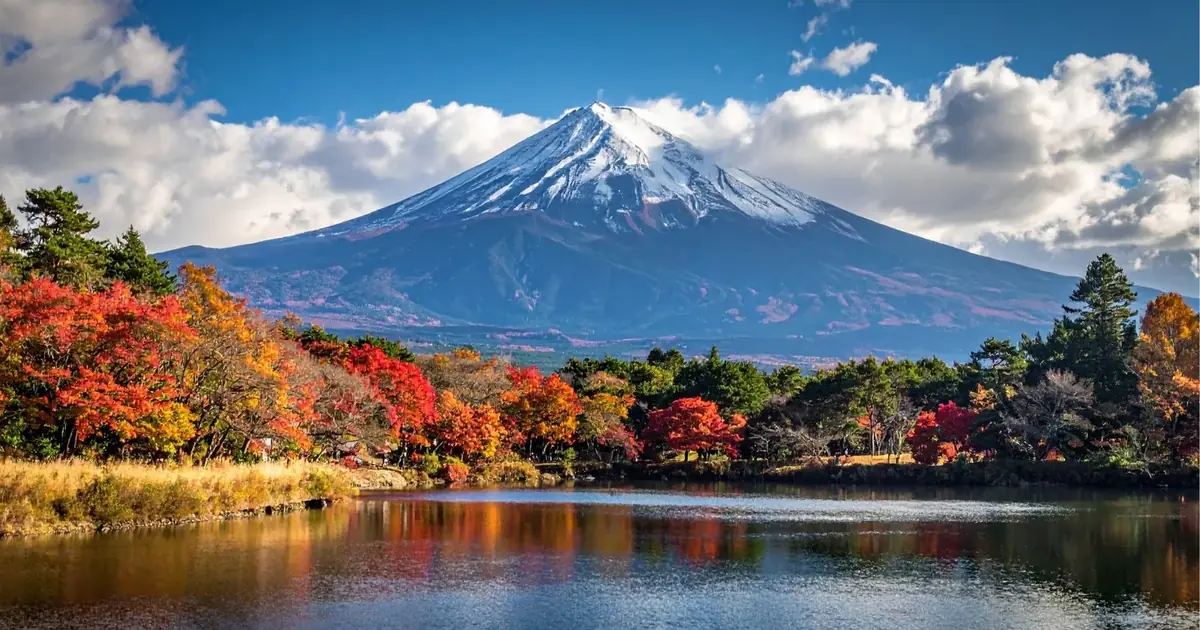
A private Mount Fuji day tour from Tokyo is the most flexible and most comfortable way to see the mountain, and for a group of six it can cost about the same per head as a coach. Most private tours start at about $280 to $370 for a small group on the cheapest dates, driver-guide included, against about $49 per head for a seat on a coach. How many of you there are decides most of what follows. The other thing that decides it is weather: Fuji makes its own cloud, and the day you book matters at least as much as the tour you book.
Check Availability
What it costs, and when it stops being an indulgence
A private tour is priced per group and a coach per head, so the gap narrows as your party grows. It does not close as early as the booking-page prices suggest, though: the starting price is usually for a small car on the cheapest date, and larger groups pay more for a van or a second car. These are the prices for Wednesday 11 November 2026, checked on 6 October.
| Party size | Private (private tour with English guide) | Private (van that keeps one price, tour with pickup and drop-off) | Group coach (from $49 each) |
|---|---|---|---|
| 2 | $367, about $184 each | $379, about $190 each | $98 |
| 4 | $398, about $100 each | $379, about $95 each | $196 |
| 6 | $493, about $82 each | $379, about $63 each | $294 |
For a solo traveller, a couple or a group of four watching the budget, the coach is clearly cheaper. At six people in a van the difference is small, and everybody gets a window seat, a boot for the bags and a departure time nobody else set. The Mt Fuji, Oishi Park, Lake Kawaguchi and Oshino Hakkai day tour is rated 4.8 from more than 4,900 reviews. Our cost guide compares more tours by group size.
The five formats you can actually book
Private car and driver day tours are the backbone of the market — typically 8 to 12 hours door-to-door with hotel pickup and drop-off in Tokyo’s 23 wards, an English-speaking driver (often a driver-guide), and an itinerary you set. Vehicles seat one to six in a car or minivan, or nine to thirteen in a commuter van. Listings advertise 10 to 11 hours as standard; fuel, tolls and parking are usually in, lunch and entry fees usually out. The most-reviewed example here is the Mount Fuji Private Tour With English Guide — 4.9 stars across 880 reviews at $319 for a small group — and our full walkthrough of the day covers what those hours actually look like.
Private guided tours — a separate guide alongside the driver, or a driver-guide who does both — add commentary and on-the-ground help. There is one booking trap worth knowing: on the largest nine-seat vans several operators note there may be no room for a separate guide, leaving a driver whose English is limited. Check the listing text rather than the headline.
Private guided hiking and climbing tours are a different product entirely, available only in the summer climbing season or as specialist off-season ascents with certified guides. The dominant format is a two-day summit climb with an overnight in a mountain hut around the 7th or 8th station at 3,200–3,400 m, timed to reach the top for goraiko, the sunrise. GetYourGuide carried a two-day summit climb with an 8th-station hut and an English guide at around $370 per person, but that listing was withdrawn — as of 12 September 2026 its page redirects to the general Tokyo listings. Two successors have appeared, a guided two-day summit climb and a three-day guided hike, and we are deliberately not recommending either yet: between them they carry three reviews in total, which is no basis for sending anyone up a 3,776 m volcano. We will name one here when it has a review record worth the name. Expect guided ascents to rate below the sightseeing tours on this page in any case, which is normal for a physically demanding product where altitude and weather decide half the experience. Specialist climbing operators including Fuji Mountain Guides, WILLER Travel and marketplace guides via Explore-Share run the same format outside the affiliate marketplaces.
Combined Fuji and Hakone private tours trade depth for breadth, swapping some Fuji Five Lakes stops for Hakone’s Owakudani volcanic valley, a Lake Ashi cruise, the Hakone Shrine torii and often the Gotemba Premium Outlets. The Mt Fuji and Hakone Private Custom Tour with English Driver is the most-reviewed version, at 4.8 from more than 750 reviews and from $315 for a small group; there is a dedicated page for it with the full itinerary.
Luxury and specialty options start with newer Toyota Land Cruiser (LC300) vehicles carrying refreshments — the Luxury Land Cruiser day tour is twelve hours from $355, rated 4.8 from 264 reviews — and end with helicopter charters for aerial views. That top end is not sold through GetYourGuide: SUNRISE TOURS (JTB) prices a private Mt. Fuji and Tokyo morning flight as a charter split across the group, roughly ¥1,800,000 in total, or about ¥450,000 a head for four. Tokyo Cheapo cites a private luxury car day tour reaching around ¥450,000 for a group of up to eight — a figure worth re-confirming directly before planning around it.
Where private tours actually go
A Fuji Five Lakes private day typically strings together three to five of the following:
- The Fuji Subaru Line 5th Station (2,305 m) — seasonal and weather-dependent access, and the one stop that feels like being on the mountain rather than looking at it.
- Arakurayama Sengen Park and the Chureito Pagoda — the five-storey pagoda with Fuji behind it, reached by roughly 398 steps.
- Oshino Hakkai — eight spring-fed ponds of Fuji snowmelt, a nationally designated natural monument.
- Lake Kawaguchiko and its north shore, for the classic reflection view.
- Oishi Park — seasonal flowers and lavender with the lake and mountain behind.
- The Kachi Kachi (Mt. Fuji Panoramic) Ropeway.
- Saiko Iyashi no Sato Nenba, a reconstructed thatched-roof village.
- Fugaku Wind Cave, and optional onsen stops such as Fujiyama Onsen.
If you are already staying at the lakes rather than in Tokyo, the Kawaguchiko local-guide tour starts at the mountain instead — six hours by private vehicle with a licensed local guide (lunch is extra), rated 5.0 from 54 reviews, from $474 for the group. It is a genuinely different product rather than a pricier version of the same one, which is why it sits above the rest of the range.
The pricing landscape in detail
All figures below are current-market ranges. Online prices are dynamic, frequently discounted, and should be verified at the moment you book.
Private car and driver full-day tours, priced per group. Across the wider market a private Fuji day trip from Tokyo runs roughly $275 to $490 per group, with about $297 cited as the flat rate most travellers actually book. Individual operators advertise from $325 per group for up to three people. Most GetYourGuide private listings start between $280 and $370 for a small group on the cheapest dates, with a premium Land Cruiser itinerary from $355 and the Kawaguchiko local-guide day from $474. Some operators publish sliding per-person rates instead — one Tripadvisor-listed operator shows ¥32,000 per person for a group of five, ¥37,000 for four and ¥45,000 for three, which is the same per-vehicle economics expressed the other way round.
Shared and group coach day tours, per person. Roughly $49 to $115 depending on inclusions. Budget coaches run about ¥10,000–13,000 per person: English guide, two or three stops, fixed schedule, usually no lunch, groups of twenty to forty. Mid-range shared tours at ¥13,000–18,000 offer smaller groups and often lunch. The Hakone Ropeway, Owakudani and Lake Ashi coach tour — 4.6 from more than 8,000 reviews, from $54 — is the highest-volume example of the format.
Private two-day guided summit climbs, per person on a sliding scale. Fuji Mountain Guides’ in-season private two-day sunrise summit tour is priced by group size — around ¥359,000 for one climber, ¥199,000 for two, ¥149,000 for three and ¥119,000 for four to six — including transport, a dedicated English guide, an 8th-station hut, the ¥4,000 permit, meals and insurance. Non-private group climbs run considerably cheaper per person, roughly ¥30,000–¥70,000 ($200–$500) depending on operator and inclusions.
How pricing scales. For private cars the group pays for the vehicle, so per-person cost falls as you add people, but larger groups often need a van or a second car at a higher price. Against a coach, the per-head cost only comes close at about six people in a van. For private climbs the per-person rate also falls sharply with group size, but from a far higher base. Our cost breakdown works through where the money that isn’t in the headline price hides.
Duration and logistics
A private Fuji sightseeing day is typically about ten hours door-to-door, with hotel pickup commonly between 6:00 and 8:00 AM — earlier in cherry-blossom and peak seasons to beat the Chuo Expressway. The drive from central Tokyo to the Fuji Five Lakes takes 1.5 to 2.5 hours each way depending on traffic, which leaves roughly five to seven hours of actual on-site time across three to five stops.
Weekends and blossom season worsen expressway congestion considerably, so an early departure is not a nicety. Overtime is usually billed — commonly ¥2,500 per 30 minutes or ¥5,000 per hour — and pickups outside Tokyo’s 23 wards, from Yokohama or Narita for instance, usually carry a surcharge.
When the mountain is actually visible
Fuji makes its own weather, and a clear view is far from guaranteed on any given day. Fuji City’s official 35-year record (1991–2025) — a fixed-point observation from the city hall on the Shizuoka side, taken three times daily — puts full visibility at the 8:00 AM check as follows:
| Month | Fully visible at 8 AM | Month | Fully visible at 8 AM |
|---|---|---|---|
| January | ~60% | July | ~10% |
| February | ~53% | August | ~15% |
| March | ~41% | September | ~27% |
| April | ~36% | October | ~41% |
| May | ~30% | November | ~54% |
| June | ~12% | December | ~62% |
In other words winter is roughly six times more reliable than midsummer, and July is the worst month of the year — the mountain is “not visible at all” 75.4% of the time. Morning is consistently the best hour: across the same 35-year record, “fully visible” runs 36.6% at 8:00 AM, 23.3% at noon and 22.5% at 4:00 PM as cloud builds through the day.
One thing to hold in mind when comparing figures elsewhere: this is a single fixed point on the Shizuoka side, some distance from the mountain, and it is the only long-run count anyone publishes. There is no equivalent record for the Fuji Five Lakes side, where most tours actually go. Higher midwinter percentages circulate in travel guides — we could not trace them to a published count, and the city’s own table is what our month-by-month guide uses. None of it is a forecast for your Tuesday.
Winter (December–February) has the most mornings with the mountain in full view, and the classic snow cap, at the cost of sub-zero early mornings at the lakes and occasional snow closures. Spring (late March–May) brings cherry blossom around Lake Kawaguchiko and the Chureito Pagoda, typically peaking 6–14 April, about one to two weeks after Tokyo because of the altitude — but spring haze cuts visibility. Summer (June–August) combines the rainy season and humidity into the worst window for views, and is the only time you can climb. Autumn (September–November) improves steadily; November is arguably the single best month for combining clear air with colour.
Official climbing season 2026: the Yoshida Trail (Yamanashi) and Subashiri Trail open 1 July; Fujinomiya and Gotemba (Shizuoka) open 10 July; all four close 10 September. Climbing outside that window is strongly discouraged — the huts, toilets, first aid and rescue infrastructure are all shut.
What changed in 2025 and 2026
- A mandatory ¥4,000 climbing fee on all four trails. In 2024 only the Yoshida Trail charged, at ¥2,000. For 2025 the fee doubled and was extended to the three previously free Shizuoka trails. It continues at ¥4,000 for 2026, with no child discount.
- Mandatory advance reservation. Yoshida Trail climbers reserve and pay through the asoview platform. Shizuoka-side climbers use the FUJI NAVI app, which requires completing an e-learning safety module and passing a short test before payment.
- A daily cap and gate closures. The Yoshida Trail caps entries at 4,000 climbers a day — a cap not actually reached on any day in 2024 or 2025. Trailhead gates close from 2:00 PM to 3:00 AM to anyone without a mountain-hut booking, and “bullet climbing” (overnight ascents without hut rest) is banned on all four trails.
- The private-vehicle restriction to the 5th Station. For 2026 the Fuji Subaru Line is closed to private vehicles from 3 July to 10 September, with shuttle buses running between designated base parking and the 5th Station. Visitors park at Fujisan Parking (¥1,000 per vehicle) and take the shuttle (¥2,000 one way, ¥3,400 return, adult). This affects private car tours directly: in that window your car cannot take you up, and the tour has to build the shuttle into the day.
- Off-season 5th Station tolls. Outside the restriction period the Fuji Subaru Line toll is about ¥2,800 return for a standard car.
- Fujiyoshida paid parking. From April 2025, Arakurayama Sengen Park introduced paid parking at ¥1,500 per six hours for the closer lots and ¥1,000 for the farther ones; downtown Fujiyoshida photo-spot parking is ¥1,000 for up to twelve hours.
- Accommodation tax. Fujikawaguchiko Town postponed its planned lodging tax to April 2027.
- Off-season rescue charges. Yamanashi and Shizuoka are debating charging reckless off-season climbers for rescue costs, following several viral 2025 incidents.
Private versus group, honestly
What private buys you: full flexibility over the itinerary and the order of stops — a good driver-guide will re-sequence the day to chase the clearest view or the best light; door-to-door hotel pickup; unhurried pacing, which matters at somewhere like the Chureito Pagoda where a coach allows 30 to 45 minutes; privacy; the ability to accommodate dietary needs, small children and specific interests; and, at three or more travellers, a competitive per-person cost.
What a group coach buys you: a dramatically lower per-person price for solo travellers and couples, no coordination, a guaranteed English guide and a proven itinerary. The trade-offs are a rigid schedule, limited photo time, crowds, and a Shinjuku or Tokyo Station meeting point rather than your hotel lobby. Our side-by-side comparison runs both cases with real prices.
Who a private tour suits — and who it doesn’t
Best suited to families with young children (car seats, stroller-friendly, flexible loo stops), photographers who want control over timing and light, travellers with mobility concerns (door-to-door, minimal walking, no train transfers), groups of three to six splitting a flat rate, older travellers, and anyone short on time who wants maximum efficiency out of a single day.
Poorly suited to solo budget travellers — a private car split one way is far more expensive than a $49 coach seat — anyone perfectly happy with a standard itinerary, and travellers whose actual goal is the summit, for whom a scheduled group climb is usually more cost-effective than private guiding unless you specifically want the pacing and attention. For a couple, a coach costs about a quarter of a private car, so go private only if the comfort and the flexible timing matter more than the money.
What to confirm before you book
- Cancellation policy. Every tour listed on this site offers free cancellation up to 24 hours before; some operators elsewhere require 48.
- What’s included. Fuel, tolls and parking are usually in; lunch and attraction entry fees usually are not. Check specifically whether the 5th Station toll or shuttle and any ropeway tickets are extra.
- Summer 5th Station access. If you want the 5th Station between July and early September, confirm the tour uses the shuttle bus and factor in the extra cost and time.
- Vehicle type and capacity. Confirm seats against group size — and whether adding people crowds out the guide.
- Guide or driver. Confirm which you are getting and the actual English level; reviews sometimes flag limited English where the listing does not.
- Overtime charges and pickup-area surcharges.
- For climbing tours specifically: whether the ¥4,000 permit is handled for you, the hut booking, gear rental (boots, poles, headlamp, rain gear, helmet), the fitness requirement — typically the ability to hike five to seven hours uphill — and altitude-sickness guidance.
Recent news and conditions worth knowing
Safety improved sharply under the new rules. There were no climbing deaths in the 2025 season, down from nine in 2024, and a little over 200,000 people climbed in 2024 against just over 220,000 in 2023. Stranded-hiker incidents fell about 44% year-on-year on the Shizuoka side, credited to the fees, caps and night-gate rules. The 2026 season has seen fatalities resume, including a foreign hiker — a reminder that the trails are strenuous even though they are not technical.
The Lawson photo-spot barrier. The notorious 2.5 m black screen erected in May 2024 was removed that August; a lower brown barrier of about 1.4 m went up on 7 August 2025 to keep photographers out of the road. The view is not blocked and the store never closed, but Lawson has asked tour operators to drop it as a stop on safety grounds.
The Fuji tram that isn’t. Yamanashi scrapped its light-rail plan up the Subaru Line in November 2024 after local opposition and a petition of some 70,000 signatures, and is instead studying a rubber-tired “Fuji Tram”. Nothing is built, so it affects no tour running today.
Overtourism measures continue across the Fuji Five Lakes — paid parking, etiquette campaigns and a possible future accommodation tax.
How to decide, in three stages
Stage one — pick the format by group size and goal. Solo or a budget couple on a standard itinerary: book a shared coach day tour at roughly $49–$90 a head. A group of four to six, or a family, a photographer, or anyone with mobility needs: book a private car day tour at roughly $300 to $400 for the group, which is more comfortable and, at six in a van, close to the coach on cost. The Private Tour From Tokyo To Mount Fuji with Custom Itinerary is rated 4.9 from more than 340 reviews, starts at $365, and has its own page here. Set on the summit: book a two-day guided climb between July and early September, and choose private only if the pacing and attention are worth the premium.
Stage two — optimise the timing. For the best odds of actually seeing Fuji, target November to February, with October and late March as shoulder options. If cherry blossom is the priority, target early-to-mid April and accept lower visibility odds. Always take the earliest available departure, and pick a tour whose guide can re-order stops based on that morning’s conditions. Check a live visibility forecast or webcam the day before.
Stage three — verify the time-sensitive specifics at the moment you book: the current climbing-season dates and permit rules, whether the private-vehicle restriction is active on your date, the cancellation window, and exactly which fees are included.
Three benchmarks that should change your decision. If your party is one or two people on a standard route, the private premium usually isn’t worth it — switch to a coach. If your dates fall in June, July or August, lower your expectation of seeing the peak and lean on the guide’s flexibility, or reconsider the timing. If you specifically want the 5th Station in summer, confirm the shuttle logistics or expect the tour to substitute another stop.
The caveats that matter
Prices are indicative and volatile. Every dollar and yen figure here is a current-market range drawn from operator listings and the live GetYourGuide data behind this site. Online prices are dynamic, often discounted, and vary by season, group size, vehicle and inclusions. Confirm the exact price and what it covers before you pay; no single operator’s price is the market rate.
Visibility statistics are probabilities, not guarantees. Fuji City’s data describes long-term odds from one fixed point on the Shizuoka side. Conditions at Kawaguchiko, at Hakone, or at your specific stop can differ, and any given day can defy the average in either direction.
Regulations are time-sensitive. Climbing fees, the reservation system, daily caps, season dates, the private-vehicle restriction window and parking fees are all set annually and have changed materially in 2024, 2025 and 2026. Verify current rules on the official Mt. Fuji climbing site, the Yamanashi and Shizuoka prefectural tourism pages, or JNTO before you travel.
Weather closures happen. The 5th Station road, the ropeways and individual viewpoints can close at short notice for wind, snow, storms or maintenance. Build flexibility into the plan — which is, in the end, the entire argument for a private car.
Related reading
- Mount Fuji day trip from Tokyo: the complete planning guide — train, coach or private car, and what one day realistically holds
- How much does a Mount Fuji private tour cost? — where the money that isn’t in the headline price hides
- The best time for a Mount Fuji private tour, month by month — visibility odds, blossom, shibazakura and autumn colour
- Private tour vs group day trip — how the cost compares by group size
- What to expect on a Mount Fuji private tour — the day, hour by hour
- Compare all six private Fuji tours — side by side, with live prices
Your Own Car, Your Own Day at Mount Fuji
Rated 4.9/5 by 675 travellers. Hotel pickup in Tokyo, an English-speaking driver-guide, and an itinerary you set yourself — with free cancellation up to 24 hours before.
Check Availability & Book