Tokyo to Mount Fuji: Every Way to Get There
Train, bus, car, taxi or private driver from Tokyo to Mount Fuji — real fares, journey times, where IC cards and the JR Pass stop working, and the summer road ban.
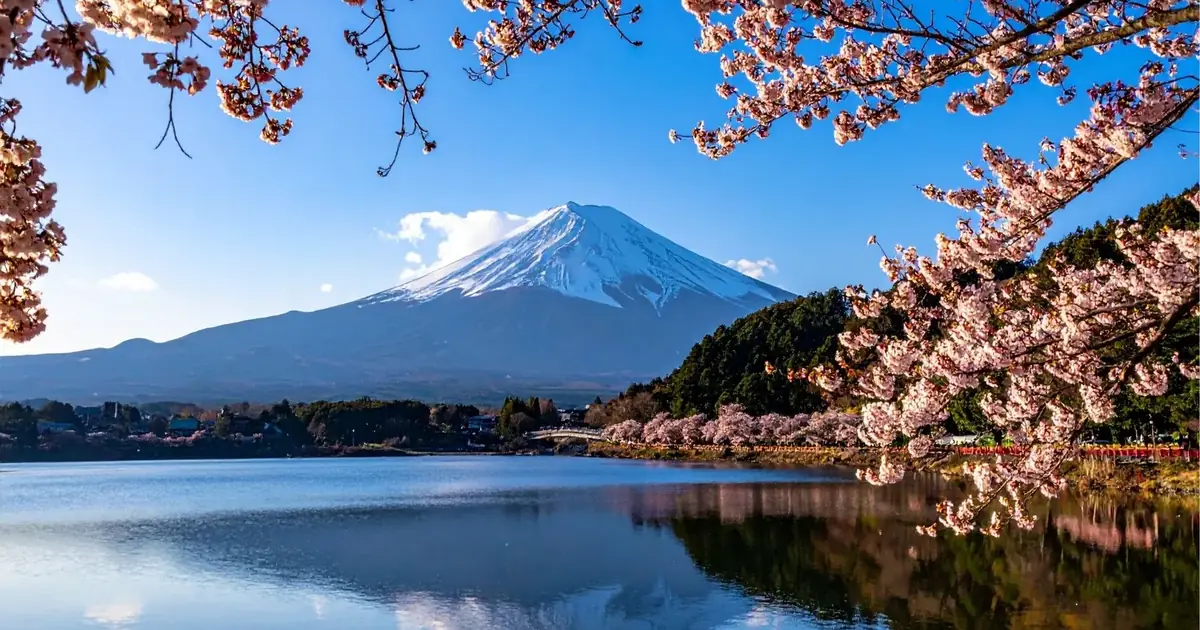
There is no single best way from Tokyo to Mount Fuji — there is a best way for you, and it turns on whether you value comfort, cost, control or luggage. The Fuji Excursion limited express is the only transfer-free train, at ¥4,200 and one hour fifty-four minutes. The highway bus from Busta Shinjuku is cheaper and nearly as fast when the expressway behaves. Driving is quickest in light traffic and illegal above the 2nd station for ten weeks each summer. And Hakone and Gotemba are perfectly good ways to see Fuji that never go near Kawaguchiko at all.
Travelling between November and February? Our Tokyo to Mount Fuji in winter: bus vs train vs tour guide covers snow cancellations, winter timetables and the 5th Station bus.
Check Availability
The one thing that decides everything else
Almost every route converges on Kawaguchiko Station or Fujisan (Mt. Fuji) Station, and from there local buses fan out to the lakes, the Chureito Pagoda, Oshino Hakkai and — seasonally — the 5th Station. Grasp that hub-and-spoke shape and every option below becomes a variation on the same journey: get to the hub, then work the spokes.
If you would rather skip the hub entirely, that is what a chartered car buys. The Private Mount Fuji Tour With Pickup and Drop-Off — 4.9 stars from 325 reviews, $341 for a small group — collects you at your hotel door and returns you to it, with no station, no transfer and no timetable. There is a full breakdown of it here.
Trains, route by route
Route A — the Fuji Excursion direct limited express
The flagship: one train, no transfers, JR Shinjuku straight through to Kawaguchiko on the Fujikyuko Line. It is operated jointly by JR East and Fujikyu Railway using E353-series stock, and between Shinjuku and Otsuki it runs coupled to a Kaiji or Azusa limited express before splitting and continuing onto Fujikyu track.
- Journey time: about 1 hour 54 minutes end to end.
- Stops: Shinjuku, Otsuki, Fuji-Q Highland, Mt. Fuji (Fujisan) Station, Kawaguchiko.
- Frequency: four round trips daily, plus extra seasonal services on busy dates.
- Fare: ¥4,200 Shinjuku–Kawaguchiko per Fujikyu Railway’s official pricing — a ¥2,580 basic fare plus a ¥1,620 express fee. Shinjuku–Shimoyoshida is ¥4,010. Some third-party sites still quote an older ¥4,130 figure; use the official number and reconfirm when you book.
- Reservations: all seats are reservable and reservation is strongly recommended. In cherry-blossom season, Golden Week, summer and autumn foliage these sell out days to weeks ahead. If you board without one, seats showing a red indicator light are unreserved and you may sit there — but that is a fallback, not a plan.
- Where to book: the JR East website or app, a green ticket counter (Midori no Madoguchi) at Shinjuku or another JR station, or a Fujikyu ticket office. Online reservations can be collected at the green counter.
- JR Pass: covers the Shinjuku–Otsuki JR segment only. The Otsuki–Kawaguchiko leg runs on privately operated Fujikyu track and needs a separate supplementary payment even with a valid pass.
- IC card: you cannot simply tap a Suica or Pasmo to board. This train needs its own ticket and reservation.
- Luggage: the E353 stock has dedicated racks and real space. This is the most luggage-friendly option on the list, which matters if Fuji is a stop inside a longer Japan itinerary rather than a round trip from a Tokyo base.
Route B — local trains via Otsuki
A regular JR Chuo Line rapid or local from Shinjuku to Otsuki, then a transfer to a Fujikyu Railway local train to Kawaguchiko.
- Journey time: roughly 2h45m–3h30m depending on the connection wait — noticeably slower than the direct train.
- Transfer: at Otsuki you get off and walk to the Fujikyuko Line platform. It is a different platform and a short walk within the station, not a cross-platform change.
- Fare: as low as about ¥2,500 one way, because you skip the limited-express surcharge entirely. The cheapest rail option.
- IC card: works for the JR Chuo Line portion and generally for the Fujikyu locals as ordinary commuter fare — unlike the Fuji Excursion.
- Best for: budget travellers with time to spare, and anyone who could not get a Fuji Excursion reservation.
Route C — Tokaido Shinkansen to Shin-Fuji
Take the Tokaido Shinkansen from Tokyo or Shinagawa to Shin-Fuji Station — Hikari or Kodama only, Nozomi does not stop there — in roughly 45 minutes, then connect by seasonal bus toward the 5th Station, or via Mishima toward Kawaguchiko.
Best for JR Pass holders, since the Shinkansen leg is fully covered where the Fujikyuko private line is not, and for anyone continuing to Kyoto or Osaka afterwards: Shin-Fuji sits directly on the Tokyo–Kansai corridor.
Buses, route by route
Highway bus: Busta Shinjuku to Kawaguchiko
The most popular budget option, run jointly by Keio Bus on the Tokyo side and Fujikyu Bus on the Fuji side, with WILLER Express as the budget competitor.
- Departure point: Busta Shinjuku, the Shinjuku Expressway Bus Terminal — two minutes’ walk from Shinjuku Station’s New South Exit, across Koshu-kaido Street and up the escalator. This consolidated terminal replaced the old scattered company-specific stops. Keio and Fujikyu depart from the Keio Highway Bus Terminal at the West Gate; WILLER goes from Busta’s fourth floor at the South Gate. Both are a few minutes apart.
- Other departure points: Tokyo Station (the Yaesu South Exit JR Highway Bus Terminal, or the Tekko Building terminal at Yaesu North), Shibuya, and some Ikebukuro (Sunshine) departures via WILLER.
- Journey time: about 1 hour 45 minutes in normal traffic — but this can extend considerably at weekends and on holidays when the Chuo Expressway backs up.
- Fare: from roughly ¥1,500 (WILLER early-bird) to ¥1,800–2,200 (Keio/Fujikyu standard).
- Booking: highwaybus.com, the Keio/Fujikyu joint reservation site with an English interface; WILLER’s own site or app; or in person at the Busta Shinjuku counter.
- Luggage: an under-bus cargo hold, and no station transfers to haul a suitcase through. Generally the most relaxed option for big bags.
- IC card: not normally used for fare payment on reserved highway bus tickets. You book and pay through the reservation platform or at the counter.
Direct highway bus: Shinjuku to the Fuji Subaru Line 5th Station (seasonal)
From spring to the end of October, Fujikyu Bus runs directly from Busta Shinjuku all the way to the 5th Station, skipping the Kawaguchiko transfer.
- Journey time: about 2 hours 35 minutes.
- Fare: ¥3,800 one way, per japan-guide’s listing for the 2026 season, with reserved seats only.
- Season: spring to autumn only. Japan-guide’s 2026 listing runs from 11 September to 31 October, with no winter timetable after that, and Fujikyu sets the exact dates each year, so check them with Fujikyu Bus before you plan around this bus.
- Outside that window there is no direct bus. You go via Kawaguchiko Station and change to the local bus.
Local bus: Kawaguchiko Station to the 5th Station
- Journey time: about 50–60 minutes.
- Fare: ¥2,000 one way, ¥3,400 return (adult), per the operator’s official fare page.
- Frequency: five to seven buses a day off-season; as often as every 20 minutes during peak climbing-season hours.
- Operating period: all year, on a busier timetable in the climbing season. The off-season timetable valid from 1 October 2026 has five buses a day each way (Kawaguchiko Station 9:40 to 14:00 up, last bus down 15:50). Buses are cancelled whenever snow closes the road and turn back at the 4th Station when that is as far as the road is open.
- Tip: board at Kawaguchiko Station rather than Fujisan (Mt. Fuji) Station — Kawaguchiko has the more frequent service.
Driving and rental cars
The two routes. The Chuo Expressway is the common one: Shinjuku or Chofu IC, westbound to Otsuki JCT, then the Higashi-Fujigoko Road to Kawaguchiko IC. That is about 110 km and 1.5 to 2 hours without traffic, stretching past three hours at weekends and on holidays. The Tomei Expressway approach comes at Fuji from the south: Tomei to Gotemba IC, then Route 138 north to Kawaguchiko or on toward the Fuji Subaru Line. About 130 km and roughly two hours, with good south-side views on a clear day and easy access to the Gotemba Premium Outlets.
What it costs. The Chuo Expressway toll from Takaido to Kawaguchiko IC is about ¥2,600 one way with ETC for a standard car; add Shuto Expressway tolls if you join in central Tokyo, which brings the total to roughly ¥3,000–4,500 one way depending on where you start. NEXCO’s Drive Plaza calculator gives the exact figure for your route. The Fuji Subaru Line is a separate toll road at about ¥2,800 return for a standard car, though some sources give ¥2,100–2,300 depending on vehicle class — reconfirm current rates. Note also that some reports say the Subaru Line toll gate takes cash and prepaid coupon books only, no credit card and no ETC; that detail varies by source and is worth verifying, since ETC is otherwise universal on Japanese expressways.
A compact rental runs roughly ¥5,000–8,000 a day before tolls and fuel, putting a solo round trip somewhere in the ¥11,000–16,000 range all in — though that swings widely with vehicle class, season and insurance. Winter rentals from December to March need winter tyres, often at extra cost. Toyota Rent a Car, Nippon Rent-A-Car, Times Car and ORIX all have central Tokyo branches, including near Shinjuku.
Who may drive. A valid passport plus either an International Driving Permit issued under the 1949 Geneva Convention, or — for drivers from a small number of countries including France, Switzerland, Germany, Belgium, Monaco and Taiwan — a certified Japanese translation of your home licence.
The My Car Regulation, and why it matters more than the tolls
During the annual climbing season — approximately the evening of 3 July to 10 September 2026, aligned with the official closing date — private vehicles are banned from the Fuji Subaru Line above a lower checkpoint, to cut congestion and environmental damage. Inside that window:
- You park at a designated lot, usually referred to as Fujisan or Fuji Hokuroku Parking, near the base.
- You transfer to a mandatory shuttle bus for the rest of the climb to the 5th Station.
- It applies to rental cars, private cars and hybrids alike. There is no tourist exemption.
- The other three trailhead roads — Fujinomiya, Subashiri and Gotemba — each run their own regulation windows during the season. Do not assume that driving to a different 5th Station gets around it.
- Verify the exact 2026 dates on the official Mt. Fuji climbing site or with Fujikyu Bus before you finalise any driving plan. Sources vary slightly on the start and end, and this is precisely the kind of detail that shifts year to year.
Parking around Lake Kawaguchi is a mix of free and paid lots near the main viewpoints — Oishi Park, the Kawaguchiko Music Forest area, the ropeway base. Many ryokan offer guest parking; confirm in advance.
Taxi, private car and rideshare
Taxi. A one-way metered taxi from central Tokyo to Kawaguchiko or the 5th Station is a genuinely premium option — meaningfully more expensive than anything above for a solo traveller, and sensible mainly when split across a full group or when you need a departure at an hour when trains and buses are not running. Treat any specific yen figure you see online as an estimate: the fare depends on exact distance, time of day and the tolls incurred.
Private car and chauffeur service. Different from a metered taxi: pre-booked, flat-rate, English-speaking driver, and usually a dedicated vehicle for the whole day rather than a point-to-point run. The price is agreed in advance rather than discovered at the end. Our complete guide to private Fuji tours from Tokyo covers the formats and market rates in full.
If what you actually want is a transfer rather than a tour — a one-way run to a Kawaguchiko or Hakone hotel with your luggage, at a fixed price — GetYourGuide sells exactly that as Private One-Way Transfers to and from Hakone or Mt. Fuji. It rates 4.94 stars, but from only 20 reviews, so treat the score as provisional rather than proven.
Rideshare apps. Uber, GO and DiDi work inside central Tokyo but have patchy, unreliable availability for a long intercity run like Tokyo to the Fuji Five Lakes. Most travellers use them for short local hops, not the whole journey.
Alternate approach: Hakone
Hakone is a legitimate and well-connected alternative to Kawaguchiko for seeing Fuji from Tokyo. The views are more distant, but the town gives you a rich, self-contained day that still works when the mountain is behind cloud.
- Odakyu Romancecar, Shinjuku to Hakone-Yumoto. Direct limited express, all seats reserved, no transfers. Typically 75–90 minutes; after a March 2026 timetable revision the fastest weekend service, “Super Hakone No. 5”, reaches Odawara in a record 59 minutes, with Hakone-Yumoto around 80 minutes total. One-way fare ¥2,420 digital / ¥2,470 paper — a ¥1,270 base fare plus a ¥1,200 paper or ¥1,150 digital limited-express surcharge. Trains leave from platforms 2–3 at ground level in Shinjuku, and there is English-language ticketing help at the Odakyu Sightseeing Service Centers by the West and South exits.
- Alternative: Tokaido Shinkansen to Odawara. Hikari or Kodama from Tokyo or Shinagawa, about 35–50 minutes total through to Hakone-Yumoto with the onward connection — faster than the Romancecar, but the Shinkansen segment is not covered by the Hakone Free Pass.
- The Hakone Free Pass. Issued by the Odakyu Group, not the JR Group, so it cannot be exchanged at JR ticket offices. It covers a round trip on Odakyu between Tokyo and Odawara plus unlimited use of the Hakone Tozan Railway, the Hakone Ropeway, the Lake Ashi sightseeing boats and the Hakone Tozan and Odakyu buses inside the designated area. It does not include the Romancecar limited-express surcharge, which you pay separately at ¥1,200 or ¥1,150 one way. Around ¥7,100 for the two-day digital pass per current listings — reconfirm, as several slightly different figures circulate. Available digitally through the official Odakyu site or Klook, or as a paper ticket from Odakyu machines and offices including Shinjuku.
- Is it worth it? If you are doing the classic Hakone loop — train, cablecar, ropeway, pirate-ship cruise, bus — point-to-point tickets alone can exceed ¥8,000–10,000, so the pass usually pays for itself in a single busy day. The equivalent guided version, the Mt. Fuji, Hakone Ropeway, Owakudani and Lake Ashi coach tour at 4.6 stars from 8,444 reviews and around $54, bundles the same loop with the transport from Tokyo.
Alternate approach: Gotemba
Gotemba, on the Shizuoka side, is the gateway to the Gotemba Premium Outlets and a different, south-facing view of the mountain. It is also a trailhead area — the Gotemba Trail — with its own My Car Regulation window during the climbing season.
- By Odakyu highway bus: with a Hakone Free Pass, the Odakyu Highway Bus between Shinjuku and Gotemba costs a discounted ¥1,000.
- By JR and Shinkansen: the Tokaido Shinkansen to Shin-Fuji (Hikari or Kodama, about 45 minutes; Nozomi does not stop), then a seasonal bus connection. Alternatively route via Kozu on the JR Tokaido Line and change to the JR Gotemba Line.
Side by side
| Method | Speed | Cost band | Comfort | Flexibility | First-timer ease | Luggage | Best for |
|---|---|---|---|---|---|---|---|
| Fuji Excursion direct train | Fast (~1h54m) | Mid-high | High | Low — fixed schedule, reserved seat | High, no transfers | High, dedicated racks | Comfort-focused travellers, anyone with luggage, first-timers who book ahead |
| Local train via Otsuki | Slow (~2h45m–3h30m) | Lowest rail | Medium | Low–medium | Medium, one transfer | Medium | Budget travellers with flexible time |
| Highway bus to Kawaguchiko | Medium (~1h45m, traffic-dependent) | Low | Medium | Medium | High | High, under-bus hold | Budget travellers who want no transfers |
| Direct bus to 5th Station (seasonal) | Medium-slow (~2h35m) | Low–mid | Medium | Low, seasonal only | High | High | Summer climbers and sightseers skipping Kawaguchiko |
| Rental car | Fastest in light traffic (~1.5–2h) | Mid-high | High | Highest | Low–medium — signage, My Car rules, driving side | Highest | Groups and families, multi-stop days, non-summer travel |
| Taxi | Fast | Highest | High | High, door to door | High, no navigation | High | Small groups splitting the cost, odd-hour departures |
| Private car / chauffeur | Fast | High | Highest | High, customisable route | Highest | Highest | Families, photographers, anyone wanting comfort and flexibility together |
| Hakone via Romancecar | Fast (~80–90 min) | Mid, with pass | High | Medium, within the pass area | High | Medium-high | Travellers wanting an all-weather day with distant Fuji views |
Ticketing and booking practicalities
Bookable in English, online, in advance: the Fuji Excursion (JR East site and app), highway buses (highwaybus.com, WILLER), the Odakyu Romancecar and Hakone Free Pass (Odakyu official site, Klook), and rental cars through the major providers’ English sites.
Often has to be bought in person or at a machine in Japan: local Kawaguchiko-area sightseeing buses, some highway bus tickets during sold-out online periods (go to the Busta Shinjuku counter), and the Fuji Subaru Line road toll, which some reports say is cash or coupon book only at the gate.
Reserve ahead in peak season: Fuji Excursion seats are essential in blossom season, Golden Week, summer and autumn foliage, and can sell out days to weeks out. Romancecar seats go at weekends. Highway bus tickets in July and August want two to three days’ notice minimum.
Where IC cards work and where they don’t. They cover ordinary Chuo Line and Fujikyuko Line local trains, and generally Odakyu commuter trains to Odawara. They do not work as standalone payment for the Fuji Excursion’s reserved seat, or for most highway bus reservations, which run on their own ticketing systems.
Where the JR Pass stops. This is the most common source of confusion on the whole route. The pass covers the JR Chuo Line as far as Otsuki and it covers the Tokaido Shinkansen to Shin-Fuji or Odawara. It does not cover the Fujikyu Railway line from Otsuki onward, so a JR Pass holder still pays a supplement for the final leg into Kawaguchiko.
2025 and 2026 notes to verify before you travel
- The Fuji Subaru Line My Car restriction: approximately 3 July (evening) to 10 September 2026, aligned with the official climbing-season close. Private vehicles must park and shuttle above the restricted point. Check the official Mt. Fuji climbing site for exact hours and dates; sources show minor variation.
- The Kawaguchiko–5th Station local bus runs all year, five times a day each way on the off-season timetable from 1 October 2026, and is cancelled whenever snow closes the road.
- The direct Shinjuku–5th Station highway bus is seasonal: in 2026 japan-guide lists it only until 31 October, and it does not run in winter.
- The Fuji Excursion timetable carries JR East’s own note that it is “accurate as of February 2026 and valid on and after March 14, 2026” — a reminder that even official schedules get revised. Check the live JR East or Fujikyu Railway page close to your date.
- The Odakyu Romancecar saw a March 2026 revision reinstate the faster “Super Hakone No. 5” weekend service. Even long-established routes change.
- Peak congestion to plan around: cherry-blossom season (late March to mid-April), Golden Week (late April to early May), Obon (mid-August) and autumn foliage (October–November). All bring heavier Chuo and Tomei traffic and a much higher chance of sold-out reserved seats.
What we’d book
If you want the simplest, most comfortable option and you are booking ahead — reserve the Fuji Excursion. Best balance of speed, comfort and zero navigation stress, especially with luggage.
If you are budget-conscious and travelling light — the highway bus from Busta Shinjuku. Nearly as fast as the train at a fraction of the fare, with easy under-bus storage.
If you only want the 5th Station in summer and want zero transfers — the seasonal direct Shinjuku–5th Station bus, after confirming the current operating dates, because this service is bound tightly to the climbing-season calendar.
If you are renting a car — plan around the My Car Regulation. Outside roughly 3 July to 10 September, driving all the way up is straightforward; inside it, budget extra time for the park-and-shuttle, or simply leave the 5th Station off a summer itinerary.
If you want an all-weather alternative that doesn’t hinge on Kawaguchiko-specific views — Hakone via the Romancecar and the Free Pass gives you a ropeway, a cruise and museums that remain worth the trip even if the mountain never appears.
If you hold a JR Pass — route to maximise JR-covered segments: either the Tokaido Shinkansen to Shin-Fuji, which is fully covered, or the Chuo Line to Otsuki with a separate Fujikyu supplement for the last leg. Do not assume the whole Fuji Excursion is included, because it is not.
If none of that appeals — the reason a chartered car exists is that it deletes the entire problem. No reservation to secure a month out, no platform transfer at Otsuki, no expressway gamble on a coach with a fixed return time, and a driver who can change the plan at eight in the morning when the summit is under cloud. The most-reviewed of them is the Mount Fuji Private Tour With English Guide at 4.9 stars from 880 reviews, $319 for a small group.
The caveats that matter
Fares and operating dates change, and sources disagree. We have used the most current official figures where they exist — Fujikyu Railway’s own ¥4,200 Fuji Excursion fare rather than the widely repeated ¥4,130, for instance. But several details showed real variation across sources: the Fuji Subaru Line toll, the exact My Car Regulation start and end, the direct 5th Station bus operating dates, and taxi fares. Reconfirm each directly with the operator — JR East, Fujikyu Railway, Fujikyu Bus, or the official Mt. Fuji climbing site — shortly before you travel.
Weather and traffic disrupt every one of these methods. Weekend and holiday congestion, snow closures, and typhoon-season disruption from roughly August to October can delay or cancel any service. Build in buffer time, particularly where a connection is tight.
This guide stays out of two neighbours’ territory on purpose: the private-tour formats and prices and the day-trip itinerary planning are covered in full elsewhere rather than re-derived here.
Related reading
- Mount Fuji day trip from Tokyo: the complete planning guide — what one day realistically holds once you have arrived
- Mount Fuji and Hakone in one day — whether combining the two is worth the transit
- Mount Fuji private tours from Tokyo: the complete 2026 guide — every private format, with real prices
- The best time for a Mount Fuji private tour, month by month — when the mountain is actually visible
- Compare all six private Fuji tours — side by side, with live prices
Your Own Car, Your Own Day at Mount Fuji
Rated 4.9/5 by 675 travellers. Hotel pickup in Tokyo, an English-speaking driver-guide, and an itinerary you set yourself — with free cancellation up to 24 hours before.
Check Availability & Book