What to Wear at Mount Fuji in November and Winter
What to wear at Mount Fuji from November 2026 to February 2027: real Kawaguchiko temperatures, outfits by month and activity, layering, chain spikes, gear hire and packing checklists.
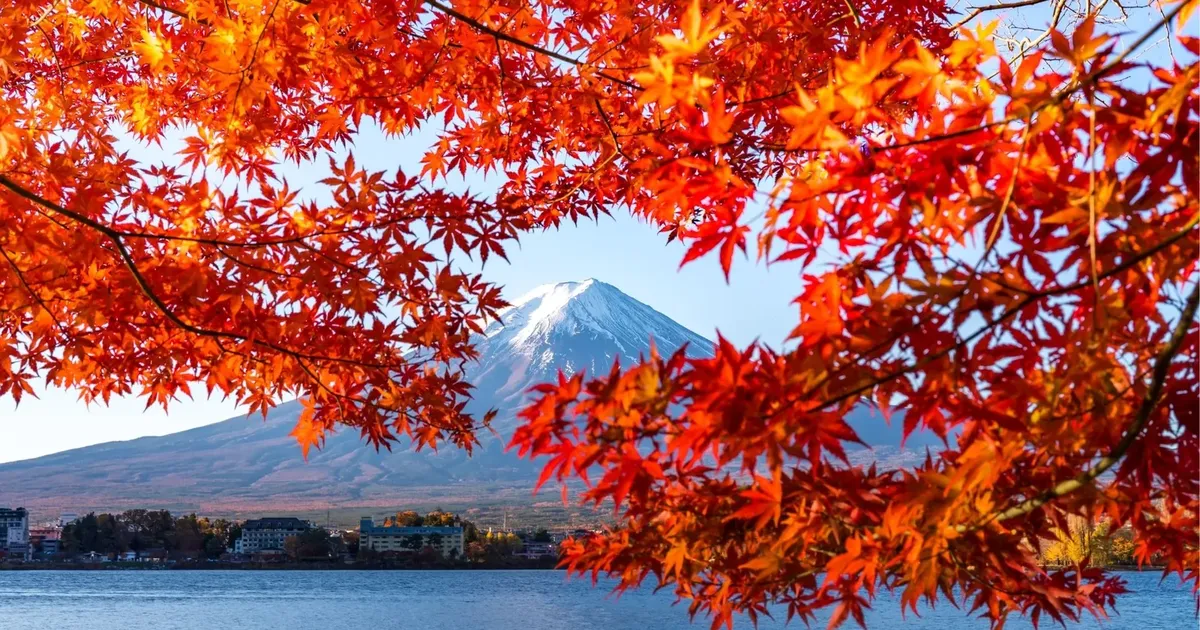
Dress for Lake Kawaguchiko as you would for a crisp, dry northern European winter, not for Tokyo. From December to February, mornings at the lake average well below freezing (about −3 °C to −6 °C), while Tokyo’s average lows stay above +1 °C. Bring three thin layers, a windproof outer layer, warm waterproof shoes with grip, and gloves you can use with a phone. That one kit covers almost everything from early November to late February.
Check Availability
What to pack, in brief
- Kawaguchiko is about 3–7 °C colder than Tokyo. The Japan Meteorological Agency’s 1991–2020 averages run from 13.8 °C / 2.2 °C (high/low) in November down to 5.5 °C / −5.7 °C in January. The 5th Station is colder again, by about 9 °C, and snow often closes the road from December.
- Layer up, don’t bulk up: a HEATTECH or merino base, a fleece or light down mid-layer, and a windproof shell or down parka on top, plus a hat, touchscreen gloves and warm waterproof shoes. From December, add chain spikes if you’ll climb Chureito’s 398 steps or walk trails after snow.
- Pack the non-clothing essentials too: cash for the Fuji Subaru Line toll (¥2,800 per standard car, cash only), a power bank in your hand luggage (since 24 April 2026 you may carry no more than two of 160 Wh or less each, and may not use them on board, according to a JAL notice citing Japan’s transport ministry), konbini hand warmers, lip balm and sunglasses.
Planning the whole trip? Start with our Mount Fuji in November 2026 guide, and compare tours in the best Mount Fuji day tours from Tokyo for November and winter.
How cold is Mount Fuji in November and winter?
The Kawaguchiko and Tokyo figures below are the Japan Meteorological Agency’s (JMA) official 1991–2020 normals. The 5th Station has no JMA weather station, so we estimated it from the standard lapse rate (about 0.6 °C cooler per 100 m). That works out at roughly 9 °C colder than the lake, which sits at around 830 m.
Temperature table: Kawaguchiko vs the 5th Station vs Tokyo
| Month | Kawaguchiko high / low (JMA) | Fuji Subaru Line 5th Station, 2,305 m (estimate) | Tokyo high / low (JMA) |
|---|---|---|---|
| November | 13.8 °C / 2.2 °C | ~5 °C / ~−7 °C | 16.7 °C / 8.8 °C |
| December | 8.5 °C / −2.9 °C | ~0 °C / ~−12 °C | 12.0 °C / 3.8 °C |
| January | 5.5 °C / −5.7 °C | ~−3 °C / ~−15 °C | 9.8 °C / 1.2 °C |
| February | 6.6 °C / −4.8 °C | ~−2 °C / ~−14 °C | 10.9 °C / 2.1 °C |
What the table means for your packing:
- Tokyo is a poor guide. A January morning in Tokyo averages +1.2 °C; at Kawaguchiko it averages −5.7 °C. Plenty of travellers pack for Tokyo and end up shivering by the lake.
- The summit figures show why the mountain is closed. JMA’s Fuji summit station averages a January high of −15.3 °C and a low of −21.4 °C. Our guide to climbing Mount Fuji in November or winter covers what stays open instead.
- Snow at the lake comes and goes. JMA counts about 9–10 snow days a month at Kawaguchiko in January and February, about 5 in December, and almost none in November.
- The air is dry. Relative humidity drops to about 62% in January, against about 81% in summer. Expect chapped lips and static; the same dry air gives you the clear sunrise skies.
Hakone: milder at the bottom, cold at the top
JMA’s Hakone station doesn’t record temperature, so there is no official normal to quote. The official Hakone Navi tourism site gives monthly averages for Hakone town of about 8.6 °C in November, 3.4 °C in December, 0.4 °C in January and 1.7 °C in February, and adds that Lake Ashi and Owakudani run about 3–4 °C colder than Hakone-Yumoto. Pack for Hakone as you would for Kawaguchiko, especially for windy Lake Ashi cruises and Owakudani. Torn between the two? Our Kawaguchiko vs Hakone in November guide compares them.
Wind chill, sunrise and light-up nights
- Wind: the prevailing winter wind at Kawaguchiko blows from the north-west, across the open lakeshore. A 2 °C morning with a breeze feels like −3 °C or lower, so your outer layer has to be windproof as well as warm.
- Sunrise shoots: in Fujikawaguchiko the latest sunrise of the year is around 6:55 in early January, and the earliest sunset around 16:32 in early December. Pre-dawn photographers stand still at roughly the daily minimum, often −5 °C or lower in midwinter.
- Momiji Corridor light-up: the 2026 Fujikawaguchiko Autumn Leaves Festival runs from 7 to 29 November, and the corridor is lit from sunset to 21:00, according to the Fujikawaguchiko Tourism Federation. Late-November evenings usually fall to 0–3 °C. Details are in our Fujikawaguchiko Autumn Leaves Festival 2026 guide.
The layering system, explained simply
Three thin layers trap more warmth than one thick coat, and you can peel them off on heated trains and in restaurants.
1. Base layer: merino or synthetic, never cotton
The base layer moves sweat off your skin. Merino wool stays warm when damp and doesn’t smell after a long day. Synthetics dry faster and cost less.
Uniqlo HEATTECH is the easy, cheap option in Japan, sold in three warmth levels:
- HEATTECH (regular): thin, for November days and city sightseeing.
- HEATTECH Extra Warm: about 1.5 times warmer than regular, and Uniqlo recommends it for 23 °F to 59 °F (about −5 °C to 15 °C). A good all-rounder for December at the lake.
- HEATTECH Ultra Warm: Uniqlo’s US site calls it “approximately 2.25 times warmer” than regular HEATTECH, based on CLO insulation values, and recommends it for −4 °F to 50 °F (−20 °C to 10 °C). Choose it for January sunrise shoots or the 5th Station.
One caveat: HEATTECH contains rayon, which holds moisture, so on sweaty hikes merino or a pure synthetic suits you better.
2. Mid-layer: fleece or light down
A fleece jacket or a packable down or synthetic “inner down” jacket is the layer you adjust most. Light down is warmer for its weight; fleece copes better if it gets damp.
3. Outer layer: windproof shell or down parka
- Early to mid-November: a windproof, waterproof shell over your mid-layer is enough.
- Late November to February: a hip-length down or synthetic parka, ideally with a hood. If you only own a shell, wear both a fleece and a light down under it.
Footwear and grip
- Shoes: waterproof walking shoes or light hiking boots with a lugged rubber sole. Leave fashion boots and smooth-soled trainers at home: stone steps and lakeside paths get frosty and icy from December.
- Chain spikes / microspikes: rubber harnesses with small steel spikes that stretch over your shoes. Carry a pair from December to February if you plan to climb Chureito’s 398 steps after snow, walk Mt. Kachi Kachi or the Panorama-dai trail, or follow icy shaded paths. You don’t need them for normal lakeside sightseeing on cleared roads, and Chureito also has a gentler slope path beside the stairs.
Accessories that make the biggest difference
- Gloves: touchscreen-compatible liner gloves, plus thicker over-mitts for sunrise. Taking gloves off for photos is how fingers go numb.
- Hat: a beanie that covers your ears.
- Neck gaiter or scarf: blocks the north-west wind and pulls up over your nose.
- Socks: merino hiking socks. Pack a spare pair for the walk back from the onsen.
- Hand warmers (kairo / hokkairo): disposable air-activated pads sold at every konbini (7-Eleven, Lawson, FamilyMart) and drugstore from autumn. Stick-on types go on your base layer; shoe-insert types warm your toes. Unopened single-use warmers are generally allowed in both hand luggage and checked bags. Liquid-fuel catalytic warmers of the “Hakkin” type are restricted like lighter fluid.
Outfit by month
| Period | Typical day / night at Kawaguchiko | What to wear |
|---|---|---|
| Early November (1–15) | Mild afternoons in the low teens; frosty mornings near 2–5 °C | Regular HEATTECH or a light merino top, fleece, windproof shell, jeans or trekking trousers, trainers with grip; light gloves and a beanie for evenings |
| Late November (16–30) | ~10 °C days; nights near 0 °C (light-up evenings) | Extra Warm base, light down mid-layer, shell or short parka, warm trousers (fleece-lined or with leggings underneath), waterproof shoes, gloves, hat, neck gaiter |
| December | ~8 °C days; −3 °C mornings; first snow possible | Extra Warm or Ultra Warm base top and leggings, fleece or light down, hooded parka, waterproof boots with lugged soles, chain spikes for steps and trails, touchscreen gloves, kairo |
| January–February | ~5–7 °C days; −5 to −6 °C mornings; the snowiest months | Ultra Warm base top and bottoms, fleece and light down, warm parka, insulated waterproof boots, chain spikes, liner gloves plus mittens, beanie, gaiter, foot and hand warmers |
Outfit by activity
| Activity | Key items | Notes |
|---|---|---|
| Lakeside sightseeing / day tour | Three layers, comfortable waterproof shoes, gloves, small daypack | You’re in and out of a heated coach or car, so a parka you can open and close easily beats a heavy wool coat. Our pick on GetYourGuide: Tokyo: Mt Fuji & Oishi Park & Lake Kawaguchi & Oshino Hakkai (from $49, 4.8/5 from 5,794 reviews) |
| Sunrise photography | Ultra Warm base, down parka, insulated boots, liner gloves plus mittens, kairo in pockets and boots, thermos | You’ll stand still for 30–60 minutes at the coldest hour. Keep spare batteries in an inside pocket. Our guide to the best places to see Mount Fuji lists the viewpoints |
| Momiji Corridor night light-up | Warm parka, hat, gloves, warm socks, shoes for crowded paths | Temperatures drop fast after sunset, and queues for the buses back can be long |
| 5th Station visit | Full winter kit: Ultra Warm layers, parka, hat, insulated gloves, sunglasses, sunscreen | Roughly 9 °C colder than the lake. From mid-November, winter hours apply and snow often closes the road |
| Low-level winter hikes (Mt. Kachi Kachi, Chureito’s 398 steps, Panorama-dai) | Breathable base, fleece, shell (carry the parka), hiking shoes, chain spikes, head torch | You’ll sweat on the way up and freeze at the top, so open your layers while climbing and add them at the viewpoint |
| Snow resorts (Yeti, Fujiten) | Waterproof ski jacket and trousers (available to hire), base layer, goggles, gloves, neck gaiter | Yeti’s official notice gives a season of 23 October 2026 to 28 March 2027, on machine-made snow, with only Slope A open on the first day. Fujiten opened on 13 December in both 2024 and 2025, and SnowJapan lists mid-December 2026 for the 2026–27 season. Both hire out clothing and gear on site |
| Onsen / ryokan stay | Easy slip-on shoes, small towel, a light layer for the cold walk between baths | Ryokan supply a yukata and a padded jacket (tanzen), so you need much less clothing indoors |
The 5th Station in winter: according to the operator, the Yamanashi Prefectural Road Public Corporation, the Fuji Subaru Line gate opens 4:30–17:00 from 1 to 15 November, 9:00–17:00 from 16 to 30 November, and 9:00–16:00 from December to February, and the road can close for snow or ice at any time. In the 2025–26 winter, mountfujitour.jp reports, the 5th Station was reachable only until 18 January and then again from 18 April; when only the lower section is open, the toll drops to ¥1,200. Read our guide to climbing Mount Fuji in November or winter before you plan a day around it.
If you’d rather someone else handled the road and the weather calls, a private driver-guide can switch the plan on the morning: the Mount Fuji Private Tour With English Guide (from $319 per group, 4.9/5 from 880 reviews) picks you up at your Tokyo hotel, so you can leave the heavy parka in the car between stops.
Buying or hiring gear in Japan
Forgot something, or flying in from somewhere warm? Warm clothing is cheap to buy in Japan.
- Uniqlo: the default for HEATTECH, ultra-light down jackets, fleece and gloves. Large stores in Tokyo, and branches in Fujiyoshida and the wider area.
- Workman (Workman Plus / #Workman Girl): a workwear chain that has become a budget favourite for windproof, waterproof and insulated clothing. Japanese reviewers often quote its down jackets at around ¥3,900–¥9,800. One quirk: a single cheap item may not reach the ¥5,000 tax-free threshold.
- Montbell: Japan’s big outdoor brand, with good quality at fair prices. One travel guide quotes a Montbell fleece at around ¥8,500 and a down jacket at around ¥20,500. Montbell also sells chain spikes (the outlet price we saw was ¥4,400).
- Don Quijote: open late and sells everything. Good for last-minute kairo, gloves, beanies and cheap chain spikes.
- Chain spikes in general: budget pairs on Japanese shopping sites cost about ¥1,500 to ¥3,000; branded ones cost more.
Hiring winter clothing
- In Kawaguchiko: the outdoor hire shops near the station serve the summer climbing season. SORANOSHITA Kawaguchiko, opposite the station, hires out clothing only from 1 July to mid-September (bicycles all year). Yamarent’s Kawaguchiko branch also opens only from 1 July to 11 September. LaMont near Fuji-Q Highland is open all year and accepts walk-ins, but it doesn’t publish its winter stock, so call ahead.
- From Tokyo (Yamarent Shinjuku, open all year): chain spikes cost ¥3,000 for one night and two days, winter boots ¥7,000 and an extreme-cold down jacket ¥4,500. Delivery is free both ways on orders of ¥10,000 or more.
- Tokyo clothing-hire services for travellers: Ninja Kotan / Edo Kagura delivers Patagonia outdoor-wear sets to your hotel from ¥21,000 (one night, two days) or ¥25,500 (two nights, three days). Any Wear, Anywhere at MIMARU apartment hotels offers winter sets from ¥37,000 for two adults (1–30 days). For a short trip, buying basics at Uniqlo or Workman usually costs less; hiring makes most sense for high-end outerwear or for families.
- Snow resorts: Yeti and Fujiten hire out skis, boards and snow wear on site.
Non-clothing essentials
- Power bank: cold drains phone batteries fast. Since 24 April 2026, Japan’s transport ministry (MLIT) rules, as JAL’s notice puts it, allow “no more than 2 (two) power banks… per passenger (each 160Wh or less)”, in hand luggage only, and prohibit using them to charge other devices on board; charging the power banks themselves on board is also banned. A 10,000 mAh pack is about 37 Wh, well inside the limit.
- Cash: the Fuji Subaru Line takes cash or prepaid coupons only (¥2,800 return for a standard car); no cards or ETC. Some rural buses and shrine stalls prefer cash too.
- Sunglasses and sunscreen: winter sun on snow and the lake is bright, and stronger at altitude.
- Lip balm and moisturiser: midwinter air is dry, and heated hotel rooms are drier still.
- Head torch: sunset comes as early as about 16:30 in early December. You’ll want one for sunrise walks and late-afternoon hikes.
- Small thermos: konbini sell hot drinks, and a thermos keeps them hot at a sunrise spot.
- Small towel: for the onsen, and for wiping wet benches and camera lenses.
- Reusable bag: public bins are scarce, so you’ll carry your rubbish.
- Mobile data: an eSIM or pocket Wi-Fi for live cameras, bus times and weather checks. Set it up before you leave Tokyo; signal is fine around the lakes.
- Travel insurance: check that your policy covers slips on ice, cancellations caused by snow and lost gear.
- Motion-sickness tablets: the Subaru Line, Hakone’s mountain roads and some bus routes are winding.
Getting there? Our Tokyo to Mount Fuji transport guide compares the bus, the train and a car, and bus vs train vs tour in winter covers snow days.
Packing mistakes to avoid
- Cotton base layers and jeans on cold days. Cotton soaks up sweat and chills you. Wear synthetic or merino next to your skin.
- Fashion boots or smooth soles on icy steps. Chureito’s stairs and shaded paths can glaze over in midwinter. Lugged soles plus chain spikes are the fix.
- A huge, heavy coat as your only layer. Trains, buses, museums and restaurants are well heated. You’ll overheat inside and have nothing to adjust.
- Forgetting gloves you can use with a phone. You’ll spend more time photographing Fuji than anything else, and touchscreen liners let you keep them on.
- Packing for Tokyo’s forecast. Check the Kawaguchiko forecast, and for sunrise, plan for the overnight low.
- Leaving the power bank in your checked bag. It’s banned there. Keep it in your hand luggage.
- No plan B for clouds. Fuji hides on some days, so pack for indoor and lakeside options too. Our Mount Fuji visibility guide explains when the odds fall.
Packing checklists
Day trip from Tokyo (tour or bus)
- Base layer top (HEATTECH Extra or Ultra Warm, or merino)
- Fleece or packable down mid-layer
- Windproof shell or warm parka
- Warm trousers (or leggings under trousers)
- Waterproof shoes with grip
- Merino socks
- Beanie, neck gaiter
- Touchscreen gloves
- 2–4 disposable hand warmers
- Power bank and cable
- Cash (coins and ¥1,000 notes)
- Sunglasses, sunscreen, lip balm
- Reusable bag, tissues, hand sanitiser
- Motion-sickness tablets
- Phone with eSIM or data, and your tour voucher
Overnight stay at Kawaguchiko or Hakone
Everything above, plus:
- Spare base layer and socks
- Ultra Warm base layer (leggings and top) for sunrise
- Head torch
- Small thermos
- Small towel for the onsen
- Moisturiser (heated rooms are very dry)
- Slip-on shoes for the ryokan and onsen
- Chain spikes (December to February, for hikes and steps)
- Camera batteries kept warm in an inside pocket
- A room booked in the right area (see where to stay at Lake Kawaguchiko): on the north shore of Lake Kawaguchiko for sunrise across the water to Fuji, or at Moto-Hakone or Hakone-en on Lake Ashi if you’re staying in Hakone
Snow activities (Yeti, Fujiten, snowy hikes)
- Waterproof ski jacket and trousers (your own or hired)
- Thermal base top and bottoms
- Fleece mid-layer
- Waterproof insulated gloves plus liner gloves
- Goggles or sunglasses
- Helmet (available to hire)
- Ski socks (no cotton)
- Neck gaiter and beanie
- Sunscreen and lip balm with SPF
- Chain spikes or snowshoes for hiking
- Foot and hand warmers
- Snack and water
Frequently Asked Questions
What should I wear to Mount Fuji in November?
Wear three layers: a thin thermal or merino base, a fleece or light down jacket, and a windproof shell. Add a beanie and touchscreen gloves. Kawaguchiko averages 13.8 °C by day and 2.2 °C at night in November, so you’ll add and remove layers all day. Late November and the light-up evenings call for a warmer parka.
How cold is Lake Kawaguchiko in December and January?
JMA’s 1991–2020 normals give December highs of 8.5 °C and lows of −2.9 °C, and January highs of 5.5 °C and lows of −5.7 °C. That’s roughly 4–7 °C colder than Tokyo.
Is Uniqlo HEATTECH enough for Mount Fuji in winter?
As a base layer, yes. Choose Extra Warm (about 1.5 times regular) or Ultra Warm (about 2.25 times) and wear it under a fleece and a windproof parka. HEATTECH under a light jacket isn’t enough for sunrise or the 5th Station.
Do I need crampons or microspikes at Chureito Pagoda?
Not in November. From December to February, light chain spikes help a lot on the 398 steps after snow or ice. You don’t need full crampons at any tourist spot. If the stairs look icy and you have no spikes, use the gentler slope path.
Can I visit the Mount Fuji 5th Station in winter, and what should I wear?
Sometimes in November and December. In the 2025–26 winter, mountfujitour.jp reports, it was reachable only until 18 January and then again from 18 April. Snow and ice often close the Fuji Subaru Line, and it keeps short winter hours. If it’s open, wear full winter gear: it’s roughly 9 °C colder than the lake, and often well below freezing.
Can I bring hand warmers and a power bank on a plane to Japan?
Unopened disposable hand warmers are generally fine in hand luggage and checked bags. Power banks go in hand luggage only, with a maximum of two per person at 160 Wh or less each, and since 24 April 2026 you can’t use them on board.
Can I hire winter clothes in Tokyo or Kawaguchiko?
Yes, in Tokyo. Travel clothing-hire services start at around ¥21,000 per trip, and Yamarent Shinjuku hires out chain spikes, boots and down jackets. Kawaguchiko’s hire shops mostly open in the summer climbing season, so for a short trip, buying basics at Uniqlo, Workman or Montbell is usually easier.
What shoes should I wear at Mount Fuji in winter?
Waterproof walking shoes or light hiking boots with deep rubber lugs, plus merino socks. Add chain spikes for icy steps and trails. Avoid smooth-soled fashion boots and canvas trainers.
Check before you travel
Conditions change week to week in winter, so check these a few days before you go:
- Fuji Subaru Line status and hours on the Yamanashi Prefectural Road Public Corporation’s site: snow closures, winter hours of 9:00–16:00 from December to February, and the ¥2,800 cash toll.
- The 10-day forecast for Kawaguchiko (JMA or tenki.jp), not Tokyo’s.
- Sunrise and sunset times for your dates.
- Snow resort opening dates: Yeti’s season runs from 23 October 2026 to 28 March 2027; Fujiten usually opens in mid-December.
- Your airline’s power-bank policy, on top of Japan’s rule of two per person at 160 Wh or less.
- Hire prices and seasons at Yamarent, LaMont, Ninja Kotan / Edo Kagura and Any Wear, Anywhere.
- Ropeway and trail status (Mt. Kachi Kachi Ropeway, Panorama-dai) after snowfall.
Related reading
- Kawaguchiko vs Hakone in November: Fuji views, autumn colour, costs and a two-day route linking both
- Mount Fuji in November 2026: visibility, weather and the best week to go
- Fujikawaguchiko Autumn Leaves Festival 2026: dates, light-up hours and getting there
- Compare all six private Fuji tours, side by side with live prices
Your Own Car, Your Own Day at Mount Fuji
Rated 4.9/5 by 675 travellers. Hotel pickup in Tokyo, an English-speaking driver-guide, and an itinerary you set yourself — with free cancellation up to 24 hours before.
Check Availability & Book